
Wherever You Are in Michigan or Wisconsin, This Is for You
Here is the search that probably brought you here, in one form or another: medical weight loss Michigan Wisconsin, or maybe something more specific, hormone therapy near me, or the name of your own city typed in right alongside the words "weight loss clinic." You have already done the harder part of this journey. You have read enough to know that what you are dealing with, the weight that will not move no matter what you cut or how far you run, the fatigue that a full night's sleep does not touch, the brain fog that makes you reread the same email three times, is not a willpower problem. You already suspect it is hormonal, or metabolic, or some tangled combination the standard fifteen-minute appointment with your primary care doctor has never had time to untangle. What you are trying to figure out now is simpler and, in its own way, more practical: is this actually available to me, where I live?
If you looked at our own site data before writing this, you'd see exactly what we mean: real, meaningful search volume for phrases like "medical weight loss Grand Rapids" showing up in our analytics with essentially no corresponding clicks to a page that actually answers the question. That's not readers losing interest. That's readers searching, seeing results that don't convincingly answer "is this here, for me," and moving on unsatisfied. We built this entire article specifically to close that gap, city by city, rather than leaving it as an assumption we hoped readers would make on faith.
That question matters more than it might seem to from the outside. It is one thing to read a compelling article about perimenopause or thyroid function or insulin resistance from a wellness site based somewhere you have never been and will never visit. It is another thing entirely to find a provider who can actually see you, order labs you can actually get drawn, and follow up with you in a way that fits into your actual week, in your actual city. If you live in Grand Rapids, you might assume this kind of root-cause, comprehensive care is close by. If you live in the Upper Peninsula, or a small town outside Wausau, or a farm community two hours from the nearest city on this list, you might have already assumed the opposite: that this kind of care exists, just not for you.
It is worth sitting with why that assumption forms in the first place, because it is not irrational. Most healthcare innovation genuinely has clustered around major metro areas historically, new specialty clinics, cutting-edge treatment programs, concierge medicine options, tend to open first, and sometimes only, in the largest markets with the deepest concentration of wealth and population. Anyone who has watched a promising new type of care arrive in Chicago or Minneapolis and take years to reach anywhere in Michigan or Wisconsin, if it arrives at all, has good reason to expect the same pattern here. Telehealth is precisely the development that breaks that pattern, not gradually, not eventually, but immediately and completely for the kind of relationship-based, conversation-and-lab-driven care this article describes.
We want to correct that assumption directly, in the clearest terms we can, before you read another word: if you live anywhere in Michigan or anywhere in Wisconsin, this kind of care is realistically available to you. Not a diluted, lesser version of it. Not a waitlist-only promise. The actual thing, root-cause testing, a provider who has time to listen, an ongoing relationship rather than a one-time prescription. The reason this is true has almost everything to do with how telehealth has changed medicine over the last several years, and almost nothing to do with how big your city is or how far it sits from Grand Rapids.
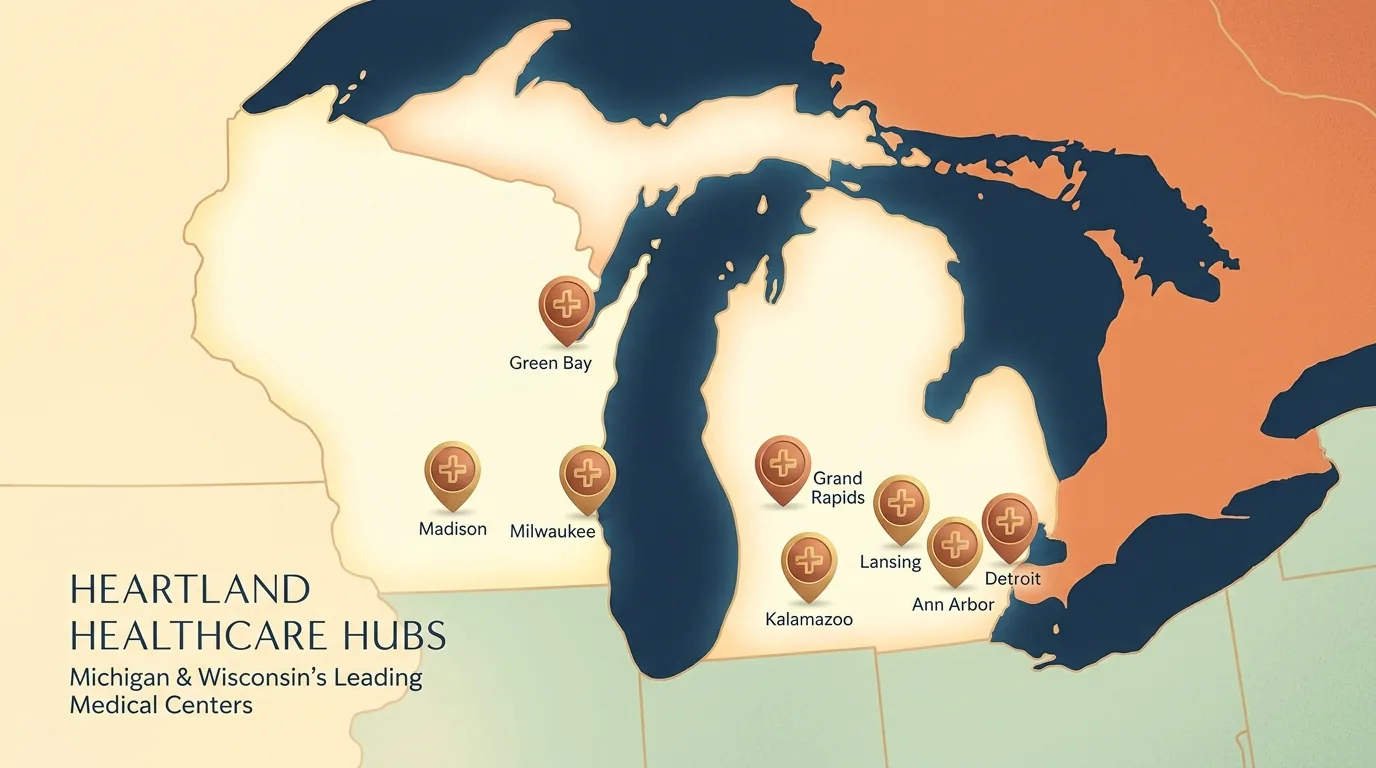
This article exists to prove that point city by city, because we know that a general reassurance ("telehealth works!") is not nearly as convincing as seeing your own community named, described accurately, and treated as a real place with real logistics that have been thought through in advance. So that is what we have built here. If you live in or near Grand Rapids, Detroit, Ann Arbor, Lansing, Kalamazoo, Milwaukee, Madison, or Green Bay, you will find a section written specifically about your area, its particular rhythms, its climate, its culture, and how care reaches women there. If you live somewhere smaller, a mid-size town, a rural community, a place that will never get its own city-name headline, you have a section too, and it is not an afterthought bolted onto the end. Section 11 exists because we do not want anyone reading this and quietly concluding that this is a "big city" service that happens to have a website. It is not. It was built, from the beginning, as a telehealth-first practice precisely so that geography would stop being the deciding factor in whether a woman gets real answers about her weight, her hormones, and her energy.
A quick note on how to use this article, since it is genuinely long by design. You do not need to read all fourteen sections in order to get value from it. If you already understand the basics of how telehealth licensing works, you can jump straight to your city's section using the table of contents. If you are earlier in your research and want the fuller picture of how virtual care actually functions before you get to your own community, Section 2 is worth reading first. And if you have already read enough about the "where" and want to understand what separates genuine root-cause care from a prescription-first model, Section 12 speaks directly to that. This article was built as a resource to return to and jump around in, not necessarily one to consume start to finish in a single sitting.
Before we get to your specific city, it is worth walking through how the mechanics of this actually work: how a Michigan-licensed or Wisconsin-licensed provider can legally and clinically see you no matter where in the state you live, what a telehealth visit actually looks like from your side of the screen, and how something as physical as a blood draw happens when your provider is not in the room with you. That is Section 2, and we would encourage you to read it even if you are tempted to skip straight to your own city, because the confidence you get from understanding the logistics will make everything that follows land differently. Then, city by city, region by region, we will walk through what care in your part of Michigan or Wisconsin actually looks like: who your neighbors are, what your winters do to your vitamin D levels, what your commute or your farm schedule or your hospital-system job does to your stress hormones and your sleep, and how telehealth threads through all of it.
One thing we want to be honest about from the start, because honesty is the entire premise of the kind of care this practice provides: this is a telehealth-based practice licensed to see patients throughout Michigan and Wisconsin, headquartered in Grand Rapids. That means most of what follows describes virtual care, not a promise of an in-person clinic on every corner. We think that distinction, stated plainly instead of buried in fine print, is exactly what a smart, skeptical reader like you deserves. So let's get into how it actually works.
It's also worth naming something about the search itself that brought you here. If you looked up "medical weight loss" plus your city name and found a thin results page, a couple of injection clinics, a hospital system's general weight management program, maybe a scattering of day spas offering something adjacent but not quite what you're looking for, that's not a coincidence, and it's not because this kind of care doesn't exist in your area. It's because the providers doing this work well tend to be smaller, telehealth-based practices that haven't yet built out the kind of city-specific web presence that would actually show up clearly for a search like yours. That's a real, current gap between what's genuinely available to Michigan and Wisconsin women and what search engines are currently surfacing, and it's a meaningful part of why an article this thorough, one that actually names your city, your neighborhood, your winter, your commute, needed to exist in the first place.
How Care Actually Reaches You: Telehealth, Licensing, and What "Virtual" Really Means
Let's start with the question that quietly sits underneath almost every "near me" search: if my provider is not physically in my town, is this real medical care, or is it a workaround? It is a fair question, and it deserves a real answer instead of a marketing slogan.
It helps to picture the alternative that existed before telehealth became a serious clinical option, because it makes the current reality easier to appreciate. A decade ago, a woman in a smaller Michigan or Wisconsin community who suspected a hormonal root cause behind her fatigue and weight resistance had a genuinely narrow set of options: convince her primary care doctor to dig deeper within a fifteen-minute visit, find and drive to a specialist who might be an hour or more away and have a months-long waitlist, or simply live with the symptoms. None of those were good options, and for a lot of women, "live with it" won by default, not because it was acceptable, but because the alternatives were too impractical to pursue. Telehealth genuinely changes that calculation, not as a lesser substitute for the drive, but as a real removal of the barrier that made the drive necessary in the first place.
The Licensing Part, in Plain Language
In the United States, a nurse practitioner or physician has to hold an active license in the state where the patient is physically located at the time of the visit, not necessarily the state where the provider's office sits. Kathryn Long, NP-C, holds licensure that allows her to see patients throughout Michigan, and separately, throughout Wisconsin. In practice, this means that if you are sitting in your kitchen in Marquette, or your office in Kenosha, or your car in a parking lot in Traverse City between errands, you are eligible to be seen exactly the same way as someone sitting in the Grand Rapids office building where this practice is based. The state line is the boundary that matters, not the distance from the physical headquarters. A patient physically located in Ohio or Illinois, even someone who grew up in Michigan or has family in Wisconsin, would not currently be eligible, because licensure in this practice does not yet extend to those states. But if your address is a Michigan address or a Wisconsin address, geography inside those borders stops being a barrier. Grand Rapids and Ironwood are treated identically from a licensing standpoint. So are Milwaukee and Ashland.
We are flagging this so plainly because telehealth licensing rules genuinely do shift over time as states update their regulations, and we would rather you hear the honest, current-as-of-publication version of this from us than assume something that has since changed. If you'd like to review the underlying state requirements directly rather than take our summary at face value, Michigan's licensing standards are maintained by the Michigan Department of Licensing and Regulatory Affairs (LARA), and Wisconsin's by the Wisconsin Department of Safety and Professional Services (DSPS). If you are ever uncertain whether your specific location qualifies, the fastest way to know for certain is to ask directly on a free discovery call rather than guess from an article, however carefully written.
What a Telehealth Visit Actually Looks Like
If you have never done a real telehealth medical visit, "virtual appointment" can sound vague, maybe even a little impersonal, like a customer service chat with a stethoscope. In practice, it tends to look and feel much more like an unusually generous version of an in-person visit than a downgraded one. You receive a secure video link ahead of time. At your appointment, you are face to face on video with Katie, not a rotating on-call stranger, for a session that runs considerably longer than the eight-to-twelve-minute primary care visits most women in Michigan and Wisconsin have grown used to. You talk through your history, your symptoms, what you have already tried, and what you are hoping actually changes. Because there is no waiting room, no drive, no parking, and no rushed hallway conversation, many patients describe the visit as feeling more personal, not less, than a typical doctor's appointment. You are in your own space, often more relaxed than you would be in a clinical office, and the conversation has room to actually go somewhere.
What Happens With Labs
This is usually the part that makes telehealth feel abstract to people, since blood cannot be drawn through a screen. It does not need to be. After your visit, if comprehensive labs are appropriate, an order goes to a local lab draw site near you, typically a Quest Diagnostics or Labcorp location, of which there are dozens spread across both states, including in many of the smaller communities covered in Section 11. You go in, usually with a short appointment window rather than a long wait, have blood drawn by a phlebotomist the same way you would for any other lab work, and results route back electronically. Katie reviews the full panel, not just the handful of markers a standard annual physical usually checks, and your follow-up visit, again by video, walks through what those results actually mean for you specifically. The physical act of the blood draw is genuinely local. Everything around it, the ordering, the interpretation, the plan built from it, the ongoing relationship, is where the real clinical work happens, and that part travels with you no matter your zip code.
How Scheduling Actually Works Across Time Zones and Busy Calendars
Michigan and almost all of Wisconsin share the Central and Eastern time zone boundary loosely (Michigan sits in Eastern time, Wisconsin in Central), a detail that matters only in that scheduling tools account for it automatically so you're never guessing which hour someone means. Beyond that, video visits are typically available across a wider band of hours than a traditional in-person clinic, including early morning and early evening slots that accommodate shift workers, farmers, and parents managing school pickup, precisely the scheduling flexibility that a fixed-location practice with a single waiting room usually cannot offer.
What Telehealth Does Not Replace, and Why That Is Worth Saying Out Loud
In the interest of the same honesty that runs through the rest of this article: telehealth is exceptionally well suited to the kind of root-cause, hormone-focused, ongoing-relationship care this practice provides, built around conversation, lab interpretation, and longitudinal follow-up rather than hands-on physical procedures. It is not the right model for situations that require an in-person physical exam as a first step, or urgent or emergency care, and it should never be your only source of medical care if you do not already have a primary care provider for general physicals, urgent concerns, and preventive screenings. Think of this practice as a specialized, deeply attentive layer focused on hormones, metabolism, and weight resistance, working alongside your existing primary care relationship, not replacing it.
So when you read your own city's section below, or the section on smaller communities if that is where you live, hold onto this: the video visit is the same visit whether you are in downtown Grand Rapids or forty minutes past Wausau. The lab draw happens near you. The only thing that changes city to city is the texture of your actual life, your winters, your commute, your community, and that is exactly what the rest of this article is built to speak to directly.
What Happens Between Visits
Root-cause care is not a single appointment followed by silence until your next scheduled follow-up. Between visits, secure messaging allows you to ask questions as they come up, report how you're responding to a new supplement or medication, or flag a new symptom worth discussing sooner rather than waiting weeks for your next call. This ongoing thread of communication is, if anything, easier to maintain through a telehealth relationship than a traditional in-person practice, where reaching your provider between visits often means navigating a call center or a portal message that takes days to get a response.
Medication and Supplement Logistics
When a treatment plan includes prescription medication, whether that's bioidentical hormone therapy, thyroid support, or a GLP-1 medication used appropriately as part of a broader plan, prescriptions are sent electronically to a pharmacy of your choice, exactly as they would be after any in-person visit. Many patients throughout Michigan and Wisconsin also have the option of mail-order pharmacy delivery for ongoing prescriptions, which removes even the pharmacy trip from the equation for patients in smaller communities where the nearest full-service pharmacy might itself be a genuine drive.
Privacy and Security
Telehealth visits run through HIPAA-compliant video platforms built specifically for healthcare, not a general-purpose video call app repurposed for medical use. Your health information is protected under the same federal privacy standards that would apply to any in-person medical record, and secure messaging between visits is similarly protected rather than running through unsecured email or text.
Cost and Structure
This practice operates on a direct-pay model rather than billing insurance for visits, which is part of what allows for the kind of unhurried, comprehensive appointments described throughout this section, visits are not compressed to fit an insurance-reimbursable time slot. Specific pricing and structure are best discussed directly on your discovery call, where you can ask candid questions about cost before committing to anything.
One more logistical question worth answering directly: what happens if a video call drops, or you're in an area with unreliable internet, which is a genuine concern in some parts of rural Michigan and Wisconsin covered later in this article. If a connection issue interrupts a visit, the standard practice is simply to reconnect and pick back up, or reschedule if the interruption is significant, the same way an in-person visit would be rebooked if you were unexpectedly called away. Phone-based follow-up is also available as a backup for markets with genuinely unreliable broadband, ensuring a connectivity issue never becomes the reason care doesn't happen.
Taken together, these pieces are what "virtual care" actually means in practice: a real, ongoing clinical relationship with genuine access between visits, not a single transactional video call standing in for what used to be an in-person appointment.
Geography is not the barrier you might think it is.
Wherever you are reading this from in Michigan or Wisconsin, licensed telehealth care means real, comprehensive, root-cause support is genuinely within reach.
Book Your Free 15-Minute Discovery CallGrand Rapids & West Michigan
Medical weight loss in Grand Rapids is the search that, more than any other single phrase, describes the reader this practice was built for, and it makes sense that it would be. Novaleo Weight & Wellness is headquartered here, on Leonard Street on the city's northeast side, and Grand Rapids is the one market on this list where telehealth and in-person history genuinely overlap. If you are searching for hormone therapy in Grand Rapids or a weight loss clinic near me from anywhere in Kent County, you are, in a very literal sense, searching for something that started in your backyard.

There is also something worth naming about how Grand Rapids talks about health and wellness as a community, because it shapes how symptoms get interpreted before anyone ever reaches a doctor's office. This is a city with a genuinely strong fitness and outdoor culture, marathon training groups along the Grand River, a robust yoga and Pilates studio scene, CrossFit boxes scattered across nearly every neighborhood, which is wonderful, and also means a woman whose weight and energy are resisting all of that consistent effort can feel a specific, compounding kind of confusion and even shame that a less fitness-oriented community might not produce in quite the same way. If you are already doing "everything right" by Grand Rapids' own high standard for wellness culture and still not seeing the results your effort should produce, that gap is not a sign you need to try harder. It is one of the clearest signals that something hormonal or metabolic, not behavioral, deserves real investigation.
West Michigan has a particular rhythm that anyone who has lived through a Grand Rapids winter will recognize immediately, and it matters clinically far more than most people assume. This is lake-effect country. The same proximity to Lake Michigan that gives West Michigan its beautiful, mild summers, the beach days in Grand Haven, the Saturday farmers market on Fulton Street, the way the whole city seems to migrate toward the lakeshore the moment the temperature clears sixty degrees, also means Grand Rapids sits under a near-constant blanket of grey cloud cover for nearly half the year. West Michigan reliably ranks among the cloudiest regions in the continental United States outside the Pacific Northwest, with stretches from November through March where clear skies are the exception rather than the rule. For a woman already dealing with hormonal shifts, that lack of sunlight is not a minor inconvenience. Vitamin D, synthesized primarily through skin exposure to sunlight, plays a direct role in thyroid function, mood regulation, and insulin sensitivity, and the vitamin D deficiency we see on Grand Rapids lab panels between January and April is strikingly consistent, year after year. It is one of the first things worth actually testing for, not assuming, and it is a perfect example of what "root cause" means in practice rather than as a marketing phrase.
It's worth naming Grand Rapids' particular demographic makeup directly, too, since it shapes exactly who is typing these searches into Google late at night after the kids are in bed. This is a city with a strong multigenerational Dutch Reformed heritage still visible in its churches, its work ethic, and its community institutions, layered over the past two decades with substantial growth and diversification, a growing Hispanic and Latino population especially on the city's southeast side, a significant refugee resettlement community, and a wave of young professionals drawn by the city's revitalized downtown and relatively affordable cost of living compared to Chicago or the coasts. Across all of that diversity, the pattern driving searches for medical weight loss and hormone therapy stays remarkably consistent: women in their late 30s through 50s who have watched their bodies change in ways that don't match what they were told to expect, and who have run out of patience with being told everything is normal.
Consider Amara, a composite patient built from patterns we see often here, a 41-year-old marketing director living in the Eastown neighborhood of Grand Rapids. She has the kind of job that used to energize her: creative work, a short commute down Wealthy Street, a walkable neighborhood full of coffee shops and the kind of community feel Eastown is known for. Over the past eighteen months, though, something shifted. The ten pounds that crept on didn't respond to the same workouts that used to keep her steady. She started needing a 2 p.m. coffee just to get through client calls, something that had never been true of her in her thirties. Her sleep, once reliable, became fragmented, and she found herself staring at her phone at 3 a.m. with a racing mind she couldn't explain. Her primary care doctor, working within a fifteen-minute appointment slot, ran a basic thyroid panel that came back "normal" and suggested she try to manage her stress better. Amara isn't a real patient, but her experience mirrors what we hear constantly from women across Grand Rapids: a standard panel that misses the fuller hormonal and metabolic picture, and a level of fatigue and weight resistance that gets quietly written off as normal aging or insufficient willpower.
This is precisely the gap root-cause, comprehensive lab testing is built to close, testing that looks at a fuller thyroid panel beyond TSH alone, sex hormones, insulin sensitivity markers, inflammation, and nutrient status like vitamin D and B12, rather than stopping at the first "normal" result and calling it done.
If the broader pattern of fatigue and stalled weight loss after 40 sounds familiar beyond what's covered in this section, our statewide guide, Why Can't I Lose Weight in My 40s? (And Why You're Always Tired), goes deeper on the Michigan-wide version of this pattern.
Grand Rapids' healthcare landscape itself is part of why this gap has persisted locally for as long as it has. Corewell Health and Trinity Health Michigan are excellent systems for acute care, surgery, and specialist referrals, but their weight management and endocrinology programs, like most large hospital-system programs nationally, tend to operate within the same insurance-driven visit structure that leaves little room for the unhurried, exploratory conversation this kind of root-cause work actually requires. That's not a criticism of those systems, it's simply a structural reality of how large hospital networks are built to operate, and it's exactly the gap a smaller, telehealth-based, direct-pay practice headquartered right here in Grand Rapids was built to fill.
Grand Rapids' economy and culture shape this pattern in specific ways worth naming. This is a city built around large employers with demanding, always-on cultures, healthcare systems like Corewell Health (the health system Grand Rapids residents will remember as Spectrum Health before its 2023 rebrand) and Trinity Health Michigan, furniture and manufacturing companies with roots going back generations, most visibly Steelcase and Herman Miller (now MillerKnoll), a growing tech and startup scene downtown around the Grand Rapids SmartZone, and a business culture where being "on" through long stretches of the year is simply expected. Add to that a food and drink culture that, while wonderful (West Michigan's craft beer scene is genuinely one of the best in the country, and the farm-to-table restaurant scene downtown has exploded over the past decade), tends to lean toward the same heavier, carb-and-alcohol-forward patterns that pair naturally with cold, dark winters, and you get a population of accomplished, driven women whose bodies are working against a specific combination of stressors: light deprivation, chronic low-grade stress, and dietary patterns that shift seasonally without most people noticing.
For patients in the immediate Grand Rapids area, meaning the city itself and close-in suburbs like East Grand Rapids, Cascade, Ada, and Forest Hills, the experience is built entirely around telehealth visits, exactly as described in Section 2, with local lab draw access at any of the numerous Quest Diagnostics and Labcorp locations spread throughout Kent County. Patients further out in West Michigan, in Rockford to the north, Grandville and Jenison to the southwest, Holland and Zeeland along the lakeshore, or out toward Ionia to the east, are seen through the exact same telehealth structure, with no meaningful difference in visit quality or lab turnaround, because the entire model was built around video visits and local lab infrastructure from the start rather than retrofitted from an in-person practice.
The Grand Rapids "medical weight loss near me" and "medical weight loss Grand Rapids" searches referenced at the top of this piece are showing up in growing numbers precisely because this specific gap, comprehensive, hormone-literate, root-cause care for weight resistance in women over 35, has been underserved locally relative to demand. Most of what shows up in a Grand Rapids search for weight loss falls into one of two categories: injection-focused clinics that will start you on a GLP-1 medication with minimal lab work and limited ongoing relationship, or generalist primary care that, constrained by insurance-driven appointment lengths, simply does not have the time to dig into the fuller hormonal and metabolic picture. Root-cause functional medicine, built around a genuine partnership and comprehensive testing rather than a prescription pad alone, is a different category entirely, and it is one Grand Rapids women searching these terms are actively looking for.
Grand Rapids' identity as an arts and culture city adds one more layer worth naming. ArtPrize each fall, the Frederik Meijer Gardens, the Downtown Market, and a genuinely vibrant restaurant and brewery scene all draw people into an active, socially engaged downtown life, which makes the contrast even sharper for women who find themselves too exhausted most weeks to actually participate in the city they love living in. That gap, between the life you know is available in Grand Rapids and the energy you actually have to enjoy it, is one of the most common things patients describe in their first visit, and it's rarely something more willpower or a better planner solves.
Rockford, just north of Grand Rapids along the Rogue River, has its own small-town identity distinct from the closer-in suburbs, a strong running and outdoor recreation culture built around the White Pine Trail, and a population that skews toward families who've deliberately chosen a slower pace than downtown Grand Rapids offers while still commuting in for work. Cascade and Ada, to the east, carry a different character again, some of the area's highest household incomes, a significant concentration of Amway and Alticor-connected families and executives, and a professional intensity that can look, from the outside, like effortless success while carrying its own private toll of chronic stress and depleted energy that rarely gets acknowledged out loud in a community where things are expected to look put-together.
Holland and Zeeland, further southwest along the lakeshore, deserve a specific mention too. This is a community with a strong Dutch heritage, a slower, close-knit small-town feel relative to Grand Rapids proper, and its own distinct seasonal rhythm built around Tulip Time each spring and a lakeshore tourism economy each summer. Women here often describe feeling like specialized healthcare requires "going into the city," a 30 to 40 minute drive into Grand Rapids that, historically, would have been the only way to access this kind of comprehensive care. Telehealth erases that drive entirely, without erasing the relationship quality that made an in-person visit feel worthwhile in the first place.
If you are reading this from anywhere in Kent, Ottawa, or Allegan County, downtown Grand Rapids, East Grand Rapids, Cascade, Ada, Forest Hills, Rockford, Grandville, Jenison, Holland, or Zeeland, the takeaway is simple: this is, quite literally, home turf. The same care described throughout this article, built here in Grand Rapids, reaches you through the exact telehealth structure covered in Section 2, with the added, if largely symbolic, comfort of knowing your provider is working from the same city, watching the same grey January skies, and understanding exactly what West Michigan winters do to energy, mood, and motivation.
Metro Detroit
Medical weight loss in Detroit and the surrounding metro area is a very different search coming from a very different kind of life than the one described in Grand Rapids, and it deserves to be treated that way rather than folded into a generic "Michigan" paragraph with a new city name dropped in. Southeast Michigan is not West Michigan with worse traffic. It is its own region, with its own pace, its own economic engine, and its own particular set of pressures on the women searching for hormone therapy in metro Detroit.

Start with what actually structures daily life here: the automotive industry and its enormous professional services ecosystem, the hospital systems (Henry Ford Health, Detroit Medical Center, Ascension) that employ tens of thousands of women in demanding shift-based or executive roles, and a sprawling metro geography that means "commute" in Detroit can mean something very different depending on whether you're coming down Woodward Avenue from Royal Oak, across I-696 from Southfield, or up from Dearborn on the Southfield Freeway. This is a region built around cars in a way even most of the Midwest isn't, and that has a real, measurable effect on daily activity levels, stress patterns, and the kind of scattered, meeting-to-meeting schedule that makes it genuinely difficult to prioritize a same-week doctor's appointment, let alone the kind of unhurried, comprehensive visit root-cause care requires.
The demographic reality of who is searching for this kind of care in Detroit also looks different than in Grand Rapids. Metro Detroit has a large, concentrated population of women in executive, legal, medical, and corporate leadership roles, many working in Birmingham and Bloomfield Hills' dense professional corridor, others downtown in the Renaissance Center or the growing Corktown business district, others further out in Grosse Pointe balancing a demanding career with a family life running on an equally demanding schedule. These are women accustomed to solving problems by working harder and longer, and that instinct, so effective in a career context, tends to backfire against hormonal weight resistance. Pushing through fatigue with more caffeine and less sleep, treating a stalled metabolism as something to out-discipline rather than investigate, is a pattern we see constantly in Detroit-area patients, and it is exactly the pattern comprehensive lab testing is designed to interrupt with actual data instead of more willpower.
Climate plays a role here too, though a somewhat different one than in West Michigan. Southeast Michigan doesn't get the same lake-effect cloud intensity as the Grand Rapids area, but it still sits solidly in a low-sunlight zone through the winter months, and vitamin D deficiency shows up on Detroit-area lab panels with almost the same regularity. What's different is the layering effect: add a long car commute (meaning limited midday sun exposure even on clear days), a downtown or office-park work environment with minimal outdoor time, and the same alcohol-and-carb-forward comfort food culture that shows up anywhere with a real winter, and you get a specific, compounding set of stressors on thyroid function, cortisol regulation, and insulin sensitivity that standard bloodwork, focused on a narrow set of markers, routinely misses.
Consider a composite patient we'll call Renee, a 47-year-old attorney living in Royal Oak with a downtown Detroit office and a daughter in high school. Her days start before 6 a.m. and rarely wind down before 9 p.m. Over the past two years, weight has settled around her midsection in a way that resisted the same eating patterns and workout routine that had kept her steady for a decade. Her energy, once dependable through a long trial day, now crashes hard by mid-afternoon. She assumed, reasonably, that this was just what "getting older" felt like for a busy working mother in her late forties. Renee isn't a real patient, but her story reflects a pattern we hear constantly from Detroit-area women: symptoms quietly normalized as an inevitable cost of an intense professional life, when in fact hormonal shifts, thyroid changes, and cortisol dysregulation are frequently the actual, testable, treatable drivers underneath.
For Detroit-area patients, whether you're in Royal Oak, Birmingham, Bloomfield Hills, Dearborn, Grosse Pointe, Southfield, Troy, or downtown Detroit itself, care works exactly as described in Section 2: video visits that fit around an unpredictable metro Detroit schedule rather than requiring a trip downtown and a parking structure, and lab draws at any of the numerous Quest Diagnostics and Labcorp locations spread throughout Oakland, Wayne, and Macomb counties, many with early morning or extended hours that accommodate a demanding commute schedule far better than a single in-person clinic ever could. If anything, the flexibility of telehealth solves a problem specific to metro Detroit's geography and traffic more directly than it does almost anywhere else on this list: when the "nearest" specialist could mean a 45-minute drive across three highways depending on the time of day, a video visit that starts on time from wherever you happen to be is not a compromise. It is, for a lot of Detroit-area women, a genuine upgrade over the in-person alternative.
Detroit's cultural identity also shapes this conversation in ways worth naming honestly. This is a city with a deep, hard-won sense of resilience, shaped by decades of economic upheaval, a genuine comeback story still actively being written downtown and in neighborhoods like Corktown, and a community ethic that prizes toughness and perseverance. That same resilience, so central to Detroit's identity and so genuinely admirable, can also make it harder for individual women to acknowledge when their own fatigue and weight resistance have crossed from "pushing through, like this city always has" into something that actually warrants medical investigation. We say this with real respect for what that resilience represents, and also with the honest observation that toughness is not a substitute for an accurate thyroid panel.
One more Detroit-specific pattern deserves mention: the sheer size and diversity of the metro area's healthcare workforce itself. Henry Ford Health, Detroit Medical Center, Ascension Michigan, and Corewell Health's Southeast Michigan hospitals collectively employ an enormous number of the region's women, nurses, administrators, technicians, physicians. It's a particular kind of irony we see constantly: women who spend their careers caring for other people's health, often in physically and emotionally demanding hospital environments, who have quietly deprioritized investigating their own fatigue and weight resistance for years, in part because they're surrounded daily by a system that, from the inside, they know is too stretched to give them the unhurried attention they'd want for their own care. A telehealth relationship outside that same system, one built specifically around time and attention rather than throughput, tends to land differently for this group of patients precisely because of what they already know about how stretched the alternative is.
Dearborn and the western suburbs bring their own distinct texture to this picture. Home to Ford Motor Company's world headquarters and a large, close-knit Arab American community, Dearborn's professional culture blends automotive-industry intensity with strong multigenerational family structures, women here are often managing a demanding corporate schedule alongside a level of extended-family involvement and hosting that adds its own quiet, constant layer of obligation on top of an already full week. Grosse Pointe, by contrast, carries an old-money, old-Detroit character, generational wealth, a slower external pace, but often an equally intense set of expectations around appearance, hosting, and philanthropic involvement that creates its own particular version of chronic low-grade stress, one that rarely looks like "burnout" from the outside but wears on hormonal balance all the same.
Troy and the northern Oakland County suburbs bring yet another distinct professional culture into the metro Detroit picture, a concentration of corporate headquarters and finance, engineering, and consulting firms that draws a highly credentialed, often dual-income professional population managing demanding careers alongside long, activity-packed school schedules for their kids. Southfield, historically a major corporate office hub and increasingly a center of Detroit's Black professional and entrepreneurial community, adds its own dimension, women here often balancing significant career achievement with deep extended-family and community involvement, a combination that, much like the pattern described in Dearborn above, creates a specific, often invisible layer of sustained obligation on top of an already demanding career.
It's also worth naming Detroit's own downtown renaissance directly, because it shapes who is searching for this kind of care from the city center itself. The last decade has brought a genuine wave of reinvestment into downtown and Midtown Detroit, new residential towers, a growing young professional population, and major employers like Quicken Loans (now Rocket Companies) anchoring a very different kind of downtown workforce than the city had a generation ago. Many of these downtown Detroit residents are exactly the audience searching "medical weight loss Detroit" or "hormone therapy metro Detroit," professional women in their late 30s and 40s who assumed, reasonably, that Detroit's healthcare landscape, dominated by large hospital systems built around acute and specialty care, simply didn't have room for the kind of unhurried, root-cause, ongoing-relationship model this article describes. Telehealth means that assumption no longer has to be true.
Ann Arbor and Washtenaw County, though technically part of the broader Southeast Michigan region and only a 45-minute drive from downtown Detroit, have enough of their own distinct character, a university town economy, a different professional demographic, a different pace entirely, that we've given the area its own dedicated section next, rather than folding it into Detroit's.
If you're searching from anywhere in the Detroit metro area, the takeaway is the same one running through this whole article: the distance between your neighborhood and Grand Rapids is irrelevant to whether you can get real, comprehensive, root-cause care. What matters is your Michigan address and your willingness to finally get a full picture of what's actually happening with your hormones and metabolism, not another rushed appointment that ends with "your labs look normal."
Ann Arbor & Washtenaw County
Medical weight loss in Ann Arbor deserves its own conversation, separate from Detroit, because Ann Arbor is genuinely its own kind of place, and the women searching for functional medicine in Ann Arbor tend to be looking for something specific that a generic Southeast Michigan section would gloss over.

Ann Arbor is, first and foremost, a university town, and that shapes almost everything about who lives here and how they think about their health. The University of Michigan is not just an employer, it is the organizing force of the entire local economy and culture, from the academic and research faculty who make up a large share of the professional population, to the massive Michigan Medicine health system that draws highly educated, research-literate patients who tend to ask more questions and want more explanation than a rushed conventional visit typically allows. Add to that a substantial biotech, pharmaceutical, and research-industry presence built up around the university over decades, and you get a population that is disproportionately well-informed, skeptical of vague answers, and genuinely interested in mechanism, in why a treatment works, not just that it does. If you're the kind of Ann Arbor patient who wants to see your actual lab values and understand the reasoning behind a treatment plan rather than simply being told what to take, that instinct is not a complication for this kind of care. It's exactly the audience root-cause, comprehensive functional medicine was built for.
That academic, research-driven culture also comes with its own particular stress profile. Faculty and research staff often work under tenure-track pressure, grant cycles, and publish-or-perish deadlines that create a different flavor of chronic stress than the corporate intensity of Birmingham or Bloomfield Hills, less about billable hours, more about a kind of low-grade, ever-present cognitive load that rarely fully switches off. Combine that with Michigan Medicine's own demanding shift and call schedules for the physicians, nurses, and researchers who live in the surrounding neighborhoods, Kerrytown, Burns Park, the Old West Side, and you get a community of accomplished, driven women whose careers reward exactly the kind of chronic overextension that quietly undermines hormonal balance over time.
Ann Arbor's climate mirrors much of the rest of southern Lower Michigan: real winters, meaningfully reduced sunlight from November through March, and the same seasonal dip in outdoor activity and vitamin D synthesis that shows up across this entire region's lab work. What's distinct here is the lifestyle overlay. Ann Arbor has an unusually strong culture around farmers markets (the Ann Arbor Farmers Market has run since 1919), local, whole-food eating, and an outdoor, walkable, bike-friendly downtown that, in a lot of ways, should protect against the kind of metabolic dysfunction we see elsewhere. And often it does help. But it also means Ann Arbor patients are sometimes the most confused and frustrated group of all: women who are already doing "everything right," eating well, exercising consistently, managing stress reasonably well by any conventional measure, and still watching their weight creep up and their energy decline. For this group in particular, the answer is rarely lifestyle discipline. It's almost always something hormonal or metabolic that hasn't been tested for yet, a thyroid pattern that looks "normal" on TSH alone but tells a different story on a full panel, a perimenopausal shift in estrogen and progesterone ratios, or early insulin resistance that hasn't yet shown up as an abnormal fasting glucose.
Consider a composite patient we'll call Dr. Lena, a 43-year-old associate professor in Ann Arbor working toward tenure while raising two kids with her partner near Burns Park. Her days are a constant negotiation between grant deadlines, teaching, committee work, and family logistics, and for years she assumed the fifteen pounds she'd gained and the brain fog making it harder to write clearly were simply the tax of an academic career during the exact years her tenure clock was running hardest. A standard physical came back unremarkable, and her doctor suggested she try to sleep more, advice that, while not wrong, didn't acknowledge that her sleep disruption itself might have a hormonal driver worth investigating rather than simply willing herself to bed earlier. Lena isn't a real patient, but her situation reflects a pattern common among Ann Arbor's academic population specifically: high-achieving women whose symptoms get filed under "the cost of this career stage" rather than genuinely investigated.
Ann Arbor's healthcare landscape also deserves a direct mention, since Michigan Medicine's presence can create the misleading impression that world-class care is automatically available for every concern, simply because a major academic medical center sits in town. In practice, a large academic system like Michigan Medicine is built around specialty referrals, research, and acute and complex care, not the kind of unhurried, root-cause-focused primary evaluation of hormonal weight resistance this article describes. We hear this from Ann Arbor patients often: an assumption that "surely someone at Michigan Medicine already does this," followed by the same experience so many other women in this article have described, a rushed visit, a narrow panel, and a "your labs look normal" that doesn't match how they actually feel.
Washtenaw County extends well beyond Ann Arbor proper, and telehealth care reaches Ypsilanti, Saline, Chelsea, and Dexter exactly the same way it reaches downtown Ann Arbor: a video visit that works around an academic calendar or a hospital shift schedule far better than a fixed-location clinic appointment ever could, and local lab draw access through Quest Diagnostics and Labcorp locations spread throughout the county, including sites convenient to both the university medical campus and the outlying townships.
The academic calendar itself deserves a specific mention, because it shapes women's health in Ann Arbor in a way that doesn't apply nearly as much elsewhere on this list. Faculty spouses and partners, graduate students building families around dissertation timelines, and staff whose work follows the rhythm of fall and winter semesters all experience a kind of cyclical stress that peaks around finals, grant deadlines, and the start of each academic year, and eases, at least somewhat, over the summer months. That cyclical pattern can actually make hormonal symptoms harder to pin down and self-diagnose, since a woman might reasonably attribute her September exhaustion to "the semester starting back up" for several years running before recognizing it as part of a more consistent, underlying pattern that deserves real investigation.
If you live in Ann Arbor or anywhere in Washtenaw County, Ypsilanti, Saline, Chelsea, Dexter, or the townships in between, and you've been doing all the "right" things without the results to show for it, that disconnect between effort and outcome is often the clearest sign that something hormonal or metabolic is genuinely at play, not a discipline problem dressed up as one. That's precisely the kind of question comprehensive lab testing, not another generic diet plan, is built to answer.
Lansing & Mid-Michigan
Medical weight loss in Lansing brings its own particular mix of culture and demographic, and mid-Michigan deserves the same specific treatment given to the larger metro markets rather than a quick pass as an afterthought between Detroit and Grand Rapids.

Lansing's identity is built on two pillars: state government and Michigan State University. Between the Capitol complex downtown, the sprawling network of state agencies headquartered here, and MSU's massive footprint in neighboring East Lansing, a huge share of the region's working women hold public-sector, higher-education, or healthcare roles (Sparrow Health System and McLaren Greater Lansing are both major regional employers). That combination tends to produce a specific kind of professional life: often more structured and predictable in its hours than the corporate intensity of metro Detroit, but layered with its own version of chronic stress, budget cycles, legislative sessions, academic semesters, and the particular strain of working inside large bureaucratic institutions where meaningful change can feel slow and control over your own schedule can feel limited. For a lot of Lansing-area women, the exhaustion they're feeling isn't the sharp burnout of an 80-hour workweek. It's a quieter, longer-simmering kind of depletion, the cumulative weight of years spent inside systems that move slower than they'd like, and that kind of sustained low-grade stress is exactly the pattern that tends to elevate cortisol and disrupt thyroid and reproductive hormone balance over time without ever producing one dramatic breaking point.
Consider a composite patient we'll call Michelle, a 49-year-old state department administrator living in Okemos. She's spent nineteen years with the same agency, weathering multiple budget cycles and reorganizations with a steadiness her colleagues have come to rely on. Over the last two years, though, that steadiness has started to feel harder to maintain. Sleep that used to come easily now takes an hour of lying awake, and weight has settled around her midsection despite no real change in her eating. Her annual physical came back with "borderline" markers her doctor said weren't worth treating yet, a wait-and-see approach that left Michelle without any actual plan for how she was feeling in the meantime. Michelle isn't a real patient, but her experience mirrors something common among long-tenured mid-Michigan public sector employees: symptoms that get labeled "borderline" or "not quite abnormal enough" for years, without anyone connecting those borderline markers to the way she's actually been feeling.
Charlotte, Mason, and the smaller county-seat towns ringing greater Lansing carry a genuinely different pace than the capital city itself, closer in spirit to the small-town Michigan described later in this article's rural section than to the institutional bustle of downtown Lansing. Women commuting in from these outlying communities often describe a specific frustration: close enough to a capital city with real institutional resources to feel like specialized care "should" be accessible, but in practice facing many of the same drive-time and scheduling barriers that women in far more rural parts of the state contend with. Telehealth flattens that distinction entirely, treating a home office in Charlotte exactly the same as a downtown Lansing high-rise.
There's a particular civic character to Lansing worth naming too, a capital city that, unlike Madison, doesn't carry the same university-town cultural energy on top of state government, since Michigan State's campus, though enormous and genuinely central to the region's identity, sits distinctly in East Lansing rather than blended into the capital city itself the way UW-Madison sits astride the Wisconsin Capitol. That geographic separation gives greater Lansing a slightly more workaday, institutional feel than Madison's, a place where the rhythms of legislative sessions and state agency budget cycles matter as much as, if not more than, the academic calendar next door.
Mid-Michigan's climate looks a lot like Ann Arbor's and Detroit's: real winters, a meaningful sunlight deficit from late fall through early spring, and the same seasonal drop in vitamin D that shows up reliably in this region's lab panels. What's a little different here is the pace of life outside the two institutional anchors. Beyond Lansing and East Lansing proper, mid-Michigan is largely small-town and semi-rural, DeWitt, Okemos, Grand Ledge, Williamston, communities where women often juggle a Lansing-area job with a longer commute in from a smaller surrounding town, and where the nearest specialist care, historically, meant a drive into the city or, more often, simply going without. This is one of the clearest examples of why telehealth genuinely changes the calculus for a region like mid-Michigan. A woman living in Grand Ledge or Williamston doesn't need to find time in an already-packed schedule for an additional twenty-minute drive into Lansing on top of a video visit. Care comes to her exactly where the rest of her day already is.
For patients throughout the greater Lansing area, East Lansing, DeWitt, Okemos, Grand Ledge, Williamston, Charlotte, and the wider mid-Michigan region, care follows the same telehealth structure described in Section 2, video visits scheduled around a state government or university calendar, and local lab draw access through Quest Diagnostics and Labcorp locations throughout Ingham, Eaton, and Clinton counties.
There's also a particular pattern worth naming among Lansing-area state employees specifically: long tenure. Many women working for the state of Michigan or for MSU have been in their roles for a decade or more, with the kind of job stability that's genuinely rare elsewhere in this economy. That stability is a real asset, but it also means these are often women who have spent years, sometimes fifteen or twenty, gradually accumulating the physical toll of a sedentary, screen-heavy, meeting-dense job without a natural inflection point that would prompt them to reevaluate their health. There's no layoff, no career change forcing a pause for reflection, just the slow accumulation of a body that feels different than it used to, easy to keep postponing until it becomes too disruptive to ignore any longer.
Michigan State University's presence also means East Lansing carries its own version of the academic-town culture described in Ann Arbor's section, faculty, researchers, and university staff who bring a similar research-literate skepticism to healthcare decisions, layered on top of the broader mid-Michigan public-sector population. And for women commuting into Lansing or East Lansing from the smaller surrounding communities, Grand Ledge, DeWitt, Williamston, Charlotte, Mason, the drive itself often becomes one more small daily tax on time and energy that a video visit simply removes from the equation entirely.
If you're in Lansing, East Lansing, or anywhere in mid-Michigan and you've chalked your fatigue and weight resistance up to "just how demanding my job is," that quiet, cumulative kind of stress is worth actually investigating rather than accepting as permanent. Comprehensive testing can show you, in concrete terms, what years of that pace have actually done to your cortisol, thyroid, and metabolic markers, and more importantly, what can be done about it.
Kalamazoo & Southwest Michigan
Medical weight loss in Kalamazoo searches tend to come from a market that's smaller than Grand Rapids or Detroit but no less in need of real, comprehensive care, and southwest Michigan has a character distinct enough from both West Michigan proper and the Detroit metro that it earns its own honest treatment here.
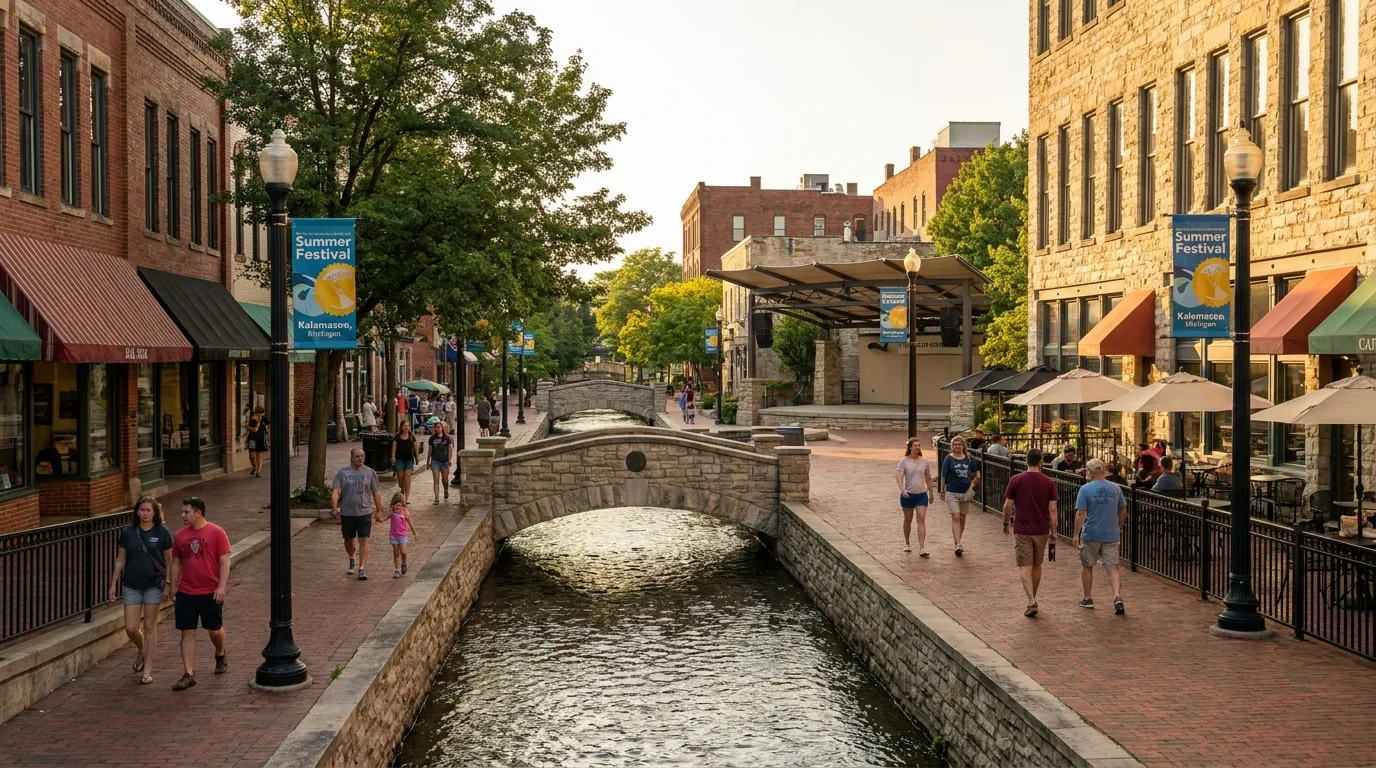
Kalamazoo's economy is a genuinely interesting mix: a strong pharmaceutical and life-sciences legacy going back to the Upjohn Company (its descendants and spinoffs, including Pfizer's continued regional presence and Stryker's global headquarters in nearby Portage, still anchor a lot of professional employment here), two major universities in Western Michigan University and Kalamazoo College, and Bronson Healthcare and Ascension Borgess as significant regional medical employers. That combination produces a professional population that skews toward science, healthcare, and higher education, women who tend to be comfortable with clinical detail and genuinely interested in the reasoning behind a treatment plan, not unlike the culture we described in Ann Arbor, though Kalamazoo's overall pace runs a notch slower and its cost of living and day-to-day rhythm feel distinctly more affordable and less frantic than the bigger metro markets on this list.
Southwest Michigan's climate sits at an interesting crossroads. It gets meaningful lake-effect cloud cover from Lake Michigan, similar in spirit to Grand Rapids though generally somewhat less intense, alongside real winters that still cut deeply into sunlight exposure from November through March. Portage, Texas Township, and the growing southern suburbs have brought a wave of newer, family-oriented professional households into the area over the past decade, many of them dual-career couples juggling Stryker or Pfizer schedules with kids' school and activity schedules, a pattern that tends to squeeze self-care and preventive health appointments to the very bottom of the list, exactly the kind of situation where symptoms get normalized for years before anyone finally asks for real answers.
Kalamazoo's relative affordability compared to Grand Rapids, Ann Arbor, or the Chicago suburbs many transplants come from also shapes the local conversation around healthcare spending in an interesting way. Women who moved to Kalamazoo specifically for a lower cost of living sometimes carry an instinct to be especially frugal about discretionary health spending, treating a comprehensive, direct-pay evaluation as a luxury to postpone rather than a genuine investment in years of better function and energy. We understand that instinct, and we'd simply encourage weighing it against the actual cost, in time, energy, and quality of life, of continuing to live with symptoms that have already been going on for years.
Bronson Healthcare and Ascension Borgess, Kalamazoo's two major hospital systems, mirror the same structural reality described in other Michigan metro sections: excellent for acute and specialty care, but not typically structured to offer the kind of unhurried, root-cause hormone and metabolic evaluation this article describes. For a lot of Kalamazoo-area women working in or around these systems, or around the pharmaceutical research culture Upjohn's legacy left behind, there's a particular appreciation for evidence and clinical rigor once they encounter a provider who can actually show them the data behind a treatment recommendation, rather than asking them to simply trust a generic protocol.
Kalamazoo also serves as a natural hub for a broader swath of southwest Michigan, Battle Creek, Portage, Paw Paw, South Haven along the lakeshore, and the string of small towns along the I-94 corridor toward the Indiana border, many of which have historically had limited access to specialists without a drive into Kalamazoo or, further, into Grand Rapids. This is another region where telehealth doesn't just add convenience, it closes a genuine access gap that existed for years before virtual care became a realistic clinical option.
For patients throughout Kalamazoo, Portage, Battle Creek, Paw Paw, South Haven, and the broader southwest Michigan region, care follows the same telehealth model described in Section 2, with local lab draw access through Quest Diagnostics and Labcorp locations across Kalamazoo, Calhoun, and Van Buren counties.
Kalamazoo College and Western Michigan University also bring a meaningful population of academic and administrative staff into the mix, adding another thread of the research-literate, question-asking patient profile we've described in both Ann Arbor and Madison. And the city's genuinely strong arts and music scene, WMU's well-regarded music program, a lively downtown built around the Kalamazoo Mall pedestrian district, a comparatively lower cost of living than Grand Rapids, gives Kalamazoo a livability that a lot of longtime residents are quietly proud of, even as the city stays out of the statewide spotlight that Grand Rapids and Detroit tend to command.
Consider a composite patient we'll call Priya, a 39-year-old research scientist at Stryker in Portage. She's meticulous by training and temperament, someone who tracks her sleep, her macros, and her workouts with real discipline. Yet over the past year, her weight has crept up despite no meaningful change in her habits, and she's started noticing hair thinning that alarms her more than she's admitted to anyone. Her primary care visit ran the standard panel and came back unremarkable. Priya isn't a real patient, but her precision and frustration reflect something we see constantly in Kalamazoo's science-and-research-heavy population: patients who have already ruled out the obvious explanations through their own careful tracking, and who need a provider willing to look at markers a standard panel simply doesn't include, complete thyroid antibodies, DHEA-S, and a fuller hormonal picture, rather than being told once again that everything "looks normal."
South Haven and the Lake Michigan shoreline communities bring their own seasonal rhythm into the mix, a summer tourism economy that brings a burst of activity and income each year, followed by a much quieter, greyer off-season that can make winter fatigue feel especially pronounced by contrast. Women running small businesses tied to that tourism economy, inns, shops, restaurants, often describe an exhausting all-or-nothing annual cycle: sprinting through summer, then crashing into a winter that never quite feels like genuine rest, more like depletion with nowhere left to spend the energy they don't have.
If you're searching from Kalamazoo, Portage, Battle Creek, Paw Paw, South Haven, or anywhere in southwest Michigan, know that this region's slightly smaller-market status has never meant smaller access to the same comprehensive, root-cause care available in Grand Rapids or Detroit. The same testing, the same provider, and the same depth of visit are available to you exactly as they are to a patient three counties over.
Milwaukee & Southeast Wisconsin
Medical weight loss in Milwaukee marks a real transition point in this guide, the first Wisconsin market, and the one most likely to be the anchor city for a large share of Wisconsin readers the same way Grand Rapids anchors Michigan. Hormone therapy in Milwaukee deserves the same level of depth we gave metro Detroit, because Milwaukee is, in its own way, Wisconsin's comparable metro powerhouse, with its own distinct culture that has nothing to do with copying either Michigan city.

Milwaukee is, first, a healthcare and manufacturing town, anchored by Froedtert Health and the Medical College of Wisconsin, Aurora Health Care (now part of Advocate Health), Children's Wisconsin, and a still-significant manufacturing base that traces back to the city's brewing and heavy-industry history. Add to that a fast-growing professional and financial services sector downtown along Water Street and the Historic Third Ward, and you get a working population that spans everything from hospital shift workers to corporate professionals to a strong contingent of small business owners and entrepreneurs, a genuinely blue-collar-meets-white-collar city in a way that shapes how women here think about their health: practical, no-nonsense, and generally skeptical of anything that sounds like a trend rather than something backed by real evidence.
Southeast Wisconsin's climate compounds the same seasonal challenge we've described throughout Michigan, but often more intensely. Milwaukee and its surrounding suburbs sit under heavy cloud cover for a striking share of the year, with grey conditions common from November straight through April, and the wind off Lake Michigan in the winter months adds a bitter edge that keeps most people indoors far more than they'd like. Vitamin D deficiency on Milwaukee-area lab panels tracks right alongside what we see in Grand Rapids and Detroit, unsurprising given the shared latitude and lake influence, and it remains one of the most common, most overlooked contributors to the fatigue and low mood so many Milwaukee-area women chalk up to "just another Wisconsin winter."
If this pattern of exhaustion and weight resistance sounds familiar beyond what's covered here, our statewide guide, Gaining Weight and Exhausted After 40? What Every Wisconsin Woman Needs to Know, goes deeper on the Wisconsin-wide version of this pattern.
There's also a specific food and drink culture here worth naming honestly, because pretending it doesn't exist would undercut the genuine local specificity this article promises. Wisconsin's dairy heritage, Friday night fish fries, the Brewers game bratwurst-and-beer tradition, and a supper club culture built around hearty, comforting food are genuinely part of what makes Milwaukee Milwaukee, and none of that needs to be treated as a problem to solve. What it does mean, clinically, is that the same seasonal shift toward heavier, richer food that we see across the whole Great Lakes region shows up with real intensity here, layered on top of already-reduced winter activity levels, and that combination of factors, low sunlight, seasonal eating patterns, and often demanding hospital or manufacturing shift schedules, adds up to a specific and testable set of pressures on thyroid function, insulin sensitivity, and hormonal balance.
Consider a composite patient we'll call Dana, a 44-year-old nurse manager at a Milwaukee-area hospital living in Wauwatosa. Her rotating shift schedule has never fully allowed for consistent sleep, and over the past few years, what used to be manageable fatigue between shifts has turned into a bone-deep exhaustion that doesn't lift on her days off. She's gained weight steadily despite genuinely trying to eat well between twelve-hour shifts, and her own colleagues, other nurses, have quietly told her "yeah, that's just what shift work does to you after forty." Dana isn't a real patient, but her situation reflects something we hear constantly from Milwaukee-area healthcare workers specifically: an assumption that chronic fatigue and weight resistance are simply the unavoidable cost of shift work, when disrupted circadian rhythm is, in fact, a well-documented, testable driver of cortisol and thyroid dysfunction, not something to just push through indefinitely.
For patients throughout Milwaukee and its surrounding communities, Wauwatosa, Brookfield, Waukesha, Mequon, Shorewood, Oak Creek, and the broader southeastern Wisconsin region, care follows the same telehealth model described in Section 2, built specifically to accommodate schedules like Dana's rotating shifts or a demanding downtown corporate calendar, with local lab draw access through Quest Diagnostics and Labcorp locations spread throughout Milwaukee, Waukesha, and Ozaukee counties, including options with early morning hours that fit around a shift-work schedule far better than a traditional 9-to-5 clinic ever could.
Milwaukee's own sense of civic identity, proud, a little defensive about being overshadowed by Chicago, deeply loyal to local institutions from the Brewers to Marquette University to the small businesses that give neighborhoods like Bay View and Riverwest their character, tends to produce a similar toughness-first attitude toward personal health as the one described in Detroit above. Milwaukee women often describe a reluctance to make "too big a deal" out of symptoms that, on reflection, have genuinely been affecting their quality of life for years. That instinct deserves respect as part of what makes Milwaukee Milwaukee, and it is also worth gently pushing back on when it keeps a woman from getting real answers about her own health.
It's worth pausing on Milwaukee's relationship to Chicago as well, since it shapes local expectations in a subtle but real way. Milwaukee sits close enough to Chicago, roughly ninety minutes south, that a meaningful number of Milwaukee-area professionals have spent time in Chicago for school, early career jobs, or family, and have seen firsthand the kind of specialized, concierge-style healthcare options available in a much larger metro market. That exposure tends to make Milwaukee women more likely to ask, directly, why a Chicago-caliber level of comprehensive, unhurried care isn't more readily available closer to home. It's a fair question, and it's exactly the expectation this practice, though headquartered across the lake in Grand Rapids, was built to meet for Wisconsin patients without requiring the drive to Illinois.
Milwaukee's suburban ring adds its own texture worth naming individually. Brookfield and Elm Grove carry an affluent, corporate-executive character built around the Milwaukee Regional Medical Center campus and the Brookfield Square business corridor, women here often in senior leadership roles managing large teams alongside a demanding household schedule. Waukesha, the county seat and a manufacturing and healthcare hub in its own right (home to GE Healthcare's diagnostic imaging headquarters), has a more middle-market, family-oriented professional culture. Mequon and the North Shore suburbs along Lake Michigan skew toward established, multigenerational households with a slower, more settled pace than downtown Milwaukee itself. Each of these communities searches for care a little differently, but the underlying pattern, symptoms dismissed as normal aging or normal stress, standard labs that miss the fuller picture, is remarkably consistent across all of them.
It's also worth acknowledging Milwaukee's real economic diversity directly, because "medical weight loss Milwaukee" searches come from a genuinely wide income and lifestyle range, from Third Ward condo residents working downtown finance jobs to Oak Creek manufacturing employees to South Side small business owners. Root-cause, comprehensive care has, historically, often been marketed and priced as though it were exclusively for the first group. We'd rather be direct about the fact that the same telehealth model, and the same conversation about cost and structure available on a free discovery call, is open to anyone in the Milwaukee area asking the question, regardless of which of those categories describes your day-to-day life.
Shorewood and the smaller lakefront communities just north of downtown Milwaukee carry their own distinct, walkable, tightly-knit character, popular with young families and professionals who want city access without a full suburban commute, while Oak Creek and the communities south of Milwaukee lean more industrial and working-class, home to a significant manufacturing and logistics workforce whose physically demanding schedules echo the shift-work patterns we described in Dana's story above. Across this entire range, from Shorewood's walkable streets to Oak Creek's industrial parks, the same underlying reality holds: the video visit and lab draw structure described in Section 2 works identically regardless of which version of Milwaukee's economy your daily life runs on.
If you're in Milwaukee, Wauwatosa, Brookfield, Waukesha, Mequon, Shorewood, Oak Creek, or anywhere in southeast Wisconsin, whether your schedule is built around hospital shifts, a downtown office, or a small business you're running yourself, the same comprehensive, root-cause approach available in Grand Rapids is available to you, structured specifically around the kind of schedule Milwaukee actually runs on rather than asking you to bend your life around a fixed appointment slot.
Madison & Dane County
Medical weight loss in Madison WI brings us to a city that, much like Ann Arbor, has its own distinct gravitational pull, built around a university and state government rather than corporate or industrial employment, and it deserves the same specific, non-templated treatment we gave Ann Arbor rather than a copy-paste of Milwaukee's section with a new city name swapped in.

Madison sits on an isthmus between Lake Mendota and Lake Monona, a genuinely unusual geography that shapes the whole feel of the city, walkable, water-adjacent, and built around the University of Wisconsin-Madison and the state Capitol in roughly equal measure. Between UW-Madison's massive employment footprint (faculty, researchers, and one of the largest university medical systems in the state through UW Health), state government offices, and a fast-growing biotech and health-tech sector that's developed around the university's research strength, Madison's professional population looks a lot like Ann Arbor's in composition: highly educated, research-literate, and generally inclined to ask detailed questions about mechanism and evidence rather than accept a treatment plan at face value.
That academic, research-driven culture shapes the kind of stress Madison women tend to carry, the grant cycles and tenure pressure of university research, the slower-moving but relentless pace of state bureaucracy, and, for the growing number of women working in Madison's biotech and health-tech startups, the particular intensity of an industry still proving itself. Add Madison's genuinely excellent farmers market culture (the Dane County Farmers' Market around the Capitol Square is one of the largest producer-only markets in the country) and a strong local, whole-food eating culture, and you get another version of the pattern we described in Ann Arbor: women who are already doing most things "right" by conventional wisdom, eating reasonably well, staying active on Madison's extensive bike trail network, and still hitting a wall of fatigue and weight resistance that lifestyle changes alone haven't touched.
Madison's winters are genuinely serious, Wisconsin's continental climate means colder average temperatures than Milwaukee's lake-moderated winters, alongside the same extended stretch of low-sunlight months that drives vitamin D deficiency across this entire region. The lake-effect snow off Lake Mendota and Lake Monona adds its own local flavor to an already long winter season, and the isthmus's wind tunnel effect between the two lakes makes February in Madison feel every bit as long as it is.
For patients throughout Madison, Middleton, Fitchburg, Sun Prairie, Verona, and the broader Dane County region, care follows the same telehealth model described in Section 2, with local lab draw access through Quest Diagnostics and Labcorp locations spread throughout Dane County, easily reachable regardless of whether your daily life centers on campus, the Capitol, or one of Madison's outlying suburbs.
Consider a composite patient we'll call Beth, a 45-year-old state agency program manager living in Middleton. Her career has been steady and well-regarded for two decades, but over the past three years she's noticed a fog settling over her afternoons that makes it hard to trust her own judgment in meetings the way she used to, along with a weight shift that no adjustment to her running routine along the Ice Age Trail has managed to touch. She'd chalked it up to "just being in her mid-40s" until a friend, already a patient, encouraged her to actually get a comprehensive panel done rather than accept that explanation at face value. Beth isn't a real patient, but her hesitation, the sense that this must just be normal aging rather than something worth investigating, is one of the most common attitudes we encounter among accomplished Madison-area women in exactly her position.
Madison's civic character leans progressive and community-minded relative to a lot of the rest of the Midwest, with a strong emphasis on public health, active living, and preventive wellness woven into the city's identity, extensive bike infrastructure, a famously strong local food movement, a culture that generally values evidence and expertise. That same culture, ironically, can make it harder for some Madison women to acknowledge when something is genuinely wrong, because so much of the city's collective identity is built around already living the "healthy lifestyle" that's supposed to prevent exactly these kinds of problems. When a woman who bikes to work, shops the farmers market, and generally does what public health guidance recommends still finds herself exhausted and unable to lose weight, the dissonance between her lifestyle and her symptoms can be its own source of frustration, on top of the symptoms themselves.
UW Health's presence in Madison creates the same pattern we've described in Ann Arbor with Michigan Medicine, an outstanding academic health system for specialty and acute care that isn't typically structured around unhurried, root-cause hormone and metabolic evaluation. Madison women, often among the most research-literate patients in this entire guide given the university's influence on the city's culture, tend to ask sharper, more specific questions in their first visit than almost any other market, and that's a genuine asset in a root-cause relationship built around real explanation rather than a scripted protocol.
Madison's growth over the past decade has also brought a wave of newer residents into surrounding communities like Middleton, Fitchburg, Sun Prairie, and Verona, many drawn by Epic Systems' sprawling Verona campus, one of the largest healthcare software employers in the country, and a major source of Madison-area tech and professional jobs. Epic's culture is famously intense and insular, long hours, an all-consuming campus environment, and a workforce that skews young and driven. Women in this specific professional cohort often present with a pattern we see distinctly here: significant, sustained work stress starting relatively early in their careers, sometimes their late 20s or early 30s, that by their late 30s and 40s has compounded into exactly the kind of cortisol-driven weight resistance and fatigue this article has described throughout, arriving a few years earlier than the more typical over-40 pattern seen elsewhere.
If you're in Madison, Middleton, Fitchburg, Sun Prairie, Verona, or anywhere in Dane County and you've already tried "doing everything right" without the results to match, that gap between effort and outcome is exactly the kind of pattern comprehensive hormone and metabolic testing is built to explain, not another reason to try harder at something that was never the actual problem.
Green Bay & Northeast Wisconsin
Medical weight loss in Green Bay searches come from a region with a genuinely different character than Milwaukee or Madison, smaller, tighter-knit, and built around a different economic backbone entirely, and it earns the same real, researched treatment as every other city in this guide.

Green Bay's identity is inseparable from two things: the paper and packaging industry that has anchored the regional economy for well over a century (Green Bay is still sometimes called the "Toilet Paper Capital of the World," a nickname the region wears with genuine pride), and, of course, the Packers, whose presence shapes the local calendar, culture, and sense of community identity in a way few other cities in this guide can match. Between the paper mills, a strong logistics and shipping sector tied to the Port of Green Bay on the Fox River, and a healthcare sector anchored by Bellin Health and Hospital Sisters Health System (HSHS St. Vincent), the regional economy leans more industrial and blue-collar than Madison's university-and-biotech base, closer in spirit to Kalamazoo's practical, no-nonsense professional culture than to Milwaukee's bigger-city mix.
That economic backbone shapes daily life for Green Bay-area women in specific ways: often longer-tenured jobs with the same employer, a strong sense of community and extended family nearby, and, especially for women working manufacturing or logistics schedules, real physical demands layered on top of household responsibilities. Northeast Wisconsin's winters are genuinely harsh, closer to Lake Michigan's northern reaches, with lake-effect snow off Green Bay itself adding to an already long, cold season that stretches the sunlight deficit even further than what we've described in Milwaukee or Madison. Vitamin D deficiency shows up reliably on Green Bay-area lab panels, often more pronounced than in the state's southern cities given the more northern latitude and longer winter season.
Green Bay also functions as a genuine regional hub for northeast Wisconsin more broadly, Appleton, Oshkosh, and the Fox Cities corridor to the south, and smaller communities stretching up toward Door County and the Door Peninsula to the northeast, a stretch of Wisconsin that has historically had limited access to specialized care without a significant drive. Telehealth changes that calculus meaningfully here, closing a real access gap for women well outside Green Bay proper who would otherwise have had few realistic options for the kind of comprehensive, root-cause hormone and metabolic care this article describes.
For patients throughout Green Bay, Appleton, Oshkosh, the Fox Cities, and the broader northeast Wisconsin region, care follows the same telehealth model described in Section 2, with local lab draw access through Quest Diagnostics and Labcorp locations spread across Brown, Outagamie, and Winnebago counties.
Bellin Health and HSHS St. Vincent, Green Bay's two major hospital systems, serve the region well for acute and specialty needs, but, as in every other Michigan and Wisconsin metro market covered in this article, aren't typically structured around the unhurried, comprehensive, root-cause evaluation of hormonal weight resistance this guide describes. For a region with a strong self-reliant, don't-make-a-fuss cultural streak, that gap has often meant women simply adapting to symptoms rather than seeking out care that, until telehealth, would have required a significant drive to find elsewhere in the state.
Consider a composite patient we'll call Sandra, a 46-year-old operations supervisor at a Green Bay-area paper mill, married to a man who works in logistics at the port. Her schedule has been physically demanding for two decades, on her feet through long shifts, and she's always considered herself tough, someone who doesn't complain and doesn't miss work. Over the past several years, though, she's noticed a fatigue that feels categorically different from ordinary tiredness, a kind of exhaustion that a weekend off no longer touches, along with joint aches and weight gain she can't explain given that her activity level, if anything, has stayed the same. Sandra isn't a real patient, but her story reflects something specific to the industrial, physically demanding jobs common throughout northeast Wisconsin: an assumption that fatigue is just the accumulated cost of decades of hard work, when in many cases it's a testable, treatable hormonal or thyroid pattern hiding underneath that assumption.
The Fox Cities corridor, Appleton, Neenah, Menasha, Oshkosh, deserves its own mention as well. This stretch along the Fox River has its own paper and manufacturing heritage alongside a growing healthcare and education sector (Fox Valley Technical College and a strong regional presence from ThedaCare and Ascension), and functions almost as a secondary hub distinct from Green Bay itself, with many residents commuting between the two areas depending on where their employer sits.
Green Bay's tight community fabric, the kind of place where people tend to know their neighbors, their kids go to school together for a full K-12 stretch, and community identity runs deep around institutions like the Packers and the region's churches and civic organizations, brings its own particular dynamic to healthcare decisions. There is often a real, warranted trust in local providers built over years of relationship, alongside an understandable hesitation about anything that sounds unfamiliar or comes from outside the immediate community. We'd simply note that a telehealth relationship with a Michigan-based, Wisconsin-licensed provider does not require abandoning that trust in local care. It can function as a specialized layer working alongside your existing local relationships, exactly as described in Section 2, rather than replacing them.
Door County, the peninsula stretching northeast of Green Bay into Lake Michigan, deserves its own brief mention too. Known statewide as a summer tourist destination, cherry orchards, small harbor towns, a much quieter, more isolated character defines the rest of the year for the women who actually live there full time. For year-round Door County residents, the nearest comprehensive specialist care has historically meant a drive down to Green Bay at minimum, often further, making this one of the clearer examples in this entire article of a community telehealth was built to reach.
If you're in Green Bay, Appleton, Oshkosh, the Fox Cities, or anywhere in northeast Wisconsin, a region that has historically had to travel for specialized care far more than Milwaukee or Madison residents ever have, telehealth means that gap has genuinely closed. The same provider, the same comprehensive testing, and the same depth of care are available to you exactly as they are in Wisconsin's larger cities.
Smaller Communities and Rural Michigan & Wisconsin
If you've read this far without seeing your town named, the Upper Peninsula, the Thumb, northern Michigan beyond Traverse City, west-central Wisconsin, the Driftless Area, farm country anywhere between the cities we've already covered, we want to say something directly, because it would be a real disservice to bury this point as a footnote: this section is not an afterthought. It may be the most important section in the entire article for a specific reason. Women in smaller and rural communities across Michigan and Wisconsin have, historically, had the least access to specialized care of any kind, and the most reason to assume, based on decades of lived experience, that "real" healthcare innovation happens somewhere else and eventually, maybe, trickles down to them. That assumption made sense for a long time. It doesn't anymore, and we want to be genuinely convincing about why, not just reassuring in a vague, feel-good way.
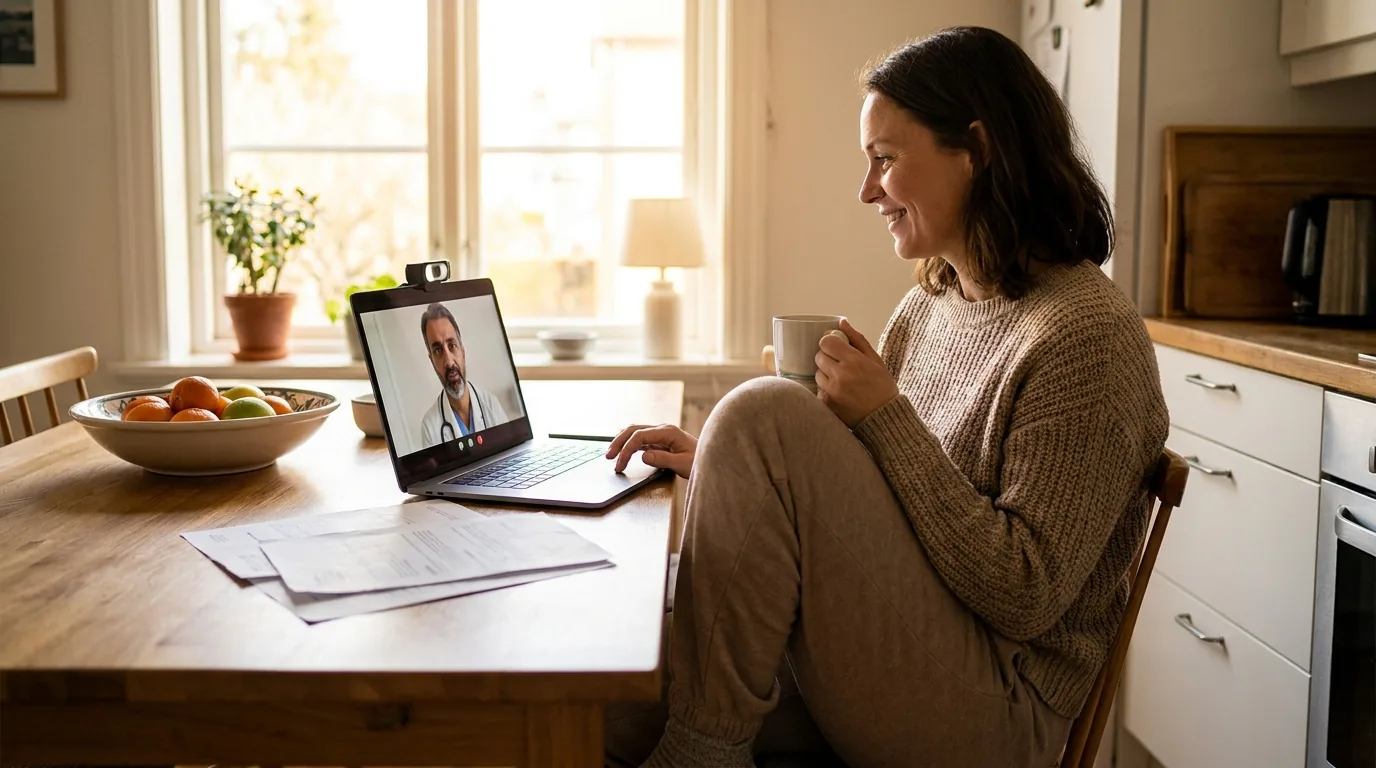
We also want to speak directly to something we hear from rural patients more than any other group: a worry that a telehealth provider based in Grand Rapids simply won't understand their day-to-day reality the way a local provider might. It's a fair worry, and the honest answer is that understanding comes from listening, not proximity. A thorough intake conversation asks about your actual daily life, your schedule, your responsibilities, your access to resources like lab draw sites and pharmacies, specifically because those details shape what a realistic treatment plan looks like for you. A provider who takes the time to understand that a dairy farm schedule or a long commute to town changes what "take this twice daily with food" realistically means for your day is doing the work that matters, regardless of which city that provider happens to be licensed from.
It's also worth acknowledging directly that "rural" describes a genuinely wide range of situations across Michigan and Wisconsin, not one single experience. It can mean a small city of ten or fifteen thousand people with its own hospital and a handful of specialists, like Alpena or Wisconsin Rapids. It can mean a township of a few hundred people organized around a single crossroads and a church, common throughout both states' agricultural counties. It can mean a genuinely remote stretch of the Upper Peninsula where the nearest grocery store is thirty minutes away, let alone the nearest specialist. Whichever version of rural describes your actual life, the same underlying point holds: the video visit and lab draw model described in Section 2 does not require a hospital, a specialist, or even much local infrastructure at all. It requires an internet connection and a nearby lab draw site, both of which reach far further into rural Michigan and Wisconsin than most people assume.
Think about what specialist access has traditionally required if you live in, say, Alpena, or Ironwood, or Rhinelander, or a farm outside Chippewa Falls: identifying a specialist, often an hour or more away, taking a half or full day off work or off the farm, arranging the drive, and hoping the eventual appointment was worth the disruption. For many women in these communities, that math simply never worked, not because the desire for better care wasn't there, but because the logistics made it functionally inaccessible. That is precisely the barrier telehealth removes, not partially, not as a lesser substitute, but genuinely and completely for the kind of visit-and-conversation-based care this practice provides. A woman on a dairy farm outside Wausau and a woman in a downtown Milwaukee high-rise have access to the exact same video visit, the same hour of Katie's time, the same comprehensive lab panel interpretation, the same follow-up relationship. The video call does not know or care how far you are from the nearest city.
We do want to be honest about one thing, in keeping with the plain-spoken approach that runs through this entire article: the one place where rural geography can genuinely matter is lab draw logistics. In Grand Rapids or Milwaukee, you likely have several Quest Diagnostics or Labcorp locations within a short drive, often with same-day or next-day availability. In a smaller or more remote community, the nearest draw site might be further away, and availability might mean planning your errands around a lab visit rather than popping in on your lunch break. We would rather tell you that directly than pretend the experience is identical down to the last detail, because that kind of overpromising is exactly the sort of thing that erodes trust once someone actually lives the reality of it. What we can tell you honestly is that Quest Diagnostics and Labcorp both maintain draw sites in the vast majority of Michigan and Wisconsin counties, including many smaller communities, and for the relatively small number of situations where a draw site genuinely isn't within a reasonable distance, that's exactly the kind of logistical detail worth talking through directly on your discovery call, so you know precisely what to expect before you commit to anything.
Beyond the practical logistics, there's a cultural and emotional piece worth naming too. Rural Michigan and Wisconsin carry a particular ethic around health: a tendency to push through, to not make a fuss, to assume that fatigue and weight gain are just part of the deal that comes with farm work, physical labor, or simply getting older in a community where everyone is expected to keep going. We hear this constantly from patients in smaller communities: a genuine surprise that someone actually wants to sit with them for a full conversation, run comprehensive labs, and treat their fatigue and weight resistance as a real medical question rather than something to quietly tolerate. That instinct to push through deserves respect, it often reflects real resilience, but it also means rural women are, if anything, more likely to have gone years longer than their urban counterparts without anyone actually investigating what's driving their symptoms.
Winter, too, hits rural Michigan and Wisconsin especially hard from a vitamin D and seasonal mood standpoint. The Upper Peninsula and northern Wisconsin see some of the shortest daylight hours and heaviest, longest-lasting snow cover anywhere in the continental United States outside the far north, and for women already managing the physical demands of farm work, small-business ownership, or a long commute to the nearest larger town for work, that seasonal darkness compounds an already heavy load.
The Upper Peninsula deserves its own specific mention, because it is culturally and geographically distinct even from the rest of rural Michigan. Communities like Marquette, Ironwood, Escanaba, and Sault Ste. Marie operate at a genuine distance from the state's major medical centers, a reality "Yoopers" have navigated for generations by necessity, developing a strong culture of self-reliance and tight community support networks. Winters here are longer and more severe than almost anywhere else in the Lower 48, with Marquette regularly among the snowiest cities in the country. For women in the UP, the historical reality has often been that specialized care meant either going without or making the multi-hour drive down to Green Bay or across to a Lower Peninsula city, an option that simply wasn't realistic for most working women and mothers. A telehealth visit that starts on time from a kitchen table in Marquette is not a minor convenience in this context. It is the difference between having access to this kind of care at all and not having it.
Wisconsin's Driftless Area, the unglaciated region spanning southwestern Wisconsin around Viroqua, Richland Center, and Prairie du Chien, along with the state's broader dairy and farm country stretching toward Eau Claire and the Chippewa Valley, presents a similar picture. This is genuine agricultural country, dairy farming remains a defining industry and identity here even as the number of working farms has declined over recent decades, and the women running households in this region are often managing farm labor, small-business bookkeeping for the family operation, and off-farm jobs simultaneously. The rhythm of farm life, dictated by milking schedules, planting and harvest seasons, and weather rather than a fixed nine-to-five, has historically made any healthcare appointment requiring a scheduled drive into town a genuine logistical puzzle. A video visit that can happen from the farmhouse between chores removes that puzzle almost entirely.
Transportation deserves one more honest mention, since it compounds everything else described in this section. In a rural community, a single vehicle household, an unreliable car, or a farm schedule that makes any trip away feel like it costs more than the hour it actually takes, can turn even a nearby lab draw site into a genuine logistical hurdle. This is exactly why the lab draw piece of this model matters as much as it does. A single, relatively short local errand for bloodwork is a fundamentally different ask than a multi-hour round trip for the entire visit, and for a lot of rural patients, that difference is the entire reason this kind of care finally becomes realistic.
It's worth addressing broadband directly, since spotty rural internet is a legitimate, practical concern rather than something to wave away. Michigan and Wisconsin have both made significant state and federal investment in rural broadband expansion over recent years, and connection quality in most rural communities across both states is genuinely sufficient for a standard video visit today, even if it wasn't a decade ago. In the relatively small number of situations where connectivity is still unreliable, phone-based visits remain a real fallback option, ensuring a spotty internet connection is never the reason a woman in a rural community goes without this kind of care.
Consider a composite patient we'll call Karen, a 52-year-old dairy farmer's wife outside Chippewa Falls who also keeps the books for the family operation and works part-time at the local school. Her days start before 5 a.m. and rarely have a true stopping point. She'd noticed for at least three years that her weight had shifted, her sleep had become unreliable, and her patience, something she'd always prided herself on, had grown thin in a way that worried her. She'd assumed, like many women in farm communities, that this was simply what midlife on a working farm looked like, and that seeking specialized care would mean a level of time away from the farm and the family that wasn't realistic to ask for. Karen isn't a real patient, but her situation reflects exactly the population Section 11 exists to speak to directly: women whose daily responsibilities make a traditional in-person specialist visit almost unthinkable, and who have, as a result, gone years without anyone actually investigating what's driving their symptoms.
There's a version of this same story on the Wisconsin side worth naming too, the string of smaller cities along Lake Michigan's western shore south of Milwaukee, Racine and Kenosha, and the smaller communities further inland like Beloit and Janesville near the Illinois border. These are historically industrial towns, some still recovering from decades of manufacturing decline, with their own version of the practical, self-reliant attitude toward health described throughout this section. Women here have told us, often almost apologetically, that they assumed the kind of comprehensive care described in this article was reserved for Milwaukee or Madison, bigger cities with bigger healthcare infrastructure. It isn't. It reaches Racine, Kenosha, Beloit, and Janesville exactly the way it reaches every other community named in this guide.
Michigan's Thumb region, Bay City, Saginaw, Port Huron, and the farm communities in between, deserves its own brief mention as well. This is another part of the state with a strong agricultural and small-manufacturing identity, historically underserved by specialist care relative to the state's western and southeastern metro corridors, and home to exactly the same pattern described throughout this section: women who have adapted around symptoms for years, assuming specialized care simply wasn't a realistic option given the drive to Detroit, Lansing, or Flint it would have required.
If you live in a smaller town or rural community anywhere in Michigan or Wisconsin, whether that's the Upper Peninsula, the Thumb, the Driftless Area, dairy country around Eau Claire or Wausau, or farm country in between the cities named throughout this article, the message of this entire section is simple and we mean it without qualification: you are not an edge case, you are not a lesser priority, and you are not too far away. You are exactly who telehealth was built to reach.
You don't have to live near a big city for this to be real, accessible care.
If you're in a smaller town or rural community anywhere in Michigan or Wisconsin, book your free 15-minute discovery call and see for yourself how straightforward this actually is, wherever you're calling in from.
Book Your Free 15-Minute CallWhat to Actually Look For in a Provider, No Matter Where You Live
We've spent eleven sections on geography, on making the case, city by city and county by county, that where you live in Michigan or Wisconsin is not the barrier you might have assumed it was. Now we want to shift entirely away from geography and talk about something more important: what actually distinguishes genuine root-cause care from the growing number of options that will happily take your money and hand you a prescription without ever answering the question you actually came in with, why is this happening to my body?
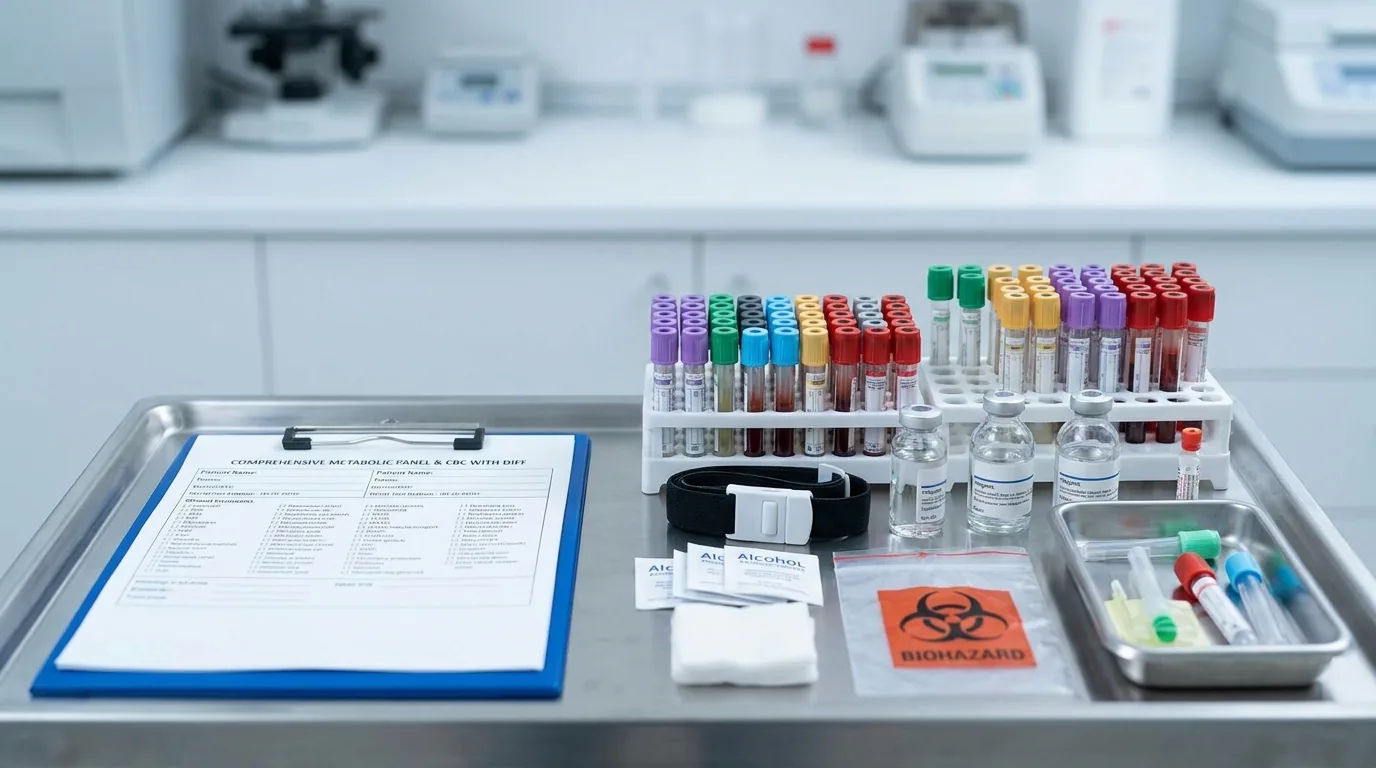
It's also worth being honest about cost expectations as part of evaluating any provider, since cost is often the unspoken question behind a lot of the hesitation we hear on discovery calls. Root-cause, comprehensive care, built around genuine time and detailed lab interpretation rather than a rushed, insurance-reimbursed visit, generally costs more out of pocket than a standard primary care copay, and it's reasonable to want to understand that investment clearly before committing to it. A trustworthy provider should be able to walk you through pricing plainly, without pressure, and should welcome direct questions about cost rather than deflecting them until after you've already committed.
This matters because the "medical weight loss" category has exploded in the last few years, largely on the back of GLP-1 medications like semaglutide and tirzepatide, and a wave of clinics, some legitimate, many not, have rushed in to capitalize on that demand. If you've done any searching at all in your own city, you've likely already encountered a version of this: a clinic offering a quick intake, a prescription within days, and minimal ongoing contact beyond a monthly refill. That model can work reasonably well for some people. But it is not the same thing as root-cause care, and if what actually brought you to this article was fatigue, brain fog, sleep disruption, or weight resistance that felt bigger than "I need an appetite suppressant," a prescription-first model without real investigation is likely to leave the underlying problem exactly where it started, even if the number on the scale moves for a while.
Here is what we'd genuinely encourage you to look for, wherever in Michigan or Wisconsin you end up seeking care, whether that's with this practice or somewhere else entirely, because you deserve an honest framework for evaluating this, not just a sales pitch dressed up as one.
Comprehensive Testing Before Any Treatment Plan
A provider genuinely interested in root causes will want a full picture before recommending anything, a complete thyroid panel (not just TSH, but free T3, free T4, and thyroid antibodies, which catch autoimmune thyroid patterns a TSH-only panel routinely misses), sex hormones appropriate to your age and symptoms (estrogen, progesterone, and testosterone, interpreted relative to where you are in your reproductive timeline, not against a single generic reference range), fasting insulin and glucose to assess metabolic health beyond a basic blood sugar check, inflammatory markers like hs-CRP, and key nutrients like vitamin D and B12, which, as you've read throughout this article, are disproportionately low across Michigan and Wisconsin given both states' limited winter sunlight. If a provider is willing to start you on medication before running anything beyond a basic metabolic panel, that's worth noticing.
Time to Actually Talk
Root-cause care requires a real conversation, your history, your symptoms, your lifestyle, what you've already tried, not a rushed ten-minute intake designed to get you to a prescription as quickly as possible. If your first visit feels transactional rather than exploratory, that's information.
An Ongoing Relationship, Not a One-Time Transaction
Hormonal and metabolic health is not a problem you solve in a single visit. It requires follow-up, adjustment based on how your body actually responds, and a provider who is still paying attention three months in, not just at intake. Ask any prospective provider directly how follow-up visits are structured, how often you'll be seen, and what happens if your first treatment plan needs adjusting. A confident, specific answer is a good sign. A vague one is worth noticing.
A Plan That's Actually Built Around Your Specific Results, Not a Template
Two women can walk in with nearly identical complaints, fatigue, weight resistance, brain fog, and walk out with meaningfully different treatment plans once their labs come back, because the actual drivers underneath similar symptoms are often different from woman to woman. If a clinic's plan looks essentially identical for every patient regardless of their lab results, that's a sign the labs aren't actually driving the treatment decisions.
Honesty About What a Treatment Can and Can't Do
Be genuinely wary of any provider or clinic promising guaranteed results, dramatic weight loss on a fixed timeline, or treating a GLP-1 medication as a standalone solution disconnected from the hormonal and metabolic picture underneath it. If you're currently on a GLP-1 medication and not seeing the results you expected, that's often a sign there's an underlying hormonal or metabolic factor working against the medication rather than with it, a pattern explored in detail in our complete guide to why Ozempic sometimes doesn't work for Michigan and Wisconsin women.
Real Clarity About Telehealth Versus In-Person, and About Licensing
As covered in Section 2, a legitimate telehealth provider should be entirely transparent about which states they're licensed to see patients in, and should never suggest they can offer in-person services in a location where they don't actually have a physical presence.
Willingness to Say "I Don't Know Yet" Rather Than Guess
Root-cause work sometimes involves genuine uncertainty, a lab result that doesn't fully explain your symptoms, a treatment that needs adjusting because the first approach didn't work as expected. A provider confident enough to say "we need more information before I can answer that" is, counterintuitively, a better sign than one who has an immediate, confident answer for absolutely everything on the first visit. Medicine involving hormones and metabolism is rarely that tidy, and a provider who pretends otherwise is often oversimplifying rather than genuinely engaging with your specific situation.
It's worth walking through what a genuine first visit actually includes, since "comprehensive" can otherwise stay a vague, unverifiable claim. A real first visit should include enough time, typically 45 minutes to an hour, to cover your full symptom history, not just your chief complaint, past and current medications and supplements, relevant family history, and your actual goals in your own words, not a goal a clinic assigns you based on your weight alone. It should result in a specific, individualized lab order rather than a one-size-fits-all panel applied to every patient regardless of symptoms. And it should end with a genuine explanation of what happens next, when you'll get results, how they'll be explained to you, and what the follow-up visit will cover, rather than a vague "we'll be in touch."
It's also worth naming what a genuinely good follow-up visit looks like, since the first visit tends to get most of the attention in how these practices market themselves, while the ongoing relationship is where the real work actually happens. A strong follow-up visit revisits your original goals, reviews how you've actually responded to any treatment started, whether that's a supplement protocol, hormone therapy, or a medication, adjusts dosing or approach based on new labs or how you're feeling, and gives you real space to raise anything new that's come up since your last visit. If a follow-up visit feels like a rubber stamp, a quick refill authorization with little discussion, that's a meaningfully different experience than the ongoing partnership this article has described throughout.
A few honest red flags are worth naming directly, because you deserve to walk into any provider relationship, here or elsewhere, with your eyes open. Be cautious of any practice that quotes a price or starts treatment before ever reviewing your labs. Be cautious of language that promises a specific number of pounds lost in a specific timeframe, bodies don't respond on a marketing schedule, and a provider who guarantees outcomes is telling you something about their sales approach, not their clinical judgment. Be cautious of a provider who can't clearly explain why a particular medication or supplement is being recommended for your specific lab results, versus recommending the same protocol to every patient regardless of what their testing actually shows. And be cautious of any telehealth provider who is vague or evasive about which states they're actually licensed in when you ask directly, that should be an immediate, confident answer, not a hedge.
This is exactly the standard this practice holds itself to, and it's why this article was worth 20,000 words instead of a single page with a map pin on it. If any of what you've read throughout this guide, the emphasis on comprehensive testing, the honesty about telehealth's real capabilities and real limits, the refusal to overpromise on rural lab logistics, resonates with what you're actually looking for, we'd encourage you to look at the services page for a full breakdown of how a discovery call, comprehensive lab panel, and ongoing partnership actually work together.
A Quick Note on How This Looks Different by Life Stage
Root-cause care isn't one-size-fits-all, and it's worth naming briefly how the picture tends to shift depending on where you are in your reproductive and hormonal timeline, regardless of which Michigan or Wisconsin city you're reading this from. Women in their mid-30s are often the most likely to be dismissed, told they're "too young" for perimenopause-related symptoms, when early perimenopause can genuinely begin in the mid-30s for a meaningful subset of women. Women in their 40s are the group most likely to have symptoms attributed to "just getting older" without any real investigation into what's changing hormonally. Women navigating PCOS often carry a specific frustration of their own, having been told for years that weight resistance is simply part of having PCOS, without ever being offered a comprehensive plan that actually addresses the underlying insulin resistance driving much of that pattern. And women already on, or considering, bioidentical hormone therapy deserve a provider who treats that decision with the same rigor and individualized dosing as any other part of a comprehensive plan, not a one-size-fits-all pellet or cream applied the same way to every patient regardless of their actual lab values.
Because this article has focused so heavily on the "where," we also want to point you toward the deeper "why" resources already on this site, in case your own situation matches one of these more specifically than the general overview given here. If you suspect your hormones and weight resistance are tied to being over 40, our Ultimate Guide to Hormones and Weight Resistance Over 40 goes deep on exactly that. If you're in your mid-30s and assumed perimenopause was still a decade away, our guide to perimenopause in your mid-30s addresses that misconception directly. If you're currently on, or considering, hormone replacement, our complete guide to bioidentical hormone therapy walks through the risks, benefits, and what actually happens. If PCOS has been part of your story, especially if you're in your 30s and have been told your symptoms don't fit the "typical" picture, our guide to PCOS and weight resistance in your 30s was written specifically for you. And if a GLP-1 medication hasn't delivered the results you expected, the Ozempic guide linked above is worth reading in full.
Wherever you live, and whichever of these resources speaks most directly to your situation, the throughline is the same: real answers require real investigation, not a quick prescription and a hope for the best.
Comprehensive FAQ
Do I need to live near Grand Rapids to be a patient?
No. While Novaleo Weight & Wellness is headquartered in Grand Rapids, care is delivered through telehealth to patients anywhere in Michigan or anywhere in Wisconsin. Your distance from Grand Rapids has no bearing on your ability to become a patient or on the quality of care you receive.
How does telehealth lab work actually happen if my provider isn't local to me?
After your video visit, if comprehensive labs are appropriate, an order is sent to a local lab draw site near you, typically a Quest Diagnostics or Labcorp location. You visit that site in person for the actual blood draw, and results are routed back electronically for your provider to review and discuss with you at your follow-up visit.
Can I switch between in-person and virtual visits?
This practice operates as a telehealth-based model across Michigan and Wisconsin. All visits, including your initial discovery call and ongoing follow-ups, are conducted via secure video. What is local is the lab draw itself, not the medical visits.
Is care different in a smaller town versus a big city?
The clinical care itself, the video visit, the comprehensive testing, the provider relationship, is identical regardless of city size. The one area where a genuine difference can exist is lab draw site proximity, which may require more advance planning in a more rural area. This is worth discussing directly on your discovery call if you have questions about draw site availability near you.
What if I live right on the Michigan-Wisconsin border?
Because licensure is tied to the state you're physically located in at the time of your visit, patients on either side of the border are fully eligible, provided you're physically within Michigan or Wisconsin when your visit takes place. If you split time between both states, this is worth mentioning on your discovery call so scheduling can account for it.
Is this the same as a weight-loss injection clinic?
No. While GLP-1 medications like semaglutide and tirzepatide may be part of a treatment plan when clinically appropriate, this practice is built around comprehensive testing and root-cause investigation of thyroid, hormonal, metabolic, and nutrient factors, not a medication-only, prescription-first model.
Do you see patients outside of Michigan and Wisconsin?
Currently, licensure covers Michigan and Wisconsin only. A patient physically located in another state at the time of a visit would not be eligible for care under current licensing, regardless of where they grew up or previously lived.
What ages and life stages does this practice work with?
This practice primarily serves women 35 and older navigating hormonal shifts, weight resistance, and metabolic changes, including women in their mid-30s already experiencing early perimenopause symptoms, as covered in our guide to perimenopause in your 30s.
What happens on the free discovery call?
The discovery call is a brief, no-obligation conversation to discuss your symptoms and goals, confirm you're a good fit for this kind of care, answer logistical questions like the ones covered throughout this article, and outline next steps if you'd like to move forward. It is not a sales pitch, and there is no pressure to commit to anything on the call itself.
Will my insurance cover this, and can I use HSA or FSA funds?
This practice operates on a direct-pay model focused on comprehensive, unhurried care rather than the constraints of insurance-driven visit lengths. Many patients are able to use HSA or FSA funds toward services here, since this is licensed medical care, though eligibility depends on your specific plan. Please reach out through the services page or your discovery call for current pricing and payment information.
How is this different from what my primary care doctor already does?
Primary care serves an essential and different purpose, general physicals, acute concerns, preventive screenings, referrals, usually within appointment windows of ten to twenty minutes. This practice is built specifically around the kind of comprehensive, hormone-focused, unhurried investigation that a standard primary care visit rarely has time for. Many patients keep their existing primary care provider for general health needs while working with this practice specifically for root-cause hormone and metabolic evaluation.
I've already tried a GLP-1 medication and hormone therapy elsewhere without much success. Is it worth trying again?
Often, yes, and this is one of the more common situations we see. A GLP-1 medication or hormone therapy prescribed without comprehensive testing behind it is frequently addressing only part of the picture. A fuller evaluation can identify whether an underlying thyroid pattern, nutrient deficiency, or dosing and formulation issue was working against previous treatment, which is a very different situation than the treatment itself simply "not working" for you.
Is this article medical advice for my specific situation?
No. This article, like all content on this site, is for informational purposes only and does not constitute medical advice. Every patient's situation is different, and a personalized evaluation through a discovery call and, where appropriate, comprehensive lab testing is the only way to get guidance specific to you. If you take one thing from this FAQ, and from this article as a whole, let it be this: the fastest way to a real, personalized answer to any of these questions is a direct conversation, not more searching.
A Personal Note From Katie
When I started this practice, I kept running into the same conversation over and over, with patients, with friends, with women I met at community events around Grand Rapids. Someone would describe exactly what you might be feeling right now, the exhaustion that sleep doesn't fix, the weight that won't respond to the same effort that used to work, the sense that something in her body had quietly changed and no one seemed interested in figuring out what. And then, almost without fail, she'd say some version of "but I don't know if anyone like that actually exists near me."
That sentence is part of why this article exists. I became a nurse practitioner because I believe every person deserves to be genuinely heard and genuinely helped, not rushed through a fifteen-minute appointment and handed a prescription that treats a symptom without ever asking what's driving it. After more than twenty years in healthcare, I've watched too many women in Michigan and Wisconsin get told their labs are "normal" while they sit across from me describing symptoms that are anything but. I built this practice on telehealth specifically because I did not want geography to be the reason a woman in Ironwood or Wausau or a farm outside Chippewa Falls got a lesser version of the care available to someone here in Grand Rapids. That was never going to sit right with me.
If you're reading this and thinking, "this sounds like me, but I'm not sure I'm the kind of patient who qualifies, or the kind of place that's close enough," I want to say directly: you are exactly who this practice exists for. Whether you're in downtown Detroit, a farmhouse outside Green Bay, a university office in Ann Arbor or Madison, or a small town this article didn't have room to name individually, the same care, the same comprehensive testing, the same amount of time and attention, is available to you. I know from two decades of clinical experience that real answers exist for what you're feeling, and you deserve to find them, not despite where you live, but regardless of it.
I think often about the specific moment in a first visit when a patient realizes she's actually going to be heard, all the way through. It usually happens somewhere around the fifteen-minute mark, when she starts to relax, because she's realized this isn't going to be the rushed, dismissive conversation she'd braced herself for. I've had that moment with women video-calling in from a car in a Grand Rapids parking garage on lunch break, from a quiet corner of a Milwaukee hospital break room between shifts, from a farmhouse kitchen table outside Chippewa Falls with the sound of chores still waiting outside. The setting is always different. What happens in that conversation is the same every time, a genuine effort to understand what's actually going on in your body, and a real plan built around your specific answer, not a generic one.
There's one more thing I want to say plainly, because I think it matters more than anything else in this article. You do not need to have a dramatic story to deserve this kind of attention. You don't need to have hit some crisis point, a health scare, a breaking point at work, a moment where things finally got bad enough to justify seeking help. If you've simply noticed that you don't feel like yourself anymore, that the energy and clarity you used to take for granted have quietly slipped away, that is more than enough reason to ask for a real evaluation. Too many women I've worked with across Michigan and Wisconsin waited years past the point they first noticed something was off, because they kept telling themselves it wasn't serious enough yet to bother anyone about. Please don't do that to yourself. Whatever you're noticing right now, however mild it might seem compared to what you imagine "bad enough" looks like, is worth a real conversation.
I think, too, about how much this profession has changed since I started, twenty years ago, telehealth wasn't a serious option for the kind of relationship-based care I wanted to provide. It existed, technically, but insurance structures, licensing frameworks, and plain old skepticism about whether a "real" doctor's visit could happen over video kept it on the margins. Watching that change over the past several years, watching it become not just acceptable but, for a lot of patients, genuinely preferable, has been one of the more meaningful shifts I've witnessed in healthcare. It's part of why I built this practice the way I did. I didn't want to build something that merely tolerated telehealth as a workaround. I wanted to build something that used it deliberately, to reach exactly the women this article has spent 20,000 words describing, wherever in Michigan or Wisconsin they happen to live.
I also want to acknowledge, honestly, that reading a 20,000-word article is its own kind of commitment, and if you've made it this far, you've already shown the kind of thoroughness and self-advocacy that tends to predict good outcomes in this work. You've done the reading. You've thought it through. The only thing left is the fifteen-minute conversation that turns all of this from information into an actual plan for your body, in your city, in your life.
Distance is not the barrier you might have assumed it was when you started reading this. The only thing left between you and a real answer is a conversation, and that conversation can start from wherever you are right now.
Wherever you are in Michigan or Wisconsin, this is genuinely available to you.
Book your free 15-minute discovery discovery call and let's talk about what's actually going on with your body, and what real, root-cause care looks like for you specifically.
Book Your Free 15-Minute CallKatie Long, NP-C
Founder, Novaleo Weight and Wellness
Kathryn Long, NP-C
Board-Certified Nurse Practitioner
Katie is the founder of Novaleo Weight and Wellness, a telehealth functional medicine practice licensed in both Michigan and Wisconsin. With over 20 years of healthcare experience, she specializes in helping women identify and address the root causes of hormonal weight resistance and metabolic dysfunction, using comprehensive testing and honest, individualized care. Katie is committed to making quality functional medicine accessible to women across both states, regardless of where they live.
Real, Root-Cause Care, Wherever You Live
Whether you're in a downtown high-rise or a farmhouse kitchen, your free 15-minute discovery call is the first step toward real answers.
Book Your Free 15-Minute CallReferences
- Michigan Department of Licensing and Regulatory Affairs (LARA). Nurse practitioner licensing standards. View resource
- Wisconsin Department of Safety and Professional Services (DSPS). Advanced Practice Nurse Prescriber (APNP) licensing. View resource