

But I'm Only 35
It is a Tuesday night in Grand Rapids, and Jenna is standing in her kitchen at 11:40 p.m., wide awake, staring at the ceiling fan and wondering why she cannot fall back asleep even though she has been exhausted since 3 p.m. She is 34. Her toddler is finally down. Her inbox is finally quiet. And her body, for reasons she cannot explain, will not let her rest. She tells herself it is stress. She tells herself it is the two glasses of wine she stopped drinking weeks ago because they seemed to make everything worse. She does not tell herself the word perimenopause, because that word belongs to her mother, or to the women at her office in their late 40s who talk about hot flashes during meetings. Jenna is 34. That word is not supposed to be hers yet.
Or maybe you are in Madison, 37 years old, and your period has started doing something it has never done before. It used to arrive like clockwork, every 28 days, mildly annoying but predictable. Now it shows up 24 days after the last one, then 31 days after that, heavier than you remember, with cramping that sends you to the medicine cabinet for something stronger than ibuprofen. Your primary care doctor ran a panel of routine labs. Everything came back normal. You were told, gently but firmly, that at your age this is probably just stress, or maybe your diet, or maybe you should try tracking things for a few more months and come back if it gets worse.
Or perhaps you are in Traverse City, 39, and the anxiety that shows up in the days before your period has stopped feeling like ordinary premenstrual irritability and started feeling like something closer to dread, a tightness in your chest that arrives out of nowhere and takes days to loosen. You have always been the calm one. Lately you do not recognize the version of yourself who snaps at her kids over spilled cereal or lies awake rehearsing conversations that never happened. You have wondered, quietly, whether something is actually wrong with you. And then you have dismissed the thought, because you are in your mid-30s, and whatever this is, it cannot be that.
I want to say something to you directly, before we go any further into this article, because it is the single most important sentence in the entire piece: you are not too young for this conversation, and you are not imagining what your body is doing.
Here is the myth we need to dismantle immediately, because it is doing real damage to real women across Michigan and Wisconsin every single day. Perimenopause, the hormonal transition that eventually leads to menopause, is widely and incorrectly treated as something that begins in your mid-to-late 40s. That belief is so pervasive that most women in their 30s never even consider the word as a possible explanation for what they are feeling. But perimenopause is not an over-40 condition. It is a hormonal transition that, for a meaningful number of women, begins more than a decade before menopause itself actually arrives. For some women, that means the first subtle shifts start showing up in their early-to-mid 30s, quietly, long before hot flashes or missed periods ever enter the picture.
This matters because the gap between when symptoms start and when women are believed can stretch on for years. Women in their 30s who bring cycle changes, new anxiety, sleep disruption, or unexplained weight shifts to their doctor are, more often than any other age group, sent away with reassurance instead of investigation. Not because their providers are careless, but because standard medical training still treats perimenopause as something that starts near 45, and a 34-year-old with a normal-looking cycle does not fit that picture. We are going to spend real time on exactly why that happens later in this article, because understanding it is part of how you advocate for yourself.
It can also help to know you are far from alone in this. Perimenopause research increasingly recognizes that the transition unfolds over a genuinely wide age range rather than clustering tightly around a single number, and a meaningful share of women describe their first noticeable symptoms years before the age most people associate with "the change." If you have never seen that reflected in anything you have read or been told, it is not because your experience is rare. It is because the popular conversation about perimenopause has, until fairly recently, mostly skipped over this earlier chapter entirely.
This article exists because that gap needs to close. It is written specifically for women in their 30s, particularly women ages 33 to 40 living in Michigan and Wisconsin, who are noticing that something in their body has shifted and who have either been told they are too young to explore it, or who have never once considered that "perimenopause" could apply to them at all. If this is the first time you are seriously entertaining that word for yourself, you are exactly who this piece was written for.
Here is how we are going to walk through this together. First, we will define perimenopause clearly and correct the "average age 51" myth that gets mistakenly applied to when symptoms start, rather than when periods finally stop. Then we will move through a decade-by-decade timeline, from the subtle signals of the early-to-mid 30s through the intensifying symptoms of the late 30s and into the more classic territory of the early 40s, so you can see exactly where you might be standing right now. We will look honestly at why doctors miss this in women under 40 specifically, what is actually happening hormonally in your 30s, how to tell perimenopause apart from look-alike conditions like PCOS (polycystic ovary syndrome) and thyroid dysfunction, and what to do now instead of waiting five years for things to get worse. We will close with what this looks like specifically for women living in Michigan and Wisconsin, a comprehensive FAQ, and a personal note from me.
You do not need to have hot flashes to belong in this conversation. You do not need to be 45. You just need to be noticing that something has changed, and to want a real answer instead of being told to come back later.
I want to name the objection directly, because it is going to come up again and again as you read, the same way it comes up again and again in your own head. "But I'm too young for that." It is worth sitting with where that sentence actually comes from. It is not a medical fact. It is a cultural script, absorbed from decades of magazine articles, television plotlines, and even well-meaning medical training that treat perimenopause as something that happens to women who are visibly older, whose kids are grown, whose careers are established. Nobody handed you a definition of perimenopause when you were 25 that included the phrase "can begin in your 30s." Most women's first real exposure to the word comes from watching their mother, an aunt, or an older coworker go through something loud and dramatic in her late 40s or early 50s. That is the picture that gets etched in, and it is genuinely an incomplete one.
Because that script runs so deep, "but I'm too young" is not a thought you have once and move past. It is a thought that resurfaces every time a new symptom shows up, every time you consider bringing it up with a doctor, every time a friend suggests it might be hormonal and some part of you wants to laugh the idea off. We are going to keep circling back to this specific objection throughout the article, not because we think you need convincing more than once, but because we know from experience that it does not stay convinced. It creeps back in. Consider this article your standing permission slip to take the thought seriously each time it resurfaces, rather than needing to relitigate it from scratch.
One more thing before we move forward. Throughout this piece we are going to introduce you to a few terms you may never have encountered before, things like FSH, AMH, and the HPA axis. We are not going to assume you have any prior familiarity with any of it. Every acronym gets explained in plain language the first time it appears, because if this is the first time the word perimenopause has ever felt like it might apply to you, it should also be the first time someone actually walks you through what these words mean instead of assuming you already know.
What Perimenopause Actually Is (and Isn't)
Before we go any further, let's build a clear, plain-language foundation, because most of the confusion around this topic comes from three related words being used as though they mean the same thing: perimenopause, menopause, and early perimenopause. They do not, and the distinction matters enormously for a woman trying to figure out what is happening to her at 35.
Menopause is a single point in time. Clinically, it is defined as the day that marks exactly 12 consecutive months since your last menstrual period. That is it. It is not a phase, a season of life, or a set of symptoms. It is a retrospective diagnosis, meaning you only know you have reached it after a full year has passed without a period. In the United States, the average age of menopause is around 51 or 52.
Perimenopause is the transition that leads up to that point. The prefix "peri" means "around" or "near," so perimenopause literally means the time around menopause, the years during which your ovaries gradually produce less estrogen and progesterone, your cycles become less predictable, and your body slowly shifts away from its reproductive years. According to the North American Menopause Society (NAMS), the leading nonprofit medical organization dedicated to women's health during midlife, perimenopause can last anywhere from a few years to more than a decade, and it commonly begins in a woman's 40s, but it can begin earlier, including in the mid-to-late 30s for a meaningful subset of women.
This is where the "average age 51" number becomes genuinely dangerous when it gets misapplied. That number describes menopause, the final period, not the beginning of the transition. If you take the well-known statistic that the average American woman reaches menopause around 51 or 52, and you subtract even a conservative four-to-eight-year perimenopausal window, simple math tells you that a meaningful number of women are entering perimenopause in their early-to-mid 40s. But that same math, extended honestly, also explains why some women with a longer transition, or an earlier-than-average one, begin experiencing real hormonal shifts in their mid-to-late 30s. Research on the perimenopausal transition, including work published by reproductive endocrinologist Dr. Nanette Santoro, one of the most cited researchers on this topic, describes perimenopause as capable of beginning as early as the mid-30s for some women, even while their menstrual cycles still look outwardly regular.
That last detail is the one that trips up almost everyone, patients and many clinicians alike: your periods can still be arriving on a roughly normal schedule while significant hormonal variability is already underway underneath the surface. This is sometimes referred to as "early perimenopause" or the "very early menopause transition," a phase where the outward signs, cycle length and regularity, have not yet changed dramatically, but internal hormonal fluctuation, especially in progesterone, has already begun. This is precisely the phase so many women in their early-to-mid 30s are living through without a name for it.
What Is Actually Driving This: Ovarian Reserve, Not "Aging" in the Abstract
It is tempting to file all of this under the vague umbrella of "getting older," but that framing is not useful and it is not precise. What is actually driving perimenopause is a specific, measurable biological process: the gradual decline of ovarian reserve, the number and quality of the eggs remaining in your ovaries.
You were born with all of the eggs you will ever have, roughly one to two million of them. By puberty, that number has already dropped to around 300,000 to 400,000. From there, the decline is continuous throughout your reproductive life, but it is not a straight line. The rate of decline accelerates as you move through your 30s, and for most women, there is a meaningful acceleration point somewhere in the mid-to-late 30s, well before the number of eggs is anywhere close to zero. As the pool of remaining eggs shrinks and the ones that remain age, the ovaries become less consistent in the hormones they produce cycle to cycle. That inconsistency, not "stress" and not "just getting older" as some undefined abstraction, is the actual mechanism behind perimenopausal symptoms.
This is a crucial reframe. Perimenopause is not your body "failing" or "aging badly." It is a normal, expected biological transition driven by a specific and identifiable process, ovarian reserve decline and the hormonal variability that comes with it. And because that process does not read a calendar and does not wait until your 40s to begin for every woman, it is entirely possible, and for some women entirely normal, for the earliest signs of that variability to show up in your early-to-mid 30s.
We will go much deeper into the specific hormones involved, including a lab marker called AMH that gives us a direct window into ovarian reserve, later in this article. For now, the foundational point is this: perimenopause is a spectrum, not a light switch that flips on your 45th birthday. Somewhere on that spectrum, quietly, is where many women in their 30s already stand.
A Simple Way to Picture the Whole Timeline
It can help to picture your reproductive hormonal life as a long, gradual descent rather than a series of sudden cliffs. In your 20s and early 30s, ovulation is generally consistent and hormone production is relatively predictable cycle to cycle. Sometime in the mid-to-late 30s for many women, that consistency starts to loosen, not dramatically, but measurably, a cycle that runs a little short here, a little heavy there, a week where sleep falls apart for no obvious reason. This loosening is early perimenopause. As the years pass, the loosening becomes more pronounced: cycles skip more often, symptoms like hot flashes may join the picture, and the descent accelerates toward the final destination, menopause itself, the single day marking 12 months without a period. After that day, a woman is in postmenopause for the rest of her life. The entire journey from the first subtle loosening to that final day can span anywhere from a few years to well over a decade.
What this means practically is that there is no single test, no single appointment, and no single symptom that definitively announces "perimenopause has begun." It is a process you can be partway through for years before it becomes obvious from the outside, which is exactly why so many women in their 30s are living through the earliest chapters of this story without any language for what chapter they are in.
Why "Early Perimenopause" Is Not the Same as "Premature" Anything
It is worth distinguishing early perimenopause, the subject of this article, from two related but distinct medical terms that sometimes get confused with it: premature ovarian insufficiency (POI, when ovarian function declines significantly before age 40) and early menopause (reaching full menopause, the 12-month mark, before age 45). Both of those are recognized medical diagnoses with their own specific criteria and their own implications, and both are less common than what we are describing in this article. Early perimenopause, the subtle, gradual hormonal variability that can begin in the mid-30s while cycles are still occurring regularly, is a much more common and much less dramatic experience. Most women reading this are not looking at POI or early menopause. They are looking at the ordinary, ordinary-but-rarely-discussed early edge of a transition that will most likely still unfold over the following decade, not the following year. Naming this distinction matters because it means you can take your symptoms seriously without needing to fear the most severe possible explanation for them.
Quick Clarifications
- Perimenopause is the years-long transition leading up to menopause, driven by declining and fluctuating ovarian hormone production.
- Menopause is a single point in time, defined retrospectively as 12 consecutive months without a period, averaging around age 51 to 52.
- Early perimenopause refers to the earliest stage of that transition, when hormone variability has begun but cycles still look largely regular on the surface.
- Postmenopause is the phase of life after menopause has occurred, lasting for the rest of a woman's life. We cover that stage in our guide to menopause after 50.
The Decade-by-Decade Symptom Timeline
One of the reasons perimenopause is so often missed in your 30s is that nobody hands you a map. The symptoms that get discussed publicly, hot flashes, night sweats, skipped periods, are the symptoms of a later stage of the transition. The earlier stage looks and feels completely different, and because nobody describes it clearly, women experiencing it have no way to recognize it for what it is. This section is that map. We are going to walk through what perimenopause actually tends to look like decade by decade, starting with the subtle, easy-to-dismiss signals of the early-to-mid 30s and moving through to the more familiar territory most people already associate with "the change."
Think of the three decades below less like three separate boxes and more like three overlapping chapters of a single, continuous story, each one building on the hormonal groundwork laid by the one before it. A woman does not wake up one morning in her late 30s with a new set of symptoms unrelated to what she felt at 33 or 34. More often, the same underlying process, progesterone becoming less consistent, ovarian reserve gradually declining, has simply progressed further, and the symptoms that were once occasional and easy to explain away have become more frequent and harder to ignore.
A note before we begin: these are patterns, not rules. Every woman's hormonal timeline is her own. Some women sail through their 30s and 40s with barely a ripple until their late 40s. Others notice real shifts at 33. Both are within the range of normal human biology. The purpose of this timeline is not to diagnose you from a list. It is to give you language for what you might be noticing, so that when you do talk to a provider, or read the rest of this article, you have a framework instead of a fog.
The Perimenopause Timeline at a Glance
Early-to-Mid 30s
Subtle cycle shifts, intensifying PMS, new sleep and mood changes. Periods often still look "regular" on the surface.
Late 30s
Heavier or lighter periods, brain fog, stubborn weight changes, mood swings that feel disproportionate to what's happening.
Early 40s
Hot flashes may begin, sleep disruption intensifies. This is the "textbook" phase most existing content describes.
Early-to-Mid 30s: The Subtle Signals
This is the phase Jenna, from our kitchen scene at the start of this article, is living through. It is also the phase most likely to be dismissed, by doctors and by women themselves, because nothing about it looks dramatic on the surface. Your period might still arrive roughly on schedule. Your bloodwork, if you have had any run, likely looks unremarkable. And yet something has changed, and you know it, even if you cannot name it.
The earliest hormonal shift in perimenopause is almost always a subtle decline and increasing unpredictability in progesterone, the hormone your ovaries produce after ovulation each cycle. Progesterone has a calming, almost sedative effect on the nervous system, supports deep sleep, and buffers the effects of estrogen. When it starts to dip, even slightly, even inconsistently from cycle to cycle, the downstream effects show up in ways that rarely get connected back to hormones at all. Cycle changes are often the first tangible clue: a cycle that runs two or three days shorter than it used to, or a luteal phase (the second half of your cycle, between ovulation and your period) that feels compressed. PMS that used to be mild irritability can intensify into something that feels genuinely hard to manage, tearfulness, rage that arrives too fast, a sense of being fundamentally less resilient in the week before your period. Sleep quality often shifts first, not necessarily trouble falling asleep, but a new pattern of waking at 2 or 3 a.m. and lying there wide awake, unable to drop back into deep sleep the way you used to. A new kind of anxiety can appear, one that feels less like situational worry and more like a baseline hum of unease that was not there a year or two ago. And energy crashes start to feel qualitatively different from ordinary tiredness, a heavy, foggy depletion in the mid-afternoon that a nap or a coffee does not really touch.
Early-to-Mid 30s: Quick Self-Check
- Your cycle length has shifted by a few days in either direction, even though periods still come roughly monthly
- PMS feels noticeably more intense than it did two or three years ago
- You wake in the middle of the night and have trouble falling back asleep
- A new or heightened sense of anxiety has shown up without an obvious cause
- You experience afternoon energy crashes that feel different from ordinary tiredness
- Your patience feels shorter, especially in the days before your period
If two or three of these sound familiar, that does not mean you are definitely in perimenopause. It means the possibility deserves real investigation instead of automatic dismissal, which is exactly what the rest of this article is built to help you pursue.
Consider Priya, a 34-year-old marketing manager in Ann Arbor. For most of her 20s, her cycle arrived like clockwork every 27 days, and PMS meant a day or two of feeling a little more tired and a little more emotional than usual. Over the past 18 months, without any major change to her diet, her stress level, or her exercise routine, her cycle has started arriving anywhere from 24 to 26 days apart. The week before her period now involves a level of irritability that genuinely scares her sometimes, a short fuse she does not recognize in herself. She sleeps fine most nights, but two or three nights a month, she is wide awake at 3 a.m. for no identifiable reason. None of this is dramatic enough, on its own, to send her to urgent care. All of it, taken together, is exactly the kind of pattern this section is describing.
What makes this stage so easy to miss, for Priya and for so many women like her, is that every individual symptom has a perfectly reasonable alternative explanation on its own. A slightly shorter cycle could be stress. A rough night of sleep could be the two glasses of wine at dinner, or the late-night work email, or the toddler who climbed into bed at 1 a.m. Sharper irritability could be a hard week at work. It is only when you step back and notice the pattern across several of these domains at once, cycle, sleep, mood, energy, occurring together and persisting over months rather than one bad week, that the shape of something hormonal starts to become visible.

Late 30s: Symptoms Intensify
By the late 30s, for many women, the signals from a few years earlier stop being subtle and start being disruptive. This is often the point where a woman starts actively searching for answers, sometimes landing, for the first time, on the word perimenopause, and just as often being told she is too young for it to apply.
Periods that were once predictable often become genuinely irregular in this window, sometimes heavier, with clotting or cramping that is new or worse than before, sometimes lighter or shorter, sometimes both in alternating cycles. Brain fog becomes a real and specific complaint, not vague forgetfulness, but a concrete sense of reaching for a word mid-sentence and not finding it, walking into a room and losing the thread of why, or needing to re-read the same paragraph of an email three times for it to land. Weight changes that do not respond to the habits that used to work reliably are one of the most common and most frustrating late-30s complaints. The same eating pattern and exercise routine that maintained your weight for years suddenly stops working, with new fat storage concentrating around the midsection specifically, a pattern directly tied to the hormonal shifts we will explain in detail in a later section. And mood swings in this window frequently feel disproportionate to their trigger, a level of irritability, sadness, or overwhelm that feels bigger than what actually happened, followed by confusion about why the reaction was so intense.
Late 30s: Quick Self-Check
- Periods have become noticeably heavier, lighter, or less predictable
- You experience real brain fog: losing words, losing your train of thought, needing to re-read things
- Your weight has shifted, especially around your midsection, despite no real change in habits
- Mood swings feel bigger and harder to explain than they used to
- You've started to wonder, seriously, whether something hormonal is going on
- Friends or family have commented that you seem different lately, and you know they're right
If this is where you are, at 37, 38, or 39, wondering seriously for the first time whether "perimenopause" belongs in your vocabulary, you are not ahead of schedule and you are not behind it. You are exactly on time for a transition that, for many women, is already well underway by now, even if nobody has said so out loud.
Consider Sarah, a 38-year-old high school teacher in Eau Claire. She has always run on the heavier side for her periods, but over the last year, "heavier" turned into something that made her nervous to leave the house on the first two days of her cycle, and her provider ran routine bloodwork that came back unremarkable. What worries Sarah more than the periods themselves is what has been happening at work. She has taught the same curriculum for a decade and knows it cold, and yet twice this semester she has stood in front of a classroom mid-lesson and genuinely lost her train of thought in a way that has never happened before. She has also noticed, almost without meaning to, that her jeans fit differently than they did a year ago, despite nothing meaningfully changing about how she eats or moves. When she mentioned all of this to her doctor, the response was that everything looked fine on paper and that stress from the school year was the likely culprit.
Sarah's story illustrates something important about this stage of the timeline: the symptoms have become significant enough to genuinely worry her, and yet they still do not point clearly toward any single, obvious diagnosis on a standard panel. This is precisely the gap where early perimenopause tends to live in the late 30s, serious enough to disrupt daily life, subtle enough on routine testing to be waved away. It is also, not coincidentally, the exact life stage where the "reference range fallacy" we describe later in this article starts causing the most damage, because a woman like Sarah has real, disruptive symptoms and a stack of paperwork telling her nothing is wrong.
It is worth pausing here to name why every woman's version of this decade looks a little different. Genetics play a real role, women whose mothers went through an earlier-than-average menopause tend to trend earlier themselves, though this is a tendency rather than a guarantee. Number of prior pregnancies, history of ovarian surgery, smoking history, and certain autoimmune conditions can all shift the timeline in one direction or another as well. This means two 38-year-old women can have meaningfully different amounts of ovarian reserve remaining, and meaningfully different symptom intensity, without either of them being outside the range of normal. The purpose of the checklists throughout this section is not to force your experience into a rigid box by exact age, but to give you a general sense of where the earlier, subtler signals tend to cluster versus where the later, more pronounced ones tend to cluster, so you can locate your own experience somewhere along that spectrum rather than needing it to match a specific age precisely.
Early 40s: Classic Perimenopause Territory
By the early 40s, many women move into what most people recognize as "textbook" perimenopause: hot flashes, sudden waves of heat that spread through the chest, neck, and face, sometimes with visible flushing and sweating, begin for a meaningful number of women in this window. Sleep disruption often becomes more pronounced, driven by both hormonal shifts and, for some women, night sweats specifically. Cycle irregularity that started in the late 30s frequently becomes more pronounced, with some cycles skipped entirely. This is the stage of perimenopause that the majority of existing public content, including much of what already lives on this site, is written to address.
Here is the piece that is easy to miss if you only ever encounter perimenopause described at this later stage: none of it arrived out of nowhere on a woman's 41st birthday. The hot flashes, the more pronounced sleep disruption, the more disrupted cycles, are typically the continuation of a process that has been quietly unfolding for years already, the same progesterone decline and ovarian reserve changes described in the two decades above, now advanced enough to produce more dramatic symptoms. A woman who reaches her early 40s and is only just now hearing the word perimenopause for the first time has often spent the previous five to eight years living through the earlier chapters of this same story without a name for any of it, brought to a doctor once or twice, and sent home reassured. If any of that describes your own history, it is worth knowing that the version of perimenopause everyone talks about openly is frequently just the loudest, latest chapter of something that started much more quietly.
Rather than re-covering ground we have already walked through in detail elsewhere, if you recognize yourself here more than in the two decades above, we want to hand you directly to the deeper resource built for exactly this stage: our Ultimate Guide to Hormones and Weight Resistance Over 40 goes in depth on estrogen dominance, thyroid interplay, insulin resistance, and the full hormonal picture for women navigating this more advanced stage of the transition. This article exists to be the front door for women earlier in the process, the ones whose experience does not yet match that "classic" picture but whose bodies are already sending real signals.
Stepping back across all three decades, the throughline is continuity, not sudden onset. The subtle sleep and mood changes of the early-to-mid 30s, the cycle and cognitive changes of the late 30s, and the more classic symptoms of the early 40s are not three unrelated problems. They are, for many women, chapters of the same unfolding story, told at different points along a single, gradual hormonal timeline. Recognizing yourself in an earlier chapter does not mean your experience is less real or less worth investigating than a later one. It means you have caught the story earlier than most women get the chance to, which, as the next several sections will make clear, is genuinely an advantage rather than something to second-guess.
You noticed something. You deserve an answer now, not in five years.
A free assessment call is a no-pressure conversation about what you're experiencing and whether it's worth investigating further. You don't need to have it all figured out first.
Book Free Assessment CallWhy Doctors Miss It in Your 30s Specifically
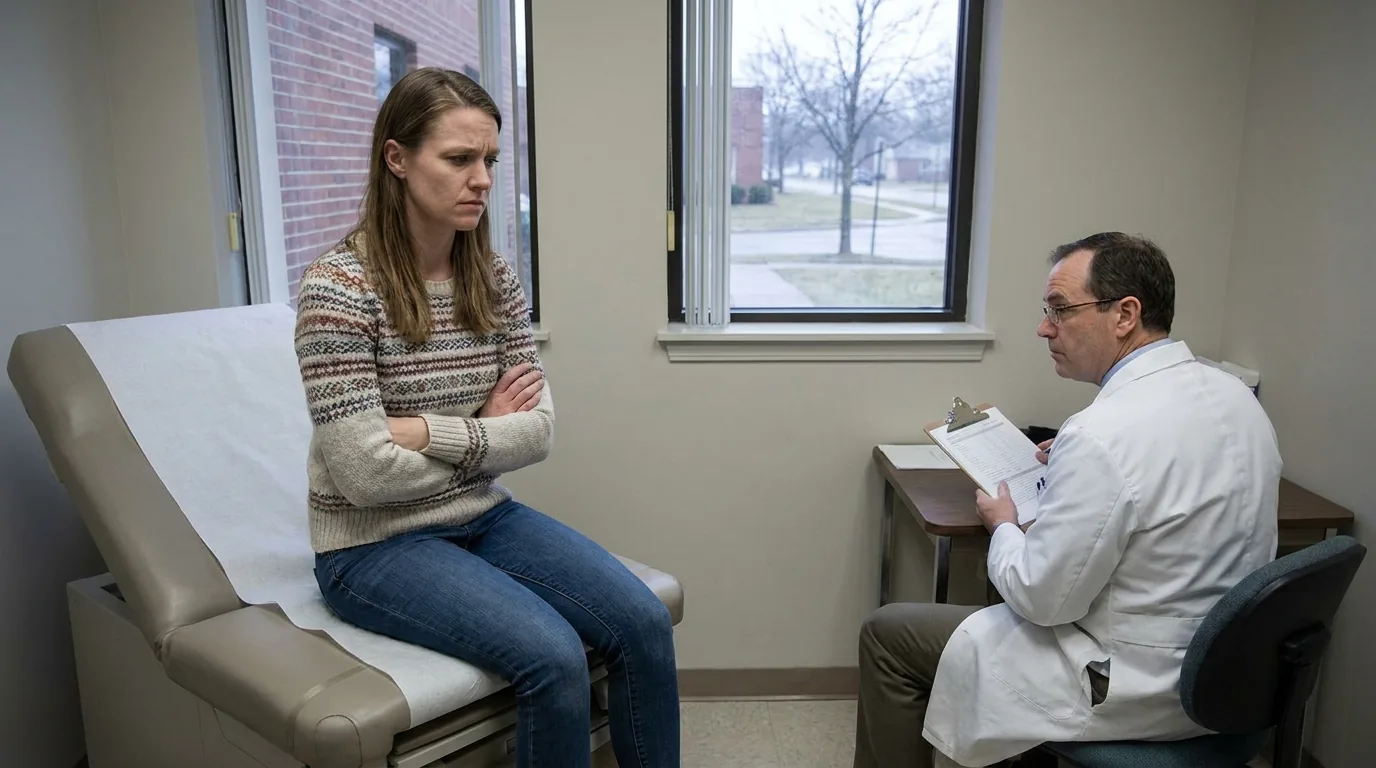
If you have already brought some version of these symptoms to a doctor and left the appointment with reassurance instead of answers, I want you to know that this is not a rare experience, and it is not a reflection of you failing to advocate for yourself well enough. It is a predictable, structural pattern, and it is worth understanding exactly why it happens, because understanding it is often the first step toward getting past it.
Consider a fairly typical version of this conversation. A 36-year-old woman in Lansing mentions to her primary care doctor that her sleep has been poor for several months and her periods have become a little unpredictable. The doctor asks a handful of reasonable screening questions, rules out anything acutely alarming, orders a basic metabolic panel and a TSH, and schedules a follow-up in three months if things have not improved. Every individual step in that visit is defensible. And yet the visit never once raises the possibility of early perimenopause as an explanation, not because the doctor dismissed the idea, but because it was never actively on the list of things being considered for a woman her age in the first place. Three months later, if nothing has changed, the cycle often repeats: reasonable questions, reasonable reassurance, and a genuine hormonal explanation that never enters the conversation because nobody was looking for it yet.
The Age Assumption: "You're Too Young for That"
Standard medical training teaches perimenopause as a condition of a woman's mid-to-late 40s. That is not entirely wrong, it is simply incomplete, because it describes the average case rather than the full range of normal biological variation. When a 34-year-old with a regular-looking cycle mentions sleep disruption, new anxiety, or PMS that has intensified, the underlying clinical assumption many providers are trained toward is that a woman under 40 with normally cycling periods cannot be perimenopausal. That assumption made more sense a generation ago, before more recent research began mapping how early the transition can actually begin for a meaningful subset of women. But it persists in practice because updating deeply ingrained clinical heuristics takes time, and because, as we will get to next, the tools used to evaluate hormones in a typical appointment are not well suited to catching this stage even when a provider is looking for it.
This is a version of a pattern we have written about elsewhere on this site: the reference range fallacy, the assumption that if a lab value falls within the broad "normal" range printed on a lab report, nothing meaningful can be wrong. In your 30s, this fallacy has an added layer, because the age assumption arrives before the lab work even gets ordered. A woman in her 40s describing these symptoms is likely to be offered hormone testing as a first step. A woman in her 30s describing the identical symptoms is more likely to be offered a thyroid check, a suggestion to reduce stress, or a wait-and-see approach, because perimenopause is not yet on the list of things being actively considered for her age group.
This is not a hypothetical pattern. It shows up in how differently the exact same sentence gets received depending on the age of the woman saying it. "My periods have gotten shorter and my sleep has fallen apart over the last year" spoken by a 46-year-old tends to prompt a conversation about perimenopause almost immediately. The identical sentence spoken by a 34-year-old more often prompts questions about her stress levels, her caffeine intake, or her exercise habits first, with hormonal causes considered later, if at all. Neither woman is wrong about what she is experiencing. The difference is entirely in which explanations get reached for first, and that difference is driven by age-based assumption rather than by anything in the symptom itself.
The 13-Minute Appointment Problem
The average primary care appointment in the United States runs somewhere in the range of 13 to 18 minutes, and that window has to cover everything: your reason for the visit, a review of any ongoing concerns, medication management, preventive screening reminders, and documentation. Within that structure, a nuanced, decade-spanning conversation about subtle hormonal variability, the kind this article is having with you right now, simply does not fit. There is not enough time to ask the follow-up questions that would surface a genuine pattern: how has your cycle length changed over the past two years specifically, what does your sleep disruption actually feel like, is the anxiety cyclical or constant, has your family history included earlier-than-average menopause. Those questions take time that the structure of a typical appointment does not allow, and without them, the pattern that a longer, more curious conversation might reveal simply never gets seen.
This is not a criticism of individual providers, many of whom are working within a system that structurally rewards volume and speed over depth. A primary care physician managing a full patient panel is often making genuinely difficult trade-offs about where to spend limited appointment time, and a 34-year-old with normal-looking vital signs and a routine annual exam on the schedule is, understandably, not where a visit is likely to go deep on subtle, cycle-dependent symptoms that would take real time to unpack properly. The system is not built for this conversation. That is a structural problem, not a personal failing on either side of the exam table, but it is still a problem worth naming clearly, because understanding it is what allows you to seek out a different kind of appointment, one specifically structured to have the time this conversation actually requires.
Why a Single Blood Draw Misses a Condition Defined by Variability
Even when hormone testing is ordered for a woman in her 30s, there is a deeper technical problem: perimenopause, especially in its early stage, is not defined by a single abnormal hormone value. It is defined by variability, hormone levels that fluctuate significantly from cycle to cycle and even day to day, in a way that a single blood draw on a single day cannot capture.
Consider FSH (follicle-stimulating hormone), the hormone most commonly tested when perimenopause is suspected. FSH is released by the pituitary gland to stimulate the ovaries, and it tends to rise as ovarian reserve declines, because the pituitary has to work harder to get a response from ovaries that are becoming less responsive. But in early perimenopause specifically, FSH can be completely normal on one day and meaningfully elevated a few weeks later, because the whole point of this stage is that hormone production has become erratic rather than uniformly low. A woman can have a textbook-normal FSH result during a lucky testing window and be told, accurately based on that single number but inaccurately based on the full picture, that her hormones look fine.
This is why a woman in her 30s can walk out of an appointment with a stack of "normal" lab results and still be correctly, validly experiencing early perimenopause. The tests were not wrong. They were simply asking a single-point-in-time question of a condition whose defining feature is that it does not hold still. Meaningful evaluation of early perimenopause typically requires either testing at specific points in the cycle, tracking values over time, or using a marker like AMH (anti-Müllerian hormone) that reflects your ovarian reserve more stably than day-to-day hormone snapshots. We will explain AMH in detail in the next section, because it is one of the most clinically useful and most underused tools for exactly this situation.
How the Billing and Insurance Structure Shapes What Gets Tested
There is one more structural factor worth naming honestly, because it rarely gets discussed openly: how insurance coding and reimbursement shape what gets tested in a standard visit. Insurance coverage for lab work in a conventional primary care setting is typically tied to a specific diagnosis code, meaning a provider generally needs a documented reason, a specific complaint or suspected condition, to justify ordering a given test in a way insurance will reimburse. A vague, multi-symptom picture like "my sleep is worse and my anxiety is up and my cycle feels slightly off" does not map cleanly onto a single diagnosis code the way "possible hypothyroidism" or "irregular bleeding" does. This creates a quiet incentive, entirely separate from any provider's clinical judgment, toward ordering the one or two tests that fit neatly into a billable diagnosis rather than the broader panel that might actually capture what is going on. Functional and integrative medicine practices, which often operate outside standard insurance billing structures, are not constrained by this same logic, which is part of why comprehensive testing tends to look meaningfully different in that setting.
What Being Believed Actually Requires
Put these three factors together, the age assumption, the time-constrained appointment, and the limitations of single-day testing, and you get a fairly complete explanation for why so many women in their 30s leave the doctor's office with reassurance instead of answers. None of the three, on its own, is a failure of any one person's judgment. Together, they form a structural pattern that predictably under-investigates exactly the population this article is written for. Being taken seriously, in this context, usually means arriving with more specificity than "I just don't feel like myself," tracking your cycle length and specific symptoms over a few months before your appointment, and, when a standard visit does not provide the depth you need, being willing to seek out a provider or practice model, such as functional medicine, that is specifically structured around longer appointments and more comprehensive testing. None of that is a burden you should have to carry. It is, however, a realistic description of what currently tends to work.
What's Actually Happening Hormonally in Your 30s
Let's get concrete about the biology, because understanding what is actually happening in your body is the antidote to the vague, dismissive explanations you may have already received. Three hormonal and physiological threads matter most for women in their 30s: the early decline of progesterone, the decline of ovarian reserve as measured by AMH, and the way chronic stress at this specific life stage accelerates the whole process.
Progesterone: Usually the First Hormone to Shift
Of the two main ovarian hormones, estrogen and progesterone, progesterone is almost always the first to decline meaningfully as perimenopause begins, and it tends to decline earlier and more steeply than estrogen does. Progesterone is produced primarily after ovulation, by a temporary structure called the corpus luteum that forms from the follicle that released the egg. As the eggs remaining in your ovaries age and ovulation becomes less robust, even while it is still happening every cycle, the corpus luteum produces less progesterone, and it does so inconsistently from month to month.
Estrogen, meanwhile, often does not fall in a straight line at all in early perimenopause. It can actually spike higher than usual in some cycles before eventually beginning its longer-term decline, a pattern driven by the same erratic ovarian signaling described above. The result of falling, inconsistent progesterone paired with relatively preserved or even elevated estrogen is a state commonly called estrogen dominance, not because estrogen itself is abnormally high in absolute terms, but because the progesterone that normally balances and moderates its effects is no longer present in sufficient, reliable quantities. Estrogen dominance is directly connected to many of the early symptoms described in the timeline above: sleep disruption, heightened anxiety, more intense PMS, and fluid retention. We cover estrogen dominance, and its connection to thyroid function and insulin resistance, in much greater depth in The Ultimate Guide to Hormones and Weight Resistance Over 40, which is worth reading in full if this pattern resonates with what you are experiencing.
It is worth briefly mentioning two other hormones that sometimes come up in this conversation: testosterone and DHEA-S (dehydroepiandrosterone sulfate), often grouped together as androgens, hormones typically associated with male physiology but present, and important, in women too. In women, both are produced by the ovaries and adrenal glands and contribute to energy, libido, muscle maintenance, and mood. Androgen levels generally decline gradually with age as well, though their trajectory is somewhat different from estrogen and progesterone and their decline tends to be more gradual. We mention them here mainly because they are part of a truly comprehensive hormone panel and because, as discussed in the next section, evaluating them is also central to distinguishing perimenopause from PCOS, a condition defined in part by androgen levels moving in the opposite direction.
It is worth pausing on why progesterone specifically has such an outsized effect on how you feel day to day, because it is not just a reproductive hormone. Progesterone interacts with receptors in the brain called GABA receptors, the same receptor system targeted by anti-anxiety medications, and it is converted in the body into a compound called allopregnanolone, which has a calming, sleep-supportive effect on the nervous system. When progesterone production becomes lower and less consistent, that natural calming influence becomes less reliable, which is a large part of why sleep quality and anxiety are so often among the very first things women in their early-to-mid 30s notice, well before anything shows up on a routine hormone panel drawn on an arbitrary day.
AMH and Ovarian Reserve: The Marker Most Women Have Never Heard Of
AMH stands for anti-Müllerian hormone, a hormone produced by the small follicles in your ovaries, the structures that house your remaining eggs. Unlike FSH or estradiol, which fluctuate meaningfully across your cycle, AMH stays relatively stable from day to day, which makes it a uniquely useful window into your ovarian reserve, the size of your remaining egg pool, without the timing sensitivity that makes other hormone tests so unreliable in early perimenopause.
AMH is most familiar to people through fertility medicine, where it is used to help predict response to fertility treatments, but its relevance extends well beyond fertility planning. AMH levels decline steadily with age as ovarian reserve naturally decreases, and research has found that women with lower AMH levels for their age tend to enter perimenopause and eventually menopause earlier than women with higher AMH levels for their age. A 2008 study published in the Journal of Clinical Endocrinology and Metabolism by researcher Mary Fran Sowers and colleagues, examining AMH and inhibin B (a related ovarian hormone) in the context of the menopause transition, helped establish AMH as one of the more reliable biological markers of ovarian aging available, precisely because it does not require precise cycle-day timing the way other hormone tests do.
Here is why this matters specifically for you, in your 30s: AMH gives us a way to look directly at ovarian reserve rather than trying to infer it indirectly from a single snapshot of FSH or estradiol that might land on an unrepresentative day. A woman whose AMH is meaningfully lower than expected for her age is not necessarily on the verge of menopause, that is a separate, more advanced consideration, but a lower-than-expected AMH is a legitimate, measurable signal that ovarian reserve decline, the actual engine driving perimenopause, may be further along than her age alone would suggest. That is genuinely useful information for a 34, 36, or 38-year-old trying to understand whether what she is feeling has a real hormonal basis, rather than being dismissed with a single normal-range FSH result drawn on the wrong day of her cycle.
It is worth being precise about what AMH can and cannot tell you, because it is easy to over-interpret a single number. AMH is a useful, relatively stable indicator of the size of your remaining egg pool, and lower-than-average AMH for your age is a meaningful data point when interpreted alongside your symptoms, your cycle history, and your other hormone markers. It is not, on its own, a stopwatch that tells you precisely how many years remain until menopause, and it is not typically the deciding factor in a diagnosis by itself. Its real clinical value in this context is as one important piece of a larger, comprehensive picture, one more honest data point instead of the vague reassurance of "your labs look fine," pulled from a snapshot that may have simply caught your hormones on a good day.
The HPA Axis: How Your Brain and Your Adrenal Glands Talk to Each Other
To understand how stress accelerates this whole process, it helps to understand the HPA axis, short for the hypothalamic-pituitary-adrenal axis, which is simply the name for the communication loop that governs your body's stress response. The hypothalamus, a small structure at the base of your brain, senses a stressor and signals the pituitary gland, also in the brain, which in turn signals your adrenal glands, two small glands that sit above your kidneys, to release cortisol. In short bursts, this system is protective and adaptive. It is what lets you respond quickly to a genuine emergency. The trouble comes when the system stays activated for months or years at a time, because chronic daily stressors, a demanding job, a child who is not sleeping through the night, financial pressure, caregiving for an aging parent, do not register to your body as fundamentally different from a genuine emergency. The HPA axis does not distinguish well between a real crisis and a persistently full inbox.
A chronically activated HPA axis has consequences that reach well beyond simply "feeling stressed." It disrupts sleep architecture, making the kind of deep, restorative sleep that supports hormone regulation harder to reach even when you are technically getting enough hours in bed. It keeps the nervous system in a heightened, vigilant state that can look and feel a great deal like anxiety. And, as described above, it competes directly with progesterone production for the same upstream raw materials, meaning a woman under chronic stress is likely to experience the effects of declining progesterone earlier and more intensely than her ovarian reserve numbers alone would predict.
A Note on Fertility Planning
For some women reading this, the conversation about ovarian reserve and AMH raises an immediate, more personal question: what does this mean for my ability to have children, now or later? It is worth addressing this directly rather than leaving it implied. Early perimenopause and declining fertility are related, both stem from the same underlying decline in ovarian reserve, but they are not identical concerns, and a lower-than-average AMH for your age does not mean pregnancy is no longer possible. Many women with lower AMH levels conceive without difficulty, particularly earlier in the perimenopausal transition when ovulation, while less consistent, is still generally occurring. If building or growing your family is part of your near-term plans, that context is genuinely useful information to bring into this conversation, because it can shape both the urgency and the specific focus of your evaluation. A comprehensive hormonal workup done for the reasons described throughout this article, understanding early perimenopause symptoms, often produces information that is directly relevant to fertility planning as well, even when fertility was not the original reason you sought it out.
The 30s Life Stage Collision, in Practice
It is worth spelling out what this life-stage collision actually looks like in practice, because it rarely announces itself as "chronic stress." It looks like a 6 a.m. wake-up to get a toddler fed and dressed before a full workday, a lunch eaten at a desk between back-to-back meetings, a 5 p.m. pickup followed by dinner, bath, and bedtime negotiations, and then, once the house is finally quiet, an hour spent catching up on the work that did not fit into the day, followed by a phone call to check on an aging parent who lives two hours away. None of these individual pieces reads as a crisis. Together, repeated day after day, month after month, they are precisely the kind of sustained load that keeps the HPA axis activated far past the point where it would naturally settle. This is not a character flaw or a time-management problem to be solved with a better planner. It is a genuine physiological load, and it deserves to be named as one of the real contributing factors behind why so many women first notice hormonal symptoms during exactly this decade of their lives.
Why Chronic Stress in Your 30s Specifically Accelerates This Timeline
There is a reason the 30s are a particularly common window for perimenopausal symptoms to become noticeable, and it is not purely a coincidence of biology. It is also a life-stage collision. This is frequently the decade when careers are accelerating and demanding more, when young children are requiring intense, round-the-clock caregiving, and when aging parents are beginning to need support for the first time. All three of these pressures often land in the same handful of years, and all three drive chronically elevated cortisol, your primary stress hormone.
Cortisol and progesterone share a biochemical relationship worth understanding. Both hormones are built from the same upstream building block, a molecule called pregnenolone, sometimes referred to as the "mother hormone" because it sits at the top of several hormone production pathways. When the body is under chronic stress, it prioritizes cortisol production, sometimes described informally as "pregnenolone steal," diverting the shared raw materials toward cortisol and away from progesterone. Chronic activation of the HPA axis (the hypothalamic-pituitary-adrenal axis, the communication loop between your brain and your adrenal glands that governs your stress response) does not create perimenopause out of nothing, ovarian reserve decline is still the fundamental driver, but it can meaningfully compound and accelerate the hormonal imbalance that early ovarian changes have already set into motion, making progesterone decline more pronounced and its symptoms more intense than ovarian aging alone would produce.
This is precisely why so many women in their 30s find themselves at the exact intersection of "hormonally vulnerable" and "under more chronic stress than at any other point in their lives so far." A demanding job, a toddler who does not sleep through the night, and a parent whose health has started to worry you are not just emotionally taxing. They are physiologically pushing your system in the same direction your ovaries are already quietly heading on their own.
PCOS, Thyroid Issues, and Other Look-Alikes
Here is an important piece of honesty that belongs in this article: if you are in your early-to-mid 30s, it is genuinely more statistically likely that an undiagnosed condition mimicking perimenopause is driving your symptoms than perimenopause itself. That is not a reason to abandon everything we have covered so far. It is a reason to insist on comprehensive testing that can actually tell the difference, rather than guessing in either direction.
The symptom overlap between perimenopause, PCOS (polycystic ovary syndrome), and thyroid dysfunction is significant, which is exactly why self-diagnosis from a symptom list, in any direction, is not a reliable strategy. All three can produce irregular cycles, mood changes, sleep disruption, fatigue, and weight changes. Telling them apart requires actual lab work interpreted in context, not guesswork.
This matters practically because the wrong assumption in either direction carries a real cost. A woman with undiagnosed PCOS who assumes she is "probably just stressed" or, once she encounters this article, assumes she must be perimenopausal, may go years without the specific support that actually helps PCOS, support that looks meaningfully different from what helps early perimenopause. Conversely, a woman genuinely in early perimenopause who is told her irregular cycles are "just PCOS" without a full picture may not get the ovarian reserve and progesterone-specific support that would actually address what she is experiencing. Getting the right label is not a matter of semantics. It changes what actually gets recommended next.
PCOS (Polycystic Ovary Syndrome)
PCOS is a hormonal condition, common during reproductive years, involving irregular ovulation and often elevated androgens (male-pattern hormones like testosterone that all women produce in smaller amounts). It affects an estimated 6 to 12 percent of women of reproductive age, and it is frequently diagnosed late, sometimes not until a woman is well into her 30s, because milder presentations can be subtle for years. PCOS can produce irregular or absent periods, acne, increased facial or body hair growth, scalp hair thinning, weight gain that concentrates around the abdomen, and difficulty losing weight despite consistent effort, several of which overlap directly with the early perimenopause symptom list above.
The distinguishing clinical picture usually involves androgen levels (total and free testosterone, DHEA-S), the LH-to-FSH ratio (luteinizing hormone relative to follicle-stimulating hormone, often elevated in PCOS), and evidence of ongoing anovulation (cycles without ovulation) rather than the gradually declining ovulatory function typical of perimenopause. A woman newly noticing irregular cycles at 33 or 34 is, statistically, more likely to be encountering a first real look at previously undiagnosed PCOS than she is to be perimenopausal, which makes accurate testing essential rather than optional.
The diagnostic framework most commonly used for PCOS, known as the Rotterdam criteria, requires meeting at least two of three features: irregular or absent ovulation, clinical or biochemical signs of elevated androgens, and polycystic-appearing ovaries on ultrasound. A woman can meet criteria for PCOS without having every classic symptom people associate with the condition, and mild or "lean" presentations of PCOS, without significant weight gain or visible acne, are commonly missed for years precisely because they do not match the stereotype most people, including some providers, still carry in their heads. This is one more reason a symptom checklist alone, in either direction, perimenopause or PCOS, is not a substitute for actual lab work and, when indicated, imaging.
Subclinical Thyroid Dysfunction
The thyroid gland regulates metabolism throughout your body, and even mild, "subclinical" thyroid dysfunction, meaning your TSH (thyroid-stimulating hormone) is in a borderline range not yet flagged as abnormal by standard lab cutoffs, can produce fatigue, weight changes, mood disruption, cycle irregularity, sleep problems, and brain fog that look remarkably similar to early perimenopause. Women are five to eight times more likely than men to develop thyroid conditions, and autoimmune thyroid disease, most commonly Hashimoto's thyroiditis, frequently emerges or intensifies during the reproductive and early perimenopausal years.
A single TSH test, the most common thyroid screening tool, is genuinely not enough to rule thyroid dysfunction in or out with confidence. A complete picture requires TSH alongside Free T4, Free T3, and thyroid antibodies (TPO and thyroglobulin antibodies), which can flag autoimmune thyroid activity years before TSH itself becomes abnormal. Because this overlaps so extensively with the topics covered in this section, and because we have written about thyroid testing in significant depth elsewhere on this site, we won't re-explain the full thyroid picture here. The short, essential point for a woman in her 30s is this: fatigue, cycle changes, and brain fog deserve a complete thyroid panel before they get filed under "probably hormones" of any kind, perimenopausal or otherwise.
It is also worth noting that autoimmune thyroid conditions and the early perimenopausal transition are not mutually exclusive, and in fact commonly coexist. Thyroid hormone and reproductive hormones interact closely, and the same 30s life stage that tends to bring on the earliest signs of ovarian reserve decline is also a common window for autoimmune conditions, including Hashimoto's thyroiditis, to first become active or to intensify, sometimes related to pregnancy and postpartum hormonal shifts for women who have recently had children. This means the correct answer for a given woman is not always "either perimenopause or thyroid dysfunction." Sometimes it is genuinely both, occurring together and compounding one another, which is one more reason comprehensive testing rather than a single isolated test matters so much at this stage.
Consider Megan, a 33-year-old physical therapist in Kenosha. She had noticed irregular cycles on and off since her early 20s, along with some acne along her jawline that she attributed to stress and, more recently, weight that felt stubborn despite a consistent workout routine. When she started reading about perimenopause online, some of it resonated, the weight changes, the frustration of feeling like her body was not responding to what used to work, but other parts did not fit at all. She had never had the sleep disruption or the new anxiety so many women described, and her cycle irregularity had actually been present for over a decade, not something new.
Comprehensive testing gave Megan a much clearer picture than guessing ever could. Her AMH was well within the normal range for her age, arguing against significant ovarian reserve decline. Her total and free testosterone were mildly elevated, and her LH-to-FSH ratio was consistent with a pattern of irregular ovulation that had likely been present since adolescence. Her thyroid panel was unremarkable. Taken together, this pointed toward previously undiagnosed PCOS rather than perimenopause, a genuinely different explanation with a genuinely different plan of support. For Megan, the value of comprehensive testing was not confirming a hunch. It was correcting one, and giving her, for the first time in over a decade, an actual explanation for a pattern she had been living with since she was a teenager.
Comprehensive Testing Is How You Actually Tell the Difference
The honest reality is that PCOS, subclinical thyroid dysfunction, and early perimenopause can all produce a strikingly similar list of symptoms while requiring entirely different approaches to address. Guessing which one you have, based on symptoms alone, based on your age alone, or based on a single lab value pulled in isolation, is simply not a reliable way to get to the right answer. A comprehensive panel that evaluates thyroid function, androgens, ovarian reserve markers like AMH, and standard reproductive hormones together, interpreted as a complete picture rather than as isolated numbers, is what actually distinguishes between these possibilities, and it is often what finally gives a woman in her 30s the concrete answer she has been looking for.
To make the distinctions a little more concrete: PCOS tends to involve elevated androgens and evidence of irregular or absent ovulation over time, often present since the teenage or early adult years rather than newly appearing in the 30s, though it is frequently only diagnosed later. Subclinical thyroid dysfunction tends to involve a borderline or mildly abnormal TSH, sometimes alongside positive thyroid antibodies, and often responds to appropriately dosed thyroid support once identified. Early perimenopause tends to involve normal or fluctuating androgens, a normal or mildly lower AMH for age, and a pattern of progesterone-driven symptoms, sleep, mood, and cycle changes, without the specific androgen or ovulatory pattern that defines PCOS. None of these are diagnoses you should attempt to make on your own from this description. They are, however, useful context for understanding what a comprehensive workup is actually trying to sort out, and why a provider asking for more than a single test is not being excessive. They are being thorough in a situation that genuinely requires it.
What to Do Now (Not "Wait and See")
If you have already had a version of this conversation with a provider, there is a good chance you were told some version of the following: you are too young to worry about this, your labs look normal, let's revisit this in a few years if things get worse. I want to directly and respectfully push back on that advice, not because it comes from bad intentions, but because it is built on an outdated premise, and because waiting carries real costs that are rarely discussed.
The Case for Investigating Early
"Come back in five years" assumes that nothing useful can be done with the information available today, and that the only thing worth acting on is a symptom severe enough to be undeniable. Neither assumption holds up well under scrutiny. Catching hormonal shifts early, while they are still subtle, gives you and a provider meaningfully more room to work with: more time to establish a personal baseline against which future changes can be measured, more opportunity to address contributing factors like chronic stress, sleep, and nutrition before they compound, and more chance to rule in or rule out look-alike conditions like PCOS or thyroid dysfunction while they are still easier to manage. Waiting until symptoms are severe does not make the underlying process go away in the meantime. It simply means you spend those years without support, without a clear explanation, and often without anyone believing you.
There is also a compounding effect worth naming honestly. The chronic stress dynamic described earlier in this article, where cortisol elevation can accelerate and intensify the hormonal shifts already underway, does not pause while you wait for symptoms to become "bad enough." A woman who spends her mid-30s unsupported through early symptoms, still juggling the same demanding job, the same young children, the same aging parents, is not preserving her options by waiting. She may simply be allowing the same accelerating factors to keep accelerating, unaddressed.
There is also a real cost to being disbelieved, one that does not show up on any lab report. Women who spend years being told their symptoms are "probably nothing" often internalize a quiet distrust of their own perception, a habit of second-guessing themselves before they even bring something up. That erosion of self-trust is a real cost, separate from whatever is happening hormonally, and it is a cost that tends to compound the longer it goes unaddressed. Getting real answers earlier is not just about the hormones. It is about protecting your own confidence in your ability to read your own body accurately, a skill that matters for the rest of your life, not just for this particular transition.
Starting the Conversation Early, Not Managing a Crisis
At Novaleo, our approach to a woman in her 30s who suspects something hormonal is happening looks meaningfully different from crisis intervention, because that is not where she is. This is about starting the conversation early, building a real picture of your baseline, and having a plan in place before symptoms become disruptive, not reacting after years of being unheard.
Consistent with the approach described throughout this site, comprehensive testing is the foundation. That typically includes a DUTCH panel (dried urine test for comprehensive hormones), which maps estrogen and progesterone metabolites, cortisol patterns across the day, and androgens with a level of detail a standard single-day blood draw cannot provide, which is particularly valuable given everything we have discussed about how misleading a single snapshot can be in early perimenopause specifically. It also typically includes a full thyroid panel (TSH, Free T4, Free T3, and thyroid antibodies) to rule look-alike thyroid dysfunction in or out with confidence, fasting insulin and related metabolic markers to evaluate insulin resistance, which can independently drive many of the same symptoms, and AMH to establish a real, individualized picture of your ovarian reserve rather than relying on age-based assumptions alone.
From there, the plan is genuinely individualized. For some women, the testing surfaces a look-alike condition, PCOS or subclinical thyroid dysfunction, that has a distinct treatment path of its own. For others, it confirms early hormonal variability consistent with early perimenopause, in which case the plan may involve targeted nutritional and lifestyle support, stress and cortisol management given everything we now understand about the HPA axis connection, and close monitoring over time so that changes get caught early rather than discovered years later in a more disruptive form.
What this does not look like, for a woman in her 30s who is simply starting to notice symptoms, is an immediate conversation about hormone replacement therapy or aggressive intervention. That is not where most women in this stage need to start, and framing it that way would be inaccurate and, frankly, more alarming than the situation calls for. The starting conversation for most women at this stage is about clarity: understanding your actual hormonal baseline, understanding whether a look-alike condition needs its own attention, and building sustainable support around sleep, nutrition, and stress that helps regardless of which explanation the testing points toward. For some women, that is where the plan stays for years, with periodic re-testing to track any changes over time. For others, as symptoms progress, the plan evolves alongside them. Either way, the decision gets made based on your actual data and your actual symptoms, not on an assumption about what a woman "your age" should or should not be doing.
You can read more about the full scope of functional medicine services we offer to understand what a comprehensive evaluation looks like in practice. And if weight changes are part of what brought you here, it is worth knowing that early hormonal shifts and weight resistance are frequently connected, a topic we explore in more depth in our article on GLP-1 medications and weight loss plateaus for women who are also exploring that piece of the puzzle.
What You Can Start Now, While You're Getting Answers
Comprehensive testing takes some coordination, and it is fair to ask what is worth doing in the meantime, since you do not have to wait for lab results to start supporting your body. Given everything we have covered about the HPA axis and the way chronic stress compounds early hormonal shifts, protecting sleep is one of the highest-leverage places to start, even modest changes like a consistent wind-down routine and a firm cutoff on screens before bed can meaningfully support the deep sleep that helps regulate hormone production. Prioritizing protein at each meal supports stable blood sugar, which in turn reduces the extra cortisol spikes that come from large glucose swings. And building in genuine, non-negotiable recovery time, even 10 or 15 minutes of true downtime in a day that is otherwise wall-to-wall caregiving and work, is not indulgent. It is one of the few levers you have direct control over while everything else about this transition proceeds on its own timeline.
None of this is a substitute for comprehensive testing, and none of it should be framed as something you failed to do if your symptoms persist despite doing all of it perfectly. It is genuinely useful foundational support, not a cure, and it works best alongside an accurate understanding of what your hormones are actually doing rather than as a stand-in for that understanding.
On timeline: most women can expect an initial consultation, a comprehensive lab draw, and a follow-up appointment to review results within a matter of a few weeks from start to finish, not months. Some tests, particularly cycle-dependent hormone panels, are timed to a specific day of your cycle for the most accurate results, which can add a small amount of scheduling coordination, but this is a matter of weeks, not the years so many women have already spent going back and forth with reassurance and no clear plan. Getting a real answer is genuinely more achievable, and faster, than the "wait and see" framing suggests.
You don't have to wait five years for this to get worse before someone takes it seriously.
A free assessment call is the place to start. No pressure, no assumptions about your age, just a real conversation about what testing could tell you now.
Book Free Assessment CallMichigan and Wisconsin Considerations
Everything we have covered in this article applies to women in their 30s broadly, but if you are reading this from Michigan or Wisconsin, a few practical and cultural realities are worth naming directly, especially since this audience tends to skew a bit younger and is often juggling small children rather than teenagers, a meaningfully different daily reality than the one our other articles on this site are written for.
Telehealth Access Across Both States
Novaleo Weight and Wellness is licensed to provide telehealth functional medicine services across both Michigan and Wisconsin, which matters enormously for a woman in her 30s trying to fit a comprehensive hormonal evaluation around a demanding job and a young family. There is no need to find childcare for an in-person specialist visit or take half a day off work to drive to an appointment. Consultations happen over secure, HIPAA-compliant video, and lab work is completed at any Quest Diagnostics or Labcorp location near you, of which there are dozens across both states, from Ann Arbor and Grand Rapids to Milwaukee and Green Bay. Whether you are in a Detroit suburb, a smaller Wisconsin town like Wausau or Fond du Lac, or anywhere in between, the same level of comprehensive evaluation is available without adding a logistical burden on top of everything else already on your plate.

A Different Season of Life Than the "Over 40" Conversation
Much of the existing conversation around hormonal health, on this site and elsewhere, is written with an audience in mind whose kids are teenagers or already out of the house, whose careers have reached a certain plateau, and who has spent years already navigating the medical system without answers. If you are 34 with a toddler who still wakes at night, or 37 with a newborn and a return-to-work date looming, your daily reality looks nothing like that. Fitting in a comprehensive hormone evaluation has to work around nap schedules, daycare pickup times, and the particular exhaustion of early parenthood layered on top of whatever your body is independently doing.
This is precisely why the telehealth model matters so much for this specific audience. A 20-minute video consultation during a toddler's nap, or a lab draw squeezed in on the way to daycare drop-off, is a genuinely different logistical proposition than a series of in-person specialist appointments. Whether you are managing a young family in the suburbs of Grand Rapids, building a career in Madison while your kids are still in elementary school, or juggling a demanding job and an aging parent's needs in Milwaukee, the goal is to make comprehensive evaluation fit into the life you are actually living right now, not the life you might have in fifteen years when things theoretically slow down.
The long Upper Midwest winters are also worth a brief mention here, even though we cover this ground in far more depth in our existing Michigan and Wisconsin articles. Both states sit far enough north that meaningful vitamin D synthesis from sunlight essentially stops from around November through March, and vitamin D functions much more like a hormone than a simple vitamin, influencing mood, immune regulation, and thyroid function. For a woman in her 30s already navigating early hormonal variability, a winter-driven vitamin D deficit is a compounding, easily overlooked factor worth testing for directly rather than assuming away, particularly since fatigue and low mood from low vitamin D can look a great deal like the symptoms described earlier in this article.
There is also a quieter cultural piece worth naming. In a lot of Midwestern families, including many across Michigan and Wisconsin, there is a strong, often unspoken norm around not making a fuss, pushing through, and saving real concern for something that is clearly, visibly wrong. That norm can make it feel almost indulgent for a 35-year-old juggling a full-time job and a preschooler to sit down and seriously investigate something as seemingly minor as slightly worse sleep or a slightly shorter fuse. If that resonates, it is worth naming directly: taking your own symptoms seriously at 35 is not making a fuss. It is the same kind of proactive, sensible health maintenance that nobody would question if the topic were a lump, a mole, or a persistent cough. Your hormones deserve the same standard.
For a deeper look at how hormonal health intersects with the broader Michigan and Wisconsin experience, including seasonal factors like the long Upper Midwest winters that affect vitamin D and mood, our existing Michigan guide and Wisconsin guide go into further detail, and much of that context carries forward even if you are a decade younger than the women those particular articles were originally written for.
Comprehensive FAQ: Your Questions Answered
Can perimenopause start at 33?
Yes, for some women it can. While perimenopause more commonly begins in the 40s, research on the menopause transition, including work on ovarian reserve decline and AMH, recognizes that the underlying biological process can begin earlier for a meaningful subset of women, sometimes in the mid-30s. This does not mean every woman in her early 30s noticing symptoms is perimenopausal, look-alike conditions are statistically more common at this age, but 33 is not too young for the possibility to be taken seriously and properly evaluated.
How do I know if it's perimenopause or just stress?
You often cannot tell from symptoms alone, and that is by design rather than a failure on your part, since chronic stress and early hormonal shifts genuinely overlap and can even accelerate one another. The most reliable way to tell them apart is comprehensive testing, including hormone patterns like a DUTCH panel and a marker like AMH that reflects ovarian reserve, rather than trying to reason it out from symptoms in isolation.
What tests should I ask my doctor for?
A reasonable starting panel includes a full thyroid panel (TSH, Free T4, Free T3, and thyroid antibodies), sex hormones including estradiol and progesterone, androgens (testosterone and DHEA-S) to help rule out PCOS, AMH to evaluate ovarian reserve, and fasting insulin to evaluate metabolic health. A DUTCH panel can add significant additional detail on hormone metabolites and cortisol patterns. If your provider is not familiar with ordering AMH outside of a fertility context, it is reasonable to ask specifically or to seek a second opinion from a functional medicine provider.
Is birth control masking my symptoms?
It can be. Combined hormonal birth control provides a steady, external dose of synthetic hormones that overrides your body's own natural hormonal fluctuations, which means the cycle irregularity and hormone-driven symptoms of early perimenopause can be effectively hidden while you are taking it. This does not mean birth control is harmful or wrong to use, but it does mean that "my cycle is regular" is a less reliable reassurance for a woman on hormonal birth control, and it is worth discussing with a provider how to evaluate underlying hormonal status in that context.
Should I wait until my periods change more before getting tested?
No. Waiting for cycle changes to become obvious means waiting through years of subtler symptoms without support or explanation, and it forfeits the advantages of catching hormonal shifts early, including more time to establish your personal baseline and more opportunity to address contributing factors like chronic stress before they compound. Testing now, even with a currently regular cycle, provides useful information rather than being premature.
What is the difference between perimenopause and early perimenopause?
They describe the same underlying biological process at different points along a spectrum. "Early perimenopause" typically refers to the earliest stage, where hormone levels, particularly progesterone, have begun to decline and fluctuate, but menstrual cycles still look outwardly regular or close to it. As the transition progresses, cycle irregularity becomes more pronounced and symptoms like hot flashes may emerge, which is the stage most people associate with the word perimenopause generally.
Does a family history of early menopause mean I'll go through it earlier too?
Family history is one meaningful factor among several that influence the timing of perimenopause and menopause, and women whose mothers or sisters experienced an earlier transition have a higher likelihood of an earlier transition themselves, though it is not a guarantee in either direction. If you have this family history, it is a genuinely good reason to bring it up directly with a provider and to consider earlier baseline testing, including AMH, rather than waiting for symptoms to confirm the pattern on their own.
Can Michigan and Wisconsin women access this kind of testing without traveling to a specialist?
Yes. Novaleo Weight and Wellness provides telehealth functional medicine services across both Michigan and Wisconsin. Consultations happen via secure video, and lab work is completed at any Quest Diagnostics or Labcorp location near you, with results reviewed together over a follow-up telehealth visit. This is designed specifically to fit around the schedule of a woman balancing a career and young children, without requiring travel to an in-person specialist.
I'm only 35 and my doctor said I'm too young. What should I do?
You are allowed to seek a second opinion or a more comprehensive evaluation, and doing so is not overreacting. If a provider dismisses your concerns primarily on the basis of age rather than a full evaluation of your symptoms and comprehensive lab work, that is a reasonable moment to look for a provider, such as a functional medicine practice, that is specifically equipped to evaluate early hormonal changes rather than relying on age-based assumptions alone.
Will addressing this early prevent perimenopause from happening?
No, and it is important to be honest about that. Perimenopause is a normal, expected transition that every woman with ovaries eventually goes through, and nothing can prevent it or should aim to. What early evaluation and support can do is help you understand what is happening in your body sooner, address contributing factors like chronic stress and nutrient status that can intensify symptoms, rule out unrelated conditions that need their own treatment, and give you a plan for navigating the transition with more clarity and support than waiting years for a diagnosis would provide.
Can stress alone cause perimenopause-like symptoms without any underlying hormonal shift?
Chronic stress on its own can produce many of the same symptoms discussed in this article, including disrupted sleep, heightened anxiety, and cycle irregularity, through its direct effects on the HPA axis (the hypothalamic-pituitary-adrenal axis, your body's central stress response system) and cortisol. This is exactly why the two are so often confused, and why comprehensive testing rather than guesswork is the most reliable way to understand what is driving your specific symptoms. In practice, chronic stress and early ovarian reserve decline frequently occur together and compound one another rather than existing as entirely separate explanations, which is part of why addressing stress is a meaningful piece of the plan regardless of what testing ultimately shows.
What is AMH testing, and is it the same as fertility testing?
AMH, or anti-Müllerian hormone, is a hormone produced by small follicles in the ovaries that reflects the size of your remaining egg supply. It is the same test used in fertility medicine to help predict response to fertility treatments, but its usefulness extends beyond fertility planning specifically. In the context of this article, AMH is used as one piece of a broader picture to help understand ovarian reserve and the likely stage of the perimenopausal transition, not as a fertility assessment on its own, though the two uses do draw on the same underlying biology.
Book a Free Assessment Call, and a Personal Note from Katie
If you have read this far, you now understand something that most women in their 30s are never given the chance to understand: that what you are feeling has a real, biologically plausible explanation, that "too young" is not a diagnosis, and that there is a meaningful difference between waiting five years for things to get undeniable and starting an honest investigation today.
Whether comprehensive testing eventually points toward early perimenopause, toward a look-alike condition like PCOS or subclinical thyroid dysfunction, or toward some combination of hormonal shifts and chronic stress that deserves its own dedicated support, the next right step is the same: a real conversation, grounded in real testing, with someone who is not going to send you away because of the number on your birth certificate.
You noticed something. Let's find out what it is.
Book your free assessment call. No sales pitch, no assumptions about your age, just an honest conversation about what testing could tell you right now instead of five years from now.
Book Free Assessment CallA personal note from Katie:
Most of the women who come to me for the first time have already spent years feeling dismissed, tired, and unheard by the time we finally meet. But every so often, a woman reaches out who is not there yet. She is not exhausted and defeated after a decade of being told she is fine. She is 35, or 37, or 39, and she has simply noticed that something feels different, and she is trying to decide whether that noticing is worth trusting.
If that is you, I want you to know that I take that noticing seriously, and I think you should too. You do not need a dramatic symptom or a crisis to justify asking questions about your own body. You do not need to wait until things get bad enough to be undeniable. The fact that you read this entire article, that you were curious enough to look for language for what you are feeling, already tells me something worth paying attention to.
After more than 20 years in healthcare, one of the things I have learned most clearly is that women are remarkably good at sensing when something in their body has shifted, often long before any test confirms it, and that trusting that instinct earlier, rather than later, tends to lead to better outcomes and a much less lonely experience along the way.
I also want to say this plainly, because I think it gets lost in a lot of health content aimed at younger women: nothing about this conversation means something is wrong with you. Perimenopause, whenever it begins for you, is not a malfunction. It is a normal transition that every woman with ovaries eventually moves through, and starting to understand your own version of it in your mid-30s, rather than in your mid-40s, is not a sign that anything has gone off track. If anything, it means you get more years of clarity instead of confusion, more time to build the kind of support that actually helps, and fewer years spent wondering, alone, whether what you are feeling is real.
I think often about the women who never make it to a conversation like this one at all, the ones who mention something to a friend once, get a shrug in response, and quietly decide it must not be worth pursuing. I do not want that to be your story. Whatever you are noticing right now, a shorter cycle, a harder week before your period, a new kind of tired that a good night's sleep does not seem to touch, it is worth naming out loud to someone who will actually listen and actually look.
You are not too young for this conversation. You are not imagining it. And you do not have to figure out on your own whether what you are feeling matters. I would be glad to help you find out. Reach out, and let's start by just talking.
Katie Long, NP-C
Founder, Novaleo Weight and Wellness
Kathryn Long, NP-C
Board-Certified Nurse Practitioner
Katie is the founder of Novaleo Weight and Wellness, a telehealth functional medicine practice licensed in both Michigan and Wisconsin. With over 20 years of healthcare experience, she specializes in helping women identify and address the root causes of hormonal imbalance, weight resistance, and metabolic dysfunction at every stage, from the earliest, most easily dismissed signals in a woman's 30s through the more classic presentation of perimenopause in her 40s. Her approach combines comprehensive lab testing, evidence-based protocols, and genuine patient partnership to produce lasting results.
You Deserve an Answer Now, Not in Five Years
Join the growing number of Michigan and Wisconsin women in their 30s who decided not to wait. Your free assessment call is the first step toward understanding what your body is telling you.
Book Free Assessment CallReferences
- North American Menopause Society (NAMS). "Perimenopause: Rocky Road to Menopause." Patient education resource on the perimenopausal transition. View resource
- Santoro N. "Perimenopause: From Research to Practice." Journal of Women's Health. 2016;25(4):332-339. View study
- Sowers MR, et al. "Anti-Mullerian Hormone and Inhibin B in the Definition of Ovarian Aging and the Menopause Transition." Journal of Clinical Endocrinology and Metabolism. 2008;93(9):3478-3483. View study