
Nobody Told You It Would Feel Like This
Picture a woman I will call Dana. She is 54, standing in her kitchen in Eau Claire, Wisconsin, at 5:40 on a January morning, and the thermometer on the porch says six below. She has not had a period in fourteen months. At her annual visit last spring, her doctor smiled and said the words so many women hear: "Congratulations, you're through it." For about a month, Dana believed that was true.
Then the rest of it started to show itself. The waistband on her favorite pants stopped closing, even though she was eating exactly the way she always had. She was waking at 3 AM, soaked, and lying there until the alarm went off. Her knees and hands ached in the mornings in a way they never had. Her last bloodwork came back "a little high on cholesterol, let's watch it," and nobody mentioned her bones, her blood pressure trend, or the fact that her mother broke a hip at 71. When Dana asked her doctor whether any of this was connected to menopause, the answer was a shrug and a reminder that it would "settle down eventually."
If any part of that scene feels uncomfortably familiar, this guide was written for you. Not for the woman in the middle of perimenopause, who is covered in our guide to early perimenopause and our guide to perimenopausal brain fog. This one is for the woman on the other side of that transition, the one who has been told she is "through it" and is quietly discovering that the finish line was actually the start of a longer stretch of road, one that has its own rules for weight, bones, heart, sleep, and daily comfort.
Here is the plain truth I wish more women heard at 51, rather than at 61. Menopause is not a single event that ends when your periods stop. It is a permanent change in your hormonal environment, and your body keeps adjusting to it for years. Some of those adjustments are uncomfortable but harmless. Some of them quietly raise your long-term risk of fracture, cardiovascular disease, and loss of muscle, and those are the ones almost nobody warns you about, because they do not hurt. You cannot feel your bone density falling. You cannot feel your LDL cholesterol climbing. By the time they announce themselves, a fall on an icy Michigan sidewalk or a heart event on a Wisconsin winter morning, there has been a long runway of years when something could have been done.
I have spent two decades in healthcare, and I now focus on women in midlife who feel they are being told everything is fine while their own bodies say otherwise. I have also sat with enough women in their fifties and sixties to know the two things they say most often. The first is relief at finally having an explanation. The second is anger, a very understandable anger, that nobody explained it sooner. This article exists to be the explanation you deserved earlier, written for women who live and work in Michigan and Wisconsin, with the long winters, the low winter sunlight, the supper clubs and fish fries, the lake-effect snow, and the real distances between you and a specialist that shape how all of this plays out in your daily life.
What You Will Find in This Guide
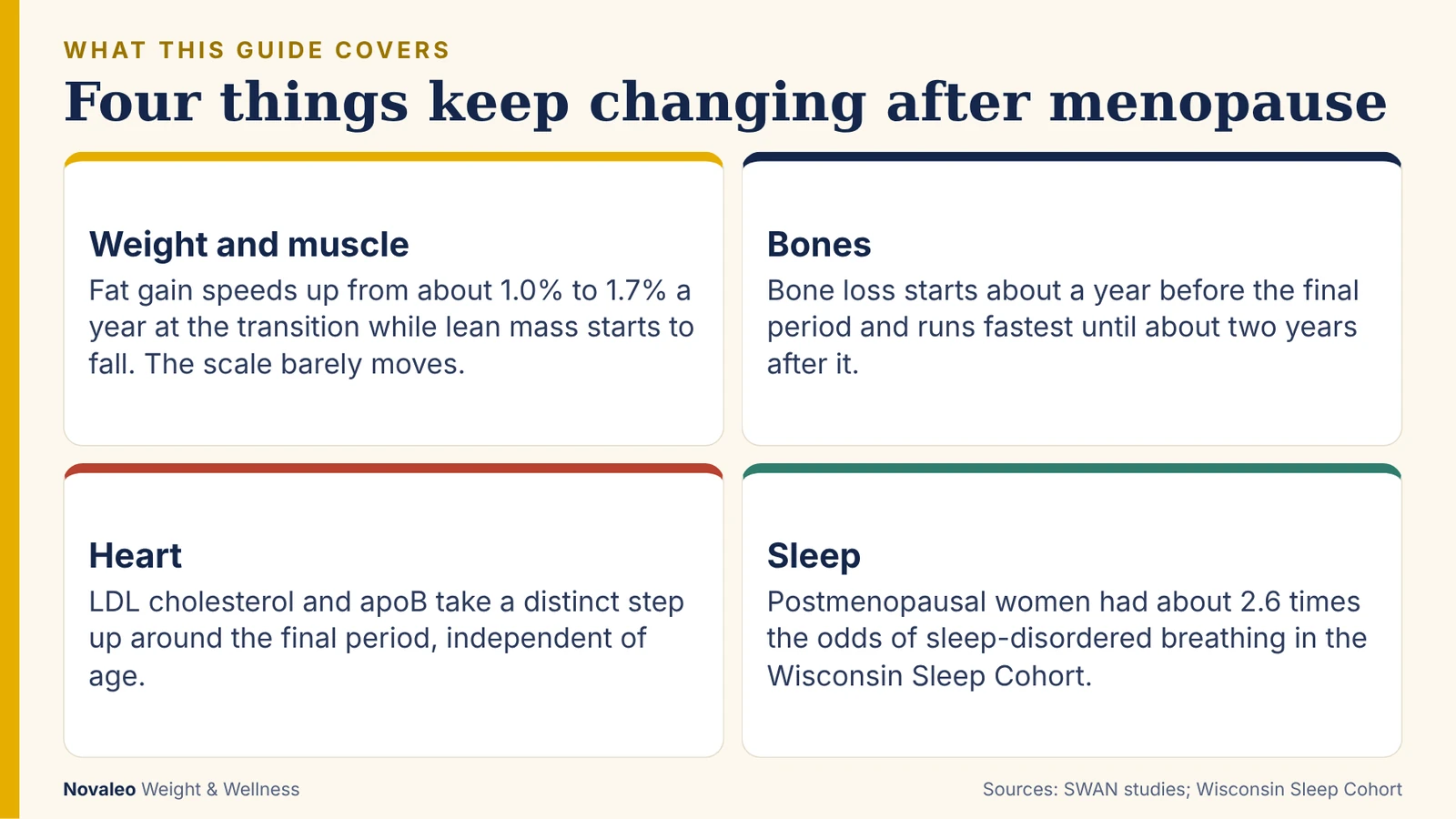
This is a long article on purpose. A short list of "seven tips for menopause weight" cannot do justice to a life stage that affects nearly every organ system, and it cannot give you the evidence you need to judge advice for yourself. The sections below take the four themes in the title in turn. First, why your weight, belly fat, and muscle change after menopause and what the best research says about it. Second, what happens to your bones, why it is silent, and what to do about it. Third, how your cholesterol, blood pressure, and overall heart risk shift, including the newest 2025 and 2026 American cardiology guidelines. Fourth, how your sleep changes, including hot flashes, night sweats, and a condition many women are never screened for, sleep apnea.
Then we move to the treatments that actually have evidence behind them, including a careful look at where menopausal hormone therapy stands in 2026 after the FDA's recent label changes, the newest non-hormonal options for hot flashes, the testing that is genuinely useful and the testing that is not, a screening checklist for your fifties and sixties, and practical guidance on food, strength training, and winter movement in the Upper Midwest. Near the end you will find a 90-day plan, a list of questions to bring to any clinician, and a comprehensive FAQ.
A word about how I handle evidence, because it matters. Where the research is strong, I will say so and link to it. Where it is thin, mixed, or still being argued over, I will say that too. You will not find promises of a "reset" or a "detox" here, and you will not find fear dressed up as education. You will find a clinician explaining what is known, what is not, and what a careful person would do with that information. If a claim in this article ever strikes you as too confident, check the reference list. If you still disagree, bring it to your own clinician. That is how this is supposed to work.
You can read this from top to bottom, or jump to the section that matches your most pressing worry using the table of contents. If you have limited time, read the next section on where you are in the transition, then go straight to the area that worries you most. Every section is written to stand on its own.
What Menopause Actually Is, and Where You Are Now
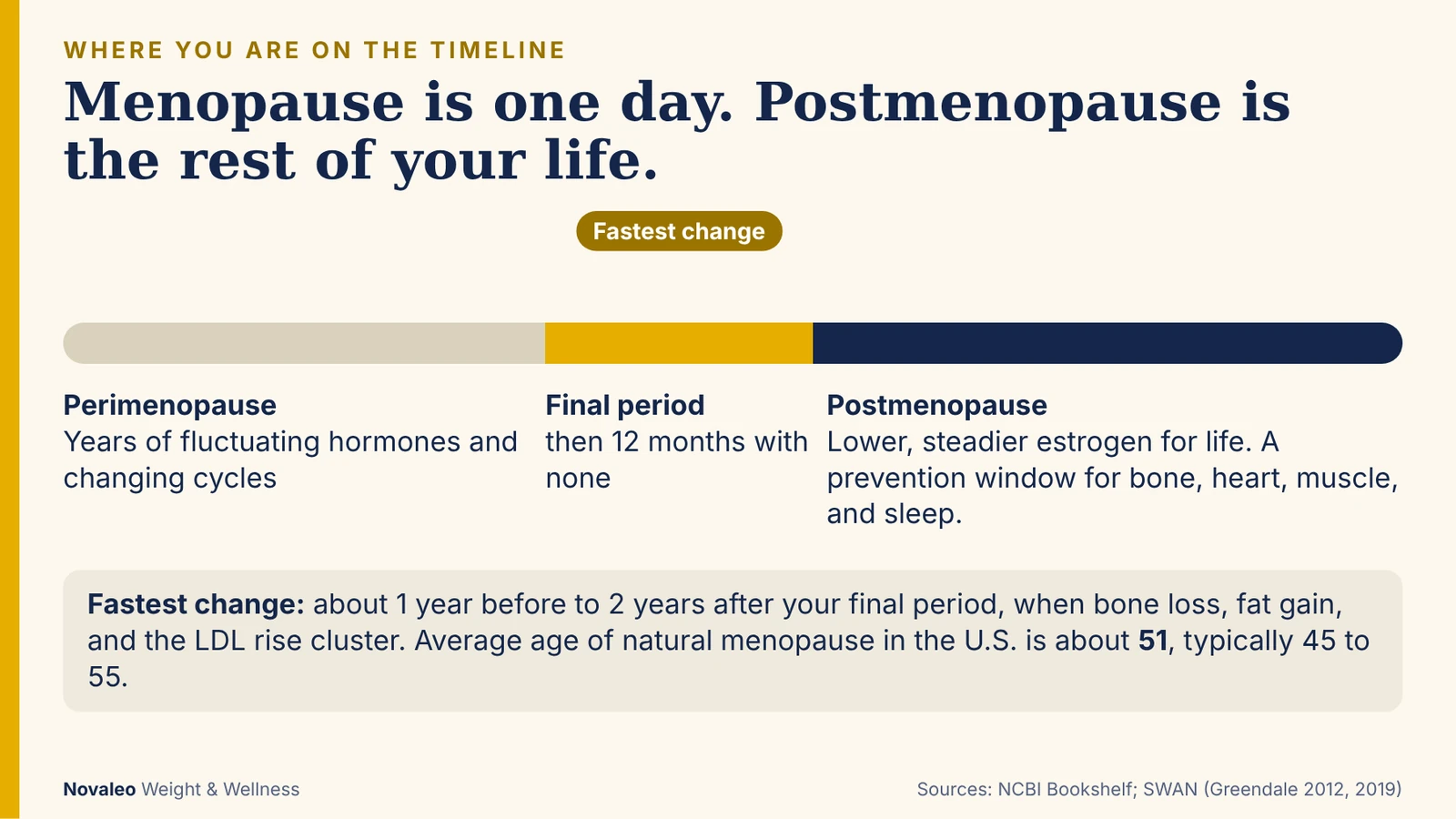
Words matter here, because the same few terms get used loosely and it creates real confusion. Menopause, in the strict medical sense, is a single point in time: the day that marks twelve consecutive months without a menstrual period, when the cause is not pregnancy, illness, or medication. Everything before that point is the menopause transition, or perimenopause. Everything after it, for the rest of your life, is postmenopause. So when your doctor says "you are postmenopausal," what is being said is simply that a full year has passed since your last period. It does not say that your symptoms are over, or that your body has finished adjusting. In the United States, the average age of natural menopause is about 51, with a typical range of roughly 45 to 55, and a wider clinical range of about 40 to 58 (see the NCBI Bookshelf overview of menopause). The title of this article says "after 50" because that is when most women arrive here, but if you reached menopause at 46 or 57, nearly everything in this guide still applies to you.
The Hormonal Picture, in Plain Language
Before menopause, your ovaries produce most of your estradiol, the most potent form of estrogen, and they release an egg most months, which in turn produces progesterone. After menopause, ovulation stops, so progesterone from the ovaries falls to very low levels. Estradiol from the ovaries falls to a low and fairly stable level. This is the point most women miss: the fluctuating, unpredictable hormone surges of perimenopause are largely over. What you have now is a steady, lower baseline. For some women this is a relief, because the wild swings that drove the worst of their mood and sleep symptoms settle down. For others, the symptoms continue because the lower baseline itself is the problem, and because estrogen receptors exist in your brain, bones, blood vessels, skin, bladder, and vagina, all of which notice the change.
Your body does not stop making estrogen entirely. Fat tissue, the adrenal glands, and other tissues convert other hormones into a weaker form of estrogen called estrone, and that becomes your main circulating estrogen after menopause. Your ovaries also continue to make small amounts of androgens, including testosterone and androstenedione, for years afterward, and your adrenal glands make DHEA, which declines gradually with age. Your pituitary gland responds to the drop in ovarian estradiol by raising follicle-stimulating hormone, or FSH, which is why FSH is high after menopause. And sex hormone binding globulin, a protein that carries hormones in your blood, tends to change as well, which alters how much hormone is "free" and active.
I explain all of this not to bury you in biochemistry but because it makes the rest of the guide easier to follow. When I say that estrogen loss affects bone, it is because bone cells have estrogen receptors and estrogen restrains the cells that break bone down. When I say it affects cholesterol, it is because estrogen influences how your liver handles LDL particles. When I say it affects sleep and hot flashes, it is because estrogen helps your brain regulate its internal thermostat. Each section of this article follows that same logic: a tissue that has estrogen receptors, a change in signaling, and a consequence you can measure and do something about.
| Tissue or system | What estrogen helped do before menopause | What can change afterward |
|---|---|---|
| Bone | Restrained bone breakdown and supported bone renewal | Faster bone loss, especially in the years right around your last period |
| Body composition | Influenced where fat is stored and supported muscle maintenance | More fat in the abdomen, a gradual shift toward less lean mass |
| Blood vessels and lipids | Supported flexible vessel walls and favorable cholesterol handling | Rising LDL cholesterol and apoB, and a higher long-term heart risk |
| Brain thermostat | Helped keep your temperature comfort zone wide and stable | Hot flashes and night sweats in a large share of women |
| Sleep | Supported sleep depth and temperature regulation | Lighter, more fragmented sleep and a higher rate of sleep apnea |
| Vagina, vulva, bladder | Kept tissue thick, elastic, and well lubricated | Dryness, discomfort, urinary urgency, and more frequent urinary infections |
| Skin, hair, joints | Supported collagen, hydration, and tissue repair | Thinner skin, hair changes, and more joint aching |
Why "How Long Since Your Last Period" Changes Everything
Where you are on the timeline, measured from your final period rather than from your birthday, changes which risks matter most and which treatments make sense. The first few years are the period of fastest change. Bone loss, for instance, accelerates in the year before your last period and stays brisk for roughly two years afterward, as we will see in the bone section. Body composition changes follow a similar pattern, with the steepest shifts clustering around the final period. Hot flashes often peak in the years surrounding it. This is also the period in which hormone therapy, if you choose it, has the most favorable balance of benefit and risk, which is why the phrase "within ten years of menopause or under age 60" shows up so often in professional guidelines.
The later years, from the mid fifties through the sixties and beyond, bring a different set of priorities. The rapid early changes slow down, but the accumulated effects matter more: a bone density that has already dropped, an LDL that has already climbed, a few extra pounds of visceral fat, a little less muscle. At this stage the conversation shifts from "how do I feel this week" to "how do I protect the next thirty years," and the answer involves screening, strength, and sleep far more than it involves any single hormone.
A quick self-placement check
Which of these sounds most like you? There is no right answer, and many women fall between two.
- Within about two years of your last period. You are in the fastest phase of bone and body composition change, and hot flashes may be at their most intense. This is the window where early action, including a baseline bone density test if you are at risk, pays off most.
- Three to ten years past your last period. The fast changes have slowed, but risk has accumulated. This is the most common time to discover high cholesterol, osteopenia, and persistent sleep problems.
- More than ten years past your last period. Prevention shifts toward fall prevention, bone protection, heart risk reduction, and maintaining strength. Starting systemic hormone therapy at this stage is a more individualized decision, as covered later.
- You reached menopause early, from surgery, from cancer treatment, or before age 45. Your body has had more years without estrogen, which raises the importance of bone and heart protection. See the section on special situations.
One more piece of context belongs here, because it affects how much weight you should put on the research I cite. Much of what we know about the menopause transition in American women comes from one long-running project, the Study of Women's Health Across the Nation, usually shortened to SWAN. It followed 3,302 women at seven sites across the country, beginning in the mid 1990s, and one of those sites was in Michigan. When I quote SWAN findings about bone, body composition, cholesterol, and hot flashes in the sections ahead, I am quoting research that includes women from your own part of the country (see the NIA overview of SWAN). Another long-running study, the Wisconsin Sleep Cohort, based at the University of Wisconsin, has given us some of the best data on how menopause affects breathing during sleep, and you will meet it in the sleep section. Your region has contributed more to what we know about women's midlife health than most people realize.
Weight, Belly Fat, and Muscle: What Really Changes
If there is one sentence I hear more than any other from women past menopause, it is this: "I am eating the same, I am moving the same, and my body is completely different." For years, that sentence was met with a polite version of "calories in, calories out," and an implication that she must be doing something wrong. The research tells a more interesting and more reassuring story. Women are not imagining the change, and the change is not primarily a character flaw. It is a measurable shift in body composition that begins around the time of your final menstrual period.
What the Best Long-Term Study Actually Found
The most detailed look at this question comes from SWAN, the same long-running study I described above. In 2019, researchers led by Dr. Gail Greendale published an analysis of 1,246 women who had their body composition measured by DXA scans repeatedly over roughly eighteen years, with the measurements lined up against each woman's own final menstrual period (see Greendale and colleagues, JCI Insight, 2019). Their findings are worth walking through slowly, because they change how you should think about your body.
- Fat mass was already creeping up before the transition, at roughly 1 percent per year. At the start of the menopause transition, the rate of fat gain accelerated to roughly 1.7 percent per year.
- Lean mass, which includes muscle, was holding steady or slightly rising before the transition, then began to decline, at roughly 0.2 percent per year.
- These changes began about two years before the final period and continued until roughly two years after it. After that, the trajectories flattened. The speed of change slowed to close to zero for most measures.
- Total body weight did not accelerate at the transition. The scale kept climbing at the same slow pace it had before, about half a percent a year, and then leveled off.
Read that last point again, because it explains so much frustration. The scale is a poor instrument for this particular change. A woman can step on a scale in her late forties and again in her mid fifties and see only a few pounds of difference, while her body has quietly traded some muscle for some fat, and shifted that fat toward her midsection. Her clothes tell her something her scale does not. The number on the bathroom scale was never designed to show the difference between a pound of muscle and a pound of fat, and that difference is where the health consequences live.
There is also good news hiding in the data. The accelerated phase has an end. By about two years after the final period, the acceleration in fat gain and lean loss slows substantially. That does not mean the changes reverse by themselves, and it does not erase what has already happened, but it does mean the body is not on an endless downhill slide. Once the transition's fast phase passes, deliberate effort, especially strength training and adequate protein, has a much more stable platform to work from. Women who understand this tend to stop blaming themselves and start working on the right target.
Why the Midsection, Specifically
Estrogen influences where your body prefers to store fat. Before menopause, women tend to carry more fat in the hips, buttocks, and thighs, a pattern that is metabolically relatively protective. After menopause, fat storage shifts toward the abdomen, including visceral fat, the deeper fat that surrounds your organs. Visceral fat is not simply "more fat." It is metabolically active tissue that releases inflammatory signals and is more closely tied to insulin resistance, fatty liver, and cardiovascular risk than the fat you can pinch under your skin. The American Heart Association's 2020 scientific statement on the menopause transition and cardiovascular risk describes these body composition and metabolic shifts as one of the reasons heart disease risk rises in this window (see El Khoudary and colleagues, Circulation, 2020). That is why I measure waist circumference in my practice alongside weight, and why I would encourage you to do the same at home with a soft tape measure at the level of your navel.
A simple home number worth knowing: your waist
For women, the standard criteria for metabolic syndrome count a waist circumference of 35 inches (88 centimeters) or more as one of five markers. The others are elevated triglycerides, low HDL cholesterol, elevated blood pressure, and elevated fasting glucose. Having three of the five meets the definition. A waist at or above that line does not mean you have a problem, but it is a prompt to look at your fasting insulin, A1c, lipids, and blood pressure, which I discuss in the testing section.
The Other Forces Piling On
Hormones are only part of the picture, and it would be dishonest to suggest otherwise. Several other things tend to converge in your fifties, and they compound the estrogen-driven shift.
- Sleep loss. When night sweats and 3 AM waking fragment your sleep, appetite regulation suffers, cravings rise, and your next-day energy and movement drop. Sleep is not a separate topic from weight. It is one of its drivers, which is why the sleep section below deserves your attention even if your only goal is weight.
- Thyroid changes. An underactive thyroid becomes more common in women with age, and its symptoms of fatigue, weight gain, constipation, cold intolerance, and hair thinning overlap almost completely with menopause. A complete thyroid panel is one of the cheapest, most useful tests a woman can have at this stage. We cover this in depth in our guide to normal TSH and hypothyroid symptoms.
- Insulin resistance. Muscle is the biggest site of insulin-stimulated glucose uptake in your body. As lean mass falls and visceral fat rises, your cells can become less responsive to insulin, which pushes your body to store more fat and makes hunger harder to manage. This often shows up in a fasting insulin level years before a standard fasting glucose becomes abnormal.
- Medications. Some antidepressants, antihistamines, steroids, certain blood pressure medications, and some migraine and seizure medications can promote weight gain. If you started something new in the same year your waistband stopped closing, it is worth asking your prescriber whether it could be contributing, rather than assuming it is all hormonal.
- Chronic stress and caregiving. Many women in their fifties are caring for aging parents, adult children, grandchildren, or all three, while still working full time. Sustained stress affects cortisol, sleep, and eating patterns. This is not a moral failing. It is a structural feature of this decade of a woman's life.
- Less spontaneous movement. Joint aches, a long winter, and a desk job tend to reduce the unplanned movement that used to burn calories without effort. Everyday activity falls quietly, long before anyone decides to stop exercising.
I have written about several of these forces in more depth elsewhere on this site, including how cortisol, thyroid function, and insulin interact in The Ultimate Guide to Hormones and Weight Resistance Over 40. That article takes the perspective of a woman in her forties who is still in the transition. This one takes the perspective of a woman who is past it. The mechanisms overlap, but the priorities and the risks are different.

What Tends to Backfire
When women notice their body changing, the instinct is to do more of what worked at 35: eat less and do more cardio. In my experience, and in the logic of the research above, that pairing often makes things worse at this stage. Aggressive calorie restriction reduces muscle along with fat, and when you are already losing lean mass, you want to protect it, not hasten it. Long hours of steady cardio without strength work leave the muscle problem untouched. Chronic restriction combined with high-volume exercise can raise stress hormones and disrupt sleep, which feeds the very symptoms you are trying to fix. If you have been eating 1,200 calories and getting nowhere, I want you to hear clearly that the problem is not discipline. It is that the target was wrong.
What Tends to Work
The approach that holds up best, both in the research and in the real lives of the women I work with, is less dramatic and more sustainable. It is a combination of enough protein spread across the day, resistance training two to three times a week, steady daily walking, protecting sleep, moderating alcohol, and, where indicated, treating the underlying metabolic or hormonal drivers that testing reveals. Women tend to measure success by the scale, and I encourage you to add three other measures: your waist circumference, your strength (can you do a sit-to-stand from a chair ten times without using your hands, can you carry two full grocery bags up a flight of stairs), and how you feel at 3 PM. Those measures move in the right direction even when the scale does not.
For women who are also using, or considering, a GLP-1 medication such as semaglutide or tirzepatide, muscle protection becomes especially important, because rapid weight loss can include significant lean mass loss. We discuss this in detail in our guide to why Ozempic stops working for many women, and I return to it in the special situations section below.
A Gentle Word About Midwestern Food Culture
I live and work in the Great Lakes region, and I would never ask you to give up the Friday fish fry, the church potluck, the supper club relish tray, the bakery on the corner, or Sunday brunch after services. Food in Michigan and Wisconsin is community, and any plan that treats it as the enemy will fail by February. What I ask instead is that you look at patterns rather than foods. A late, large dinner followed by a nightcap interacts badly with night sweats and sleep. A weekend that is entirely beer and brats, followed by a weekday of skipped breakfasts, produces swings in blood sugar and appetite. The nutrition section below translates this into practical swaps that preserve the culture while serving your bones, heart, and metabolism.
Strength Training, Protein, and Creatine After 50
If I could prescribe one thing to every woman past menopause, and I were forced to choose, it would be resistance training. Not because it is fashionable, but because it addresses so many of the problems in this guide at once. It builds and preserves muscle, which supports your metabolism and your blood sugar control. It places the mechanical load on your skeleton that bone needs to stay strong. It improves balance and reaction time, which reduces your risk of falling. It improves mood and sleep. And it is one of the few interventions that shows benefit across weight, bones, heart, and brain at the same time.
Why Muscle Is So Central After Menopause
Muscle is not just for lifting things. It is the largest site of glucose disposal in your body, which means it is central to insulin sensitivity. It is the tissue that keeps you able to rise from a chair, climb stairs, carry groceries across an icy parking lot, and catch yourself when you slip. After menopause, as the SWAN data show, lean mass begins to decline modestly at the same time fat mass accelerates. The decline is small each year, but it is cumulative, and it sits on top of the broader age-related loss of muscle that researchers call sarcopenia. The good news is that muscle responds to training at nearly any age, and women in their fifties, sixties, and seventies gain strength at a rate that often surprises them.
Protein: The Honest Numbers
The official recommended dietary allowance for protein is 0.8 grams per kilogram of body weight per day. That figure is designed to prevent deficiency in healthy adults, not to optimize muscle and function as you age. An international expert group, the PROT-AGE Study Group, concluded that older adults need more: at least 1.0 to 1.2 grams per kilogram per day, with higher needs in people who are ill or recovering (see Bauer and colleagues, Journal of the American Medical Directors Association, 2013). That position paper was written about adults over 65. For women in their fifties, I treat it as a reasonable target, especially for those who are lifting weights, losing weight, or have noticed a drop in strength. To translate: a woman who weighs 150 pounds (about 68 kilograms) would aim for roughly 68 to 82 grams of protein per day. A woman who weighs 180 pounds (about 82 kilograms) would aim for roughly 82 to 98 grams.
Distribution matters as much as the daily total. Many women eat very little protein at breakfast, a modest amount at lunch, and a large serving at dinner. Aiming for roughly 25 to 35 grams at each of three meals tends to work better for muscle than loading everything into the evening. In the Great Lakes states, good protein sources are easy to find: eggs, Greek yogurt and cottage cheese, Wisconsin cheeses, whitefish, perch and salmon, chicken, lean beef and venison, beans and lentils, and tofu. Whey or pea protein powder is a perfectly reasonable convenience when appetite is low or mornings are rushed.
One important exception
If you have chronic kidney disease that has not been treated with dialysis, do not raise your protein intake without talking to your kidney specialist. The PROT-AGE group specifically notes this exception. Anyone with known kidney disease should treat the numbers above as a conversation starter, not a target.
What a Sensible Resistance Program Looks Like
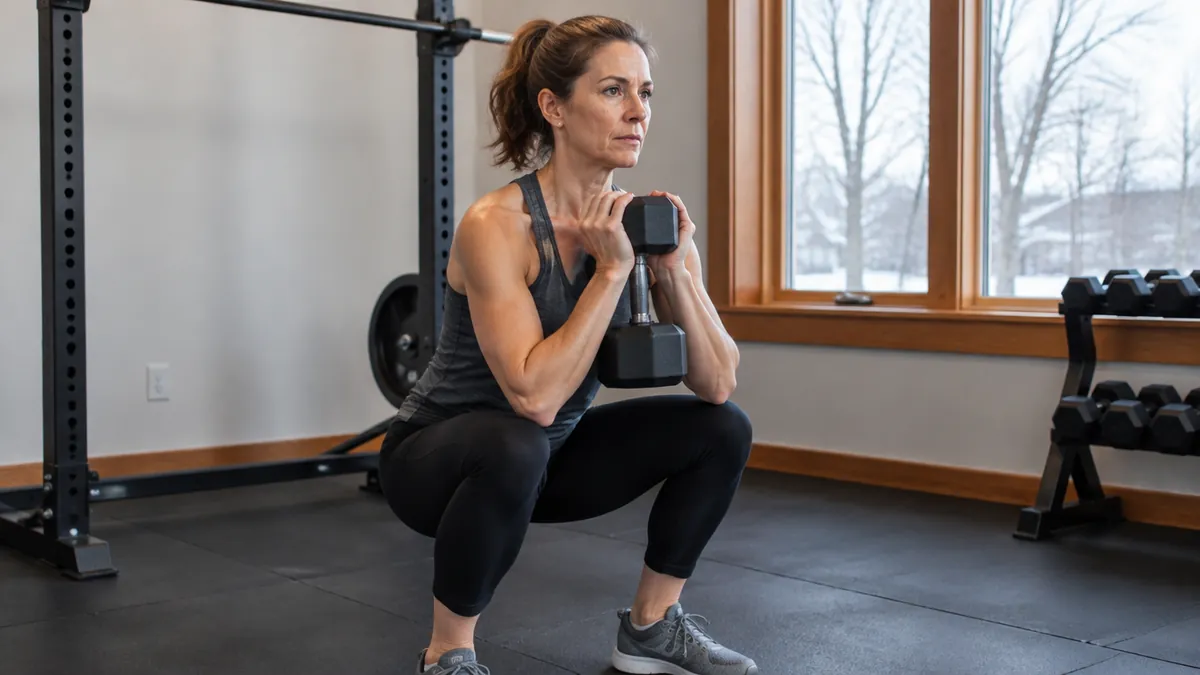
You do not need a gym membership, special equipment, or a complicated program. You need a handful of movements that train the major muscle groups, a way to gradually make them harder, and consistency. The foundation I teach women is five movement patterns: a squat (including sit-to-stand from a chair), a hinge (such as a deadlift or hip bridge), a push (wall or incline push-up), a pull (a row with bands or dumbbells), and a carry (walking while holding a weight in each hand). Two to three sessions per week of thirty to forty-five minutes is a strong starting point, with eight to twelve repetitions per set taken close to, but not quite to, muscular failure.
| Weeks | Focus | Example session (two to three times per week) |
|---|---|---|
| 1 to 4 | Learn the movements with light load | Sit-to-stand from a chair, 2 sets of 8 to 10. Glute bridge, 2 sets of 10. Incline push-up against a counter, 2 sets of 6 to 8. Band row, 2 sets of 10 to 12. Farmer carry, 2 trips of 30 seconds. |
| 5 to 8 | Add a little load or one more set | Goblet squat with a light dumbbell, 3 sets of 8 to 10. Romanian deadlift with dumbbells, 3 sets of 8 to 10. Incline push-up, 3 sets of 8 to 10. Dumbbell row, 3 sets of 10 each side. Farmer carry, 3 trips of 30 to 40 seconds. |
| 9 to 12 | Progressive overload | Increase the weight when the last two repetitions of every set feel manageable. Add step-ups or lunges. Keep one or two reps in reserve. Add a short brisk walk after each session. |
Progressive overload simply means that over time you gradually ask your muscles to do a little more than they did last time, either by adding load, adding repetitions, or improving control. It is the single most important principle. A woman who lifts the same three-pound weights for two years will not see the results of a woman who steadily progresses. That said, start conservatively. Joint aches are common after menopause, and a month of gentle ramp-up prevents the setbacks that make women quit.
What About Bone? The LIFTMOR Trial
Women are often told, rightly, that weight-bearing exercise is good for bones. Less commonly, they are told how much load and what kind. In the LIFTMOR trial, published in 2018, researchers randomized 101 postmenopausal women with low bone mass to either an eight-month program of twice-weekly, thirty-minute, supervised high-intensity resistance and impact training, or a home-based low-intensity program. The supervised group, which lifted heavy relative to their ability, improved lumbar spine bone density by about 2.9 percent, while the control group lost about 1.2 percent. Femoral neck bone density was roughly stable in the training group and fell in the control group (see Watson and colleagues, Journal of Bone and Mineral Research, 2018).
I share this with an important caution, because it is easy to misread. That program was supervised by trained staff, delivered to women who had been screened, and progressive. It is not an argument for a woman with osteoporosis to attempt heavy deadlifts alone in her garage. If you have a known vertebral fracture, a T-score in the osteoporosis range, or significant pain, work with a physical therapist or a trainer experienced with bone health, and avoid loaded spinal flexion and twisting until you have been assessed. For most women with normal or mildly reduced bone density, progressive resistance training is both safe and beneficial. The point is that load matters, and gentle exercise alone may not be enough to change bone.
Creatine: What the Evidence Actually Shows
Creatine monohydrate has moved from the gym bag to the doctor's office, and women ask me about it regularly, so let me summarize what the research shows, including the disappointing parts. Creatine is a compound your muscles use for rapid energy. Supplementation can increase the stores in muscle, and a 2026 systematic review and meta-analysis of seven randomized, placebo-controlled trials in 608 postmenopausal women found small gains in lean mass (about 0.4 kilograms on average) and a meaningful gain in leg-press strength (about 7.5 kilograms), with the benefit appearing mainly when creatine was combined with resistance training and taken at 5 grams a day or more. There was no overall change in bone mineral density, and adverse events were mild and similar to placebo (see Naddafha and colleagues, Journal of the International Society of Sports Nutrition, 2026).
The bone result deserves special mention. An earlier, small one-year trial suggested creatine plus resistance training might slow bone loss at the femoral neck. A much larger, two-year randomized trial of 237 postmenopausal women found no effect of creatine on femoral neck bone density, though it did observe some favorable changes in bone geometry (see the 2023 two-year randomized trial). So the honest summary is this: creatine is a reasonable, low-risk supplement that can modestly help strength and lean mass when paired with lifting, and it should not be sold as a bone medication. If you have kidney disease, talk to your clinician before starting. If you take it, creatine monohydrate is the form with the evidence behind it, and consistent daily use matters more than timing.
Cardio, Intensity, and Not Overdoing It
Aerobic exercise matters for your heart, your mood, and your sleep, and I encourage a daily walk, ideally outdoors in daylight when weather and safety allow. Beyond that, more is not always better at this stage. Women who add long, grueling workouts on top of poor sleep and chronic stress sometimes find that their sleep gets worse and their recovery suffers. A balanced week for most women might include two or three strength sessions, one or two moderate cardio sessions, and a daily walk. High-intensity intervals have their place and the research on them is encouraging, but I would introduce them only once the strength foundation and sleep are in place.
Finally, if your goal is to understand how muscle protection fits with weight loss medications, hormone therapy, or a comprehensive hormonal evaluation, it is worth noting that none of these replaces training. They create the conditions in which training works better. We return to that in the hormone therapy and special situations sections.
Your Bones: The Quiet Loss Nobody Warns You About
Of everything that changes after menopause, bone loss is the one I would most like to move to the front of every woman's mind, precisely because it is invisible. There is no sensation of bone thinning. There is no lab on a standard annual panel that reflects it. A woman can feel well, look well, and be losing bone steadily for years, and the first sign may be a broken wrist after a slip on black ice, or a hip fracture that changes the rest of her life. I want you to know the numbers now, while you can still change them.

How Fast Does Bone Disappear After Menopause?
Bone is living tissue that is constantly being broken down and rebuilt. Estrogen restrains the cells that break bone down. When estrogen falls, the breakdown side of the cycle outpaces the rebuilding side, and bone density declines. SWAN gave us the clearest picture of when and how fast. In an analysis of 862 women who had a documented natural final menstrual period, researchers found that bone density loss began about a year before the last period, ran at its fastest pace until about two years afterward, and then slowed but did not stop (see Greendale and colleagues, Journal of Bone and Mineral Research, 2012).
In the reference group of white women in that study, lumbar spine bone density fell by about 2.5 percent per year during that fast "transmenopause" window, and femoral neck (the top of the thigh bone, near the hip) fell by about 1.8 percent per year. In the following three years, loss continued at roughly 1 percent per year at both sites. Added up across the ten years surrounding the final period, the cumulative loss was about 10.6 percent at the spine and about 9.1 percent at the femoral neck. Women with higher body mass index lost bone more slowly, and rates differed by ethnicity. The Bone Health and Osteoporosis Foundation notes that some women lose up to 20 percent of their bone density in the five to seven years after menopause, which tells you that the range between women is wide (see the BHOF guidance for women).
Two points about those numbers matter to me clinically. First, the loss is front-loaded. The steepest decline happens in a window that begins before your last period and ends a couple of years after it, which is exactly when many women are told they are "through it" and nobody is looking at their bones. Second, the baseline you start from matters as much as the speed of loss. A woman who entered menopause with strong peak bone mass has more to draw on than a woman who entered it with low bone density, which is part of why a baseline DXA scan is so informative.
Why Fractures Matter More Than a Number on a Scan
The Bone Health and Osteoporosis Foundation estimates that roughly one in two women over 50 will break a bone because of osteoporosis, that about 10 million Americans have osteoporosis, and that another 44 million have low bone density. The organization also points out that a woman's lifetime risk of a hip fracture is comparable to her combined risk of breast, uterine, and ovarian cancer. I do not share that comparison to scare you. I share it because most women fear breast cancer, correctly, and have almost never been told that hip fracture is a comparably common event.
Fractures are not only a problem of the hip. Vertebral compression fractures, small collapses in the bones of the spine, can happen with little or no pain. Their signs are subtle: loss of height of an inch or more, a rounding of the upper back, new back pain that eases when you lie down, or a clothing fit that changes with no weight change. Many women are told their shrinking is "normal aging," when in fact it can represent a series of silent spinal fractures. If you have lost height, ask for a DXA scan and a vertebral assessment.
Reading a DXA Scan
A DXA, or dual-energy X-ray absorptiometry scan, is a painless, low-radiation test that measures bone density, usually at the lumbar spine and hip. Results are reported as a T-score, which compares your bone density to that of a healthy young adult. By the World Health Organization's definitions, a T-score of minus 1.0 or higher is normal, a score between minus 1.0 and minus 2.5 is low bone mass, often called osteopenia, and a score of minus 2.5 or lower is osteoporosis. A fragility fracture of the hip or spine can also establish a diagnosis of osteoporosis regardless of the scan.
Do not stop at the T-score. Clinicians use a tool called FRAX, which combines your bone density with age, prior fractures, family history, smoking, alcohol, steroid use, and other factors to estimate your ten-year risk of a major osteoporotic fracture and a hip fracture. This matters because many fractures occur in women whose scans show osteopenia rather than osteoporosis, simply because there are far more women in the osteopenia group. "Osteopenia" is not a disease, but it is also not a pass. It is a signal that how you manage the next decade matters.
Who Should Be Screened, and When
Guidelines differ slightly on timing. The U.S. Preventive Services Task Force, in its 2025 update, recommends bone density screening for all women 65 and older, and for postmenopausal women younger than 65 who are at increased risk, determined by a clinical risk assessment (see the USPSTF recommendation statement in JAMA, 2025). The Bone Health and Osteoporosis Foundation takes a somewhat broader approach and states that DXA testing is routinely recommended for postmenopausal women and for men aged 50 and older. In practice, I encourage any postmenopausal woman with one or more of the risk factors below to ask her clinician for a baseline scan in her early postmenopausal years rather than waiting until 65.
- A parent who broke a hip, especially your mother, or a family history of osteoporosis
- Menopause before age 45, including surgical menopause, or long gaps without periods earlier in life
- A prior fracture from a minor fall or bump after age 40
- A low body weight or a body mass index below 20, or a history of an eating disorder
- Current or past smoking, or regular alcohol use of three or more drinks a day
- Long-term use of oral steroids such as prednisone, or certain other medications including aromatase inhibitors and high-dose thyroid hormone
- Rheumatoid arthritis, celiac disease, inflammatory bowel disease, type 1 diabetes, or an overactive parathyroid or thyroid
- Significant height loss, a rounded upper back, or back pain that began without injury
- Rapid or large weight loss, including weight loss on a GLP-1 medication, which tends to reduce bone density along with fat and muscle
What Actually Protects Bone
Bone health after menopause rests on a handful of well-established pillars, and a few popular add-ons with weaker evidence. I will take them in order.
Load. Bone responds to mechanical stress, as the strength training section explained. Progressive resistance training and, where appropriate, impact activity such as brisk walking, stair climbing, and jumping variations are the closest thing to a bone-building exercise prescription. A 30-minute walk is wonderful for your heart and mood, but by itself it does little to increase bone density.
Protein. A large share of bone's internal structure is protein, mainly collagen. Adequate protein supports both bone and the muscle that loads it, and the old worry that protein "leaches" calcium from bone is not supported by good evidence when calcium intake is adequate.
Calcium. The National Institutes of Health recommends 1,200 milligrams a day for women aged 51 to 70 (see the NIH Office of Dietary Supplements calcium fact sheet). Food is the best source because calcium from food is well absorbed, is spread through the day, and does not come with the kidney-stone concerns some supplements carry. A typical Midwestern diet that includes yogurt, milk, and cheese can reach this goal; a diet that skips dairy needs deliberate planning with fortified foods, canned fish with bones, tofu set with calcium, and leafy greens. If you need a supplement, aim to fill the gap rather than replace food, keep your total intake below the upper limit of 2,000 milligrams per day for adults over 50, and take calcium carbonate with meals or choose calcium citrate if you take acid-reducing medication.
| Food (approximate serving) | Calcium (approximate, varies by brand) |
|---|---|
| Plain yogurt, 1 cup | About 300 to 400 mg |
| Milk, 1 cup | About 300 mg |
| Cheddar or other aged cheese, 1.5 ounces | About 300 mg |
| Canned sardines with bones, 3 ounces | About 300 mg |
| Calcium-set tofu, half a cup | About 250 mg or more |
| Fortified orange juice or plant milk, 1 cup | About 300 mg, check the label |
| Cooked kale or collards, 1 cup | About 150 to 250 mg |
Vitamin D. The official recommendation is 600 international units a day through age 70 and 800 after that, with an upper limit for general supplementation of 4,000 units a day. How much you actually need depends on your sun exposure, skin, body weight, and, most reliably, a 25-hydroxyvitamin D blood level. Experts disagree on the ideal level: the Institute of Medicine concluded that a level of about 20 nanograms per milliliter meets the needs of most people, while many clinicians and some earlier guidelines aim for 30 or higher. What is not in dispute is that low vitamin D contributes to bone loss and muscle weakness, and that people in northern latitudes are at higher risk of deficiency.
That includes you. In a classic 1988 study, researchers found that human skin exposed to sunlight in Boston, at 42 degrees north, produced no vitamin D3 from November through February, and that the ineffective winter period was even longer at higher latitudes (see Webb, Kline, and Holick, Journal of Clinical Endocrinology and Metabolism, 1988). Grand Rapids, Milwaukee, Madison, and Detroit sit near that same latitude or north of it, Green Bay is farther north, and Marquette and the Keweenaw are farther still. That means that for roughly four months of the year, and longer in the northern parts of both states, sunlight will not make vitamin D in your skin, no matter how long you stand outside in the cold. Add the fact that you are covered head to toe in winter, and it is easy to see why winter vitamin D deficiency is so common in our region. For a woman with bone risk, a long northern winter, or symptoms like fatigue and aching, I check a 25-hydroxyvitamin D level and adjust the dose to the result rather than guessing. For more on how winter affects vitamin D and thyroid function in this region, see our thyroid pillar article.
Magnesium, vitamin K2, and other add-ons. Magnesium is involved in bone metabolism and many women do not get enough, so food sources such as nuts, seeds, beans, and whole grains are worth emphasizing. Vitamin K2 and other bone-support supplements have attracted a lot of marketing. The trial evidence for fracture prevention in postmenopausal women is mixed, and I do not treat them as bone medications. If you take warfarin, do not add vitamin K without speaking to your prescriber.
Alcohol, smoking, and crash dieting. Heavy alcohol use harms bone, smoking accelerates bone loss, and rapid weight loss reduces bone density along with fat and muscle. These are all practical levers, especially for women who are cutting calories aggressively or using weight loss medications.
Falls: A Winter Problem in Our Region
Bone density is only half of fracture risk. The other half is falling. In Michigan and Wisconsin, where sidewalks and parking lots are glazed with ice for months, falls are a seasonal hazard that deserves its own plan. Wear footwear with good tread, and consider slip-on ice traction cleats for the walk to the mailbox or the car. Keep salt or sand by the door, and treat the steps first. Take shorter steps on slippery surfaces, keep your hands free, and avoid carrying heavy loads that obscure your feet. Check your vision, review any medications that cause dizziness or drowsiness, and pay attention to the nighttime route from the bedroom to the bathroom. Balance and strength training, including tai chi and simple single-leg stands at the kitchen counter, reduce fall risk, and they pair naturally with the resistance training described above.
Medications for Bone, in Plain Language
For women whose bone density is in the osteoporosis range, who have had a fragility fracture, or whose FRAX risk is high, lifestyle alone is rarely enough, and medication reduces fracture risk. The main categories are the bisphosphonates (such as alendronate, risedronate, and zoledronic acid), denosumab, the bone-building agents (teriparatide, abaloparatide, and romosozumab), and raloxifene. Menopausal hormone therapy also prevents bone loss and reduces fracture risk, and I discuss it in the hormone therapy section. These drugs have benefits and risks, including uncommon problems with long-term bisphosphonate use such as jaw osteonecrosis and atypical thigh fractures. Stopping denosumab abruptly causes a rapid rebound in bone loss and a risk of spinal fractures, so it should only be stopped under a plan from your prescriber. This is territory where I want you working with a physician or endocrinologist who treats osteoporosis, and where my role is to help you understand your options and coordinate care, not to replace that specialist.
When Low Bone Density Isn't "Just Menopause"
Some women lose more bone than menopause alone would explain. Before attributing a low DXA to menopause, a thorough clinician considers secondary causes: vitamin D deficiency, an overactive parathyroid gland, an overactive thyroid or too much thyroid medication, celiac disease or other malabsorption, chronic kidney disease, certain medications, and low testosterone or estrogen from other causes. A basic evaluation includes calcium, kidney function, 25-hydroxyvitamin D, and thyroid testing, with parathyroid hormone and celiac testing added when the picture suggests it. This is the kind of coordinated lab review that can change a "bone loss from menopause" story into a treatable one.
Your Heart: Cholesterol, Blood Pressure, and Rising Risk
If bone loss is the silent risk women do not hear about, heart disease is the loud one they hear about wrong. Surveys over the years have shown that many women believe breast cancer is the leading threat to their lives. The Centers for Disease Control and Prevention reports that heart disease is the leading cause of death for women in the United States, accounting for about one in every five female deaths (see the CDC overview of women and heart disease). Before menopause, women are relatively protected compared with men of the same age. After menopause, that gap narrows. Understanding why gives you something you can act on.
What the American Heart Association Concluded
In 2020, the American Heart Association published a scientific statement titled "Menopause Transition and Cardiovascular Disease Risk: Implications for Timing of Early Prevention." The writing group, chaired by Dr. Samar El Khoudary, reviewed the evidence and concluded that cardiovascular risk accelerates for women during the menopause transition, in part through changes in body composition, lipids, and blood vessel health. The statement also noted that an earlier age at natural menopause tends to be a marker of higher cardiovascular risk, and that surgical menopause before natural menopause is also associated with higher risk (see El Khoudary and colleagues, Circulation, 2020). The practical message of the statement is the title itself: the menopause transition is a window for early prevention, not a reason for fatalism.
The Cholesterol Jump Most Women Never See
One of the clearest pieces of evidence comes from SWAN. Researchers studied 1,054 women who went through a natural final menstrual period and compared two models of how cardiovascular risk factors change: a model based on chronological aging, and a model anchored to the final menstrual period. For most risk factors, including blood pressure, glucose, insulin, and inflammatory markers, the data fit chronological aging, meaning they changed gradually with years. But total cholesterol, LDL cholesterol, and apolipoprotein B showed a distinct, substantial rise in the year before to the year after the final menstrual period that was independent of age and weight (see Matthews and colleagues, Journal of the American College of Cardiology, 2009).
In plain English, there appears to be a menopause-specific step upward in the type of cholesterol that builds plaque in arteries. A woman can have a perfectly acceptable lipid panel at 47 and a clearly worse one at 53 without having changed her diet or her weight much at all. This is why I do not accept "your cholesterol was fine last time" as a reason to skip testing after menopause, and why I recommend a repeat lipid panel, ideally with apoB, in the first few years after your final period.
Blood Pressure: Know Your Number
The 2025 American Heart Association and American College of Cardiology guideline on high blood pressure, the first major update since 2017, continues to define hypertension as 130 over 80 or higher and sets a goal of keeping blood pressure below 130 over 80 for adults. It emphasizes lifestyle change as the first step, and for lower-risk adults in the 130 to 139 over 80 to 89 range it recommends adding medication if blood pressure remains above goal after three to six months of lifestyle changes. It also updates risk estimation to the PREVENT equations (see the American College of Cardiology summary of the 2025 guideline).
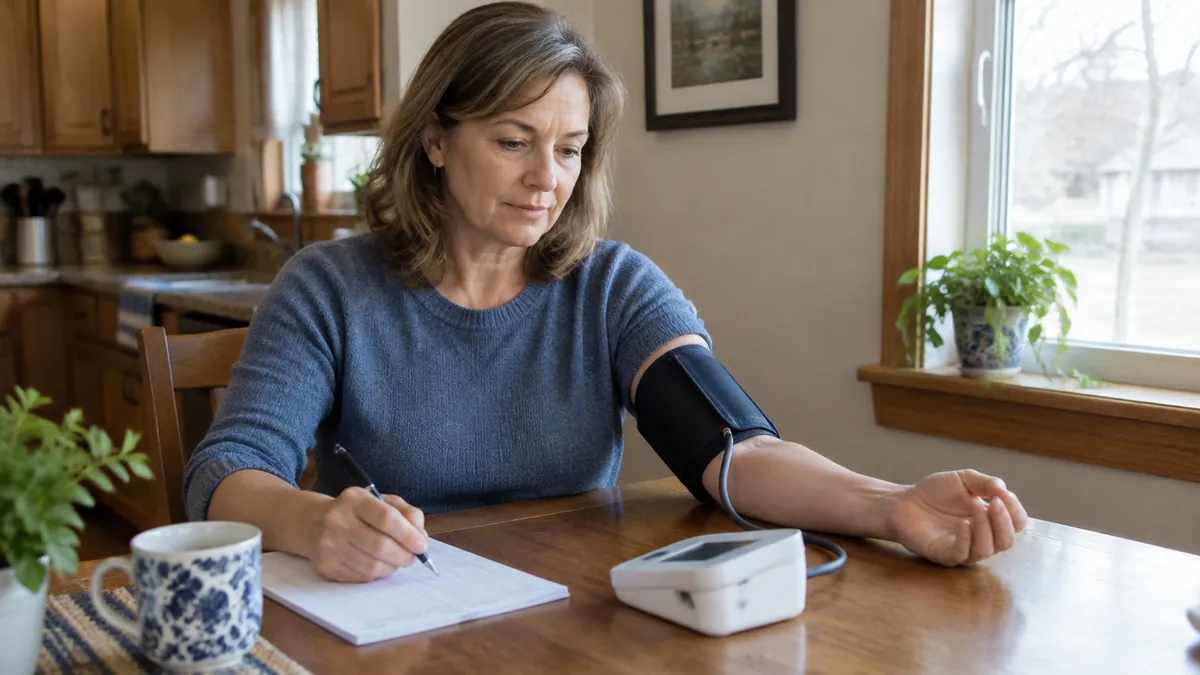
Office readings can be misleading, especially if you are anxious about the visit, so I encourage home monitoring. A validated upper-arm cuff is more reliable than a wrist cuff. Sit quietly for five minutes with your back supported, feet flat, and your arm resting at heart level. Take two readings a minute apart, in the morning before coffee or medication and again in the evening, for seven days, and bring the log to your appointment. A pattern of readings at home tells your clinician far more than one number in a waiting room.
Many things can push pressure up after menopause: weight gain around the midsection, less sleep, more alcohol, sodium, and, importantly, untreated sleep apnea, which I discuss in the next section. Midwestern food, wonderful as it is, can carry a lot of sodium. Brats, cheese curds, canned soups, deli meats, pickles, and restaurant gravy add up quickly, and the potassium in vegetables, fruit, beans, and yogurt helps offset it.
The 2026 Cholesterol Guideline: What Changed
In March 2026, the American College of Cardiology and the American Heart Association, with a number of partner organizations, published a new dyslipidemia guideline that replaced the 2018 cholesterol guideline (see the American College of Cardiology summary). Four changes matter for women past menopause.
- Lipoprotein(a), or Lp(a), should be measured at least once in every adult. Lp(a) is a cholesterol-carrying particle that is largely determined by your genes and barely changes with diet or exercise. A high level, generally 125 nanomoles per liter (50 milligrams per deciliter) or more, raises lifetime risk of heart attack and stroke, and is a risk-enhancing factor. Because it is mostly inherited, you generally only need to test it once, and a high result is also useful for your relatives. Many women have never had it measured.
- Risk is now estimated with the PREVENT equations for adults aged 30 to 79, which replace the older Pooled Cohort Equations and take kidney function and metabolic health into account.
- LDL cholesterol treatment goals are back. For people at borderline or intermediate risk the goal is below 100 milligrams per deciliter, and for those at high risk below 70.
- Apolipoprotein B (apoB) has a defined role in some groups, particularly people with diabetes, high triglycerides, or established heart disease, as a more accurate marker of how many cholesterol-carrying particles are circulating. The guideline also supports selective use of a coronary artery calcium scan in women over 45 who are at borderline or intermediate risk.
I would add a clinical note from my own practice. Even outside the groups the guideline singles out, I find apoB useful in postmenopausal women, because LDL cholesterol and apoB can disagree, and women with metabolic syndrome or insulin resistance are the ones in whom they most often do. An apoB that is higher than the LDL would predict is a reason to take the numbers more seriously.
Women-Specific Risk Factors to Mention
Certain parts of your history carry extra information about your heart that is easy to forget by the time you are 55. Tell your clinician if you had high blood pressure or preeclampsia in pregnancy, gestational diabetes, a preterm delivery, or if you went through menopause before age 45 or had both ovaries removed. Autoimmune and inflammatory conditions such as rheumatoid arthritis and lupus also raise cardiovascular risk. These are risk-enhancing factors that can change how aggressively your clinician treats a borderline number.
Symptoms in Women Can Look Different
Chest pressure or pain is the most common heart attack symptom in both sexes, but women are more likely than men to also have shortness of breath, nausea or vomiting, back or jaw pain, unusual fatigue, or a vague sense of indigestion, and women are more likely to delay seeking emergency care, according to CDC reporting. If you have any combination of those symptoms that is new, severe, or comes with sweating or faintness, call 911 rather than driving yourself or waiting to see if it passes. No one will think you overreacted.
What About Hormone Therapy and the Heart?
This is one of the most misunderstood areas of menopause medicine, so I want to be precise. Menopausal hormone therapy is not recommended for the primary purpose of preventing heart disease. At the same time, the fear that was attached to it for two decades was overstated for women who begin it in early menopause. The ELITE trial, a randomized study of 643 women, found that estradiol slowed the progression of carotid artery thickening in women who started within six years of menopause, but not in women who started ten or more years after it, although it did not show a difference in coronary artery calcium (see Hodis and colleagues, New England Journal of Medicine, 2016). In other words, the timing of hormone therapy matters for the cardiovascular risk balance, which is the consistent message of the Menopause Society's 2022 position statement. We cover this in more detail in the hormone therapy section.
The Everyday Moves That Protect Your Heart
The American Heart Association summarizes cardiovascular health in eight components it calls Life's Essential 8: eating well, being active, avoiding nicotine, getting healthy sleep, managing weight, and keeping cholesterol, blood sugar, and blood pressure in healthy ranges. A few practical emphases for women past menopause in our region:
- Eat a Mediterranean-style pattern with a Midwestern accent. More vegetables, beans, berries, nuts, olive oil, whole grains, and fish, and less processed meat and refined starch. Michigan blueberries, cherries, apples, and Wisconsin beans, along with Great Lakes fish within advisory limits, fit naturally.
- Watch sodium and alcohol. Both raise blood pressure, and alcohol also fragments sleep, as I discuss in the sleep section.
- Treat sleep as a heart measure. Poor sleep and untreated sleep apnea raise blood pressure and cardiovascular risk.
- Stay active daily and lift twice a week. Muscle improves insulin sensitivity and lipid handling.
- Do not dismiss medication. If your clinician recommends a statin or a blood pressure medicine after a risk calculation, that is not a failure of lifestyle. It is arithmetic. Statins have strong evidence for reducing heart attacks and strokes in people at elevated risk, and for most people the benefit outweighs the side effects. If you are hesitant, ask your clinician to show you your risk estimate and what a medication changes, then decide together.
Thyroid function also affects cholesterol, and an underactive thyroid can raise LDL. Before attributing a new cholesterol rise entirely to menopause, make sure a full thyroid panel has been done. The ultimate guide on this site walks through the overlap between thyroid, cortisol, insulin, and sex hormones in detail in our hormones and weight resistance guide.
Sleep After Menopause: Night Sweats, 3 AM Waking, and Sleep Apnea
Sleep trouble is among the most common reasons women in their fifties walk into my virtual office, and also one of the most under-treated. Women describe it in different ways. Some cannot fall asleep. Some fall asleep easily and wake at 2 or 3 AM, wide awake, with a racing mind. Some wake drenched and cold. Some sleep seven hours and wake feeling as though they have not slept at all. If you have been told to "practice better sleep hygiene" and it has not helped, you are in good company, and there is a reason it has not helped: after menopause, sleep disruption usually has more than one cause, and sleep hygiene addresses only one of them.
I have written at length about the hormonal mechanics of 3 AM waking, including cortisol rhythm, progesterone, and overnight blood sugar, in our guide to hormonal sleep and anxiety. I will not repeat that material here. This section focuses on what is distinct after menopause: the role of night sweats, a breathing problem that becomes more common, and the treatments with the best evidence.

The Many Reasons You Might Be Awake
- Night sweats and hot flashes. A hot flash during sleep often wakes you and, even when it does not fully wake you, fragments sleep architecture. Women often describe waking after the flash has passed, cold and damp, and then being unable to settle.
- Loss of progesterone's calming effect. Progesterone has a metabolite that acts on the same receptors in the brain that calming medications use. After menopause, that source is gone, and some women notice that the loss of that gentle sedative effect shows up as lighter, more fragile sleep.
- Sleep-disordered breathing. This is the one I most want you to hear about, and I cover it in the next subsection.
- Nocturia. Waking to urinate once or twice a night becomes more common, partly from changes in the bladder and urethra related to low estrogen, partly from sleep apnea, and partly from evening fluids, caffeine, and alcohol.
- Restless legs and low iron. Restless legs syndrome becomes more common in midlife. A ferritin level that is low or at the low end of the reference range is a well-known, treatable contributor, which is why I always check it.
- Pain. Joint aching and back pain are more common after menopause and make it harder to stay comfortable at night.
- Mood and anxiety. New or worsening anxiety and depression can both cause and result from poor sleep, and both deserve direct treatment rather than being dismissed as stress.
- Alcohol and caffeine. A nightcap can make you sleepy and then fragment the second half of the night. Many women find their caffeine tolerance shortens after menopause.
The Condition Many Women Are Never Screened For: Sleep Apnea
Obstructive sleep apnea occurs when the airway repeatedly narrows or closes during sleep, causing pauses in breathing and micro-arousals that you may not remember. It has long been thought of as a condition of overweight middle-aged men, and as a result it is chronically under-diagnosed in women. The Wisconsin Sleep Cohort Study, a long-running population-based study at the University of Wisconsin, looked at this question in women directly. In a 2003 analysis of 589 women, researchers found that after adjusting for age, body habitus, smoking, and other factors, postmenopausal women had about 2.6 times the odds of having sleep-disordered breathing at the mild-or-greater level, and about 3.5 times the odds at the moderate-or-greater level, compared with premenopausal women (see Young and colleagues, American Journal of Respiratory and Critical Care Medicine, 2003). Women in the perimenopausal group did not show a statistically significant increase. In other words, the risk rose most clearly after menopause itself.
Women with sleep apnea often do not describe classic loud snoring and witnessed gasping. They are more likely to describe insomnia, unrefreshing sleep, daytime fatigue, morning headaches, low mood, and anxiety. Untreated sleep apnea raises blood pressure, strains the heart, worsens insulin resistance, and impairs memory and concentration. It is one of the most important things to rule out in a woman who has resistant hypertension, "menopausal" insomnia that does not respond to anything, or new brain fog. Our guide to perimenopausal brain fog lists sleep apnea among the common mimics for the same reason.
When to ask about a sleep study
Consider asking your clinician about screening for sleep apnea if you have two or more of the following.
- Snoring, or a partner who has noticed pauses in your breathing or gasping
- Waking unrefreshed even after a full night in bed
- Morning headaches or a dry mouth on waking
- High blood pressure, or blood pressure that is hard to control
- Waking often to urinate
- Daytime sleepiness, nodding off while reading or driving
- A larger neck circumference, a crowded throat, or recent weight gain
- Insomnia that has not responded to behavioral or hormonal treatment
Testing can often be done at home with a portable device that your clinician orders and interprets. If apnea is found, treatments include CPAP, a custom oral appliance, positional therapy, weight loss, and in selected cases surgery or implanted devices. Alcohol and sedatives can worsen apnea, so mention any you take.
What Works for Insomnia: CBT-I First
For chronic insomnia, meaning trouble sleeping at least three nights a week for three months or more, the American College of Physicians recommends cognitive behavioral therapy for insomnia, usually written as CBT-I, as the first-line treatment, because it improves sleep with fewer harms than sleep medications (see Qaseem and colleagues, Annals of Internal Medicine, 2016). A 2024 scoping review of trials in menopausal women also found that CBT-I reduces insomnia severity, with benefits lasting up to about six months (see the review in Life). CBT-I is not "sleep hygiene." It is a structured program that typically includes setting a consistent wake time, limiting time in bed to the time you actually sleep (sleep restriction), re-associating the bed with sleep (stimulus control), and addressing the worry and thoughts that keep you awake. It can be delivered by a trained clinician, in group programs, or through well-designed digital programs, and it is worth asking about even if you are also treating hot flashes.
Sleeping pills deserve a measured word. Prescription sedative-hypnotics can help in the short term for some people, but they carry risks, including dependence, next-day impairment, and falls, and those risks matter more with age. Melatonin has modest benefit for some sleep problems and is generally low risk, though product quality varies. Magnesium, valerian, and other supplements have limited and inconsistent evidence. I treat them as optional, low-risk experiments rather than solutions.
Cooling the Bedroom, Practically
Even if the cause of your waking is not hot flashes, a cooler sleeping environment helps, and for women with night sweats it is essential. These are the changes I suggest first, because they are cheap and quick.
- Keep the bedroom cool, in the low to mid 60s Fahrenheit for many women, even in winter. Many Michigan and Wisconsin furnaces overheat bedrooms. Turn the thermostat down at night.
- Layer your bedding so you can peel off a blanket without waking fully. Choose breathable fabrics such as cotton, linen, or bamboo, and consider moisture-wicking sleepwear.
- Place a quiet fan where it can blow across your upper body, and keep a glass of cold water and a spare set of sleepwear within reach.
- Take a lukewarm shower in the evening rather than a hot one, which can raise core temperature just before bed.
- Finish dinner at least two to three hours before bed, and keep alcohol, spicy food, and large meals out of the late evening.
- Set a caffeine cutoff by early afternoon, and see whether a trial of no caffeine after noon changes your 3 AM waking.
Light, Winter, and Your Body Clock
Midwestern winters have a hidden effect on sleep. The sun rises late and sets early, and many women leave for work in the dark and come home in the dark. Morning daylight is the strongest cue your body uses to set its internal clock, and weak light exposure can contribute to both poor sleep and low winter mood. Where you can, step outside for ten to twenty minutes within an hour of waking, even on cloudy days, when outdoor light is still far brighter than indoor lighting. A light therapy box, used under guidance, is an option for some women with winter depression or delayed sleep timing, though anyone with bipolar disorder or eye disease should talk with a clinician first. Keep your wake time consistent, including weekends, since regularity is one of the most reliable anchors for sleep.
Finally, if hot flashes are driving your sleep loss, treating them directly is often the most effective sleep intervention available. The next section lays out the options.
Hot Flashes and Night Sweats: How Long They Last and What Works
Nearly every woman is warned about hot flashes. Almost none is told how long they can last. For decades the conventional wisdom was "a year or two." The data say otherwise, and the gap between what women are told and what is true causes real distress. A woman who expects a short-term problem and is still waking drenched at 58 starts to wonder whether something is wrong with her.

How Long Do Hot Flashes Last?
The best answer comes from SWAN. In an analysis of 1,449 women who reported frequent hot flashes or night sweats, researchers found that the median total duration of these vasomotor symptoms was 7.4 years. For the 881 women who could identify the date of their final period, symptoms continued for a median of 4.5 years after it. Timing of onset mattered enormously: women whose symptoms began in premenopause or early perimenopause had the longest course, with a median total duration of more than 11.8 years, and women who were already postmenopausal when symptoms began had the shortest, a median of 3.4 years. The median duration also varied by ethnicity, from about 4.8 years in Japanese women and 5.4 years in Chinese women, to 6.5 years in non-Hispanic white women, 8.9 years in Hispanic women, and 10.1 years in Black women (see Avis and colleagues, JAMA Internal Medicine, 2015).
Those are medians, which means half of women had symptoms for longer than the figure. If you are five, eight, or even ten years past your last period and still having hot flashes, you are not an exception. You are well within the range the research describes, and you deserve treatment rather than a reminder to be patient.
What Is Actually Happening Inside Your Brain
A hot flash is not a malfunction of your skin or your blood vessels. It is a thermostat problem in your brain. Within the hypothalamus, which regulates body temperature, there is a group of neurons that respond to estrogen. When estrogen falls, signaling through a molecule called neurokinin B increases, which narrows the range of core body temperature your body treats as comfortable. When your temperature drifts even a small amount above that narrowed range, the brain triggers a rapid cooling response: blood vessels dilate, your skin flushes, you sweat, and your heart rate may rise, and when it is over, you may feel cold. Understanding this mechanism is not just academic. It is the reason the newest class of medications for hot flashes exists, because researchers realized they could block the neurokinin pathway directly without using hormones.
Triggers Worth Testing, Not Obsessing Over
Many women find a few triggers that reliably bring on a flash. Common ones include alcohol, hot beverages, spicy food, a warm room, tight or synthetic clothing, stress, and smoking. Higher body weight is associated with more frequent hot flashes in several studies. I suggest keeping a brief log for two weeks, noting when flashes occur, and looking for patterns. If wine at dinner reliably predicts a bad night, that is useful information. If nothing correlates, do not drive yourself crazy hunting for a trigger. The evidence that avoiding triggers substantially reduces flashes is limited, but the cost of testing them is low.
A Ladder of Options
The Menopause Society, formerly the North American Menopause Society, reviewed the evidence for non-hormonal treatments in its 2023 position statement and graded the options by the strength of evidence (see the 2023 nonhormone therapy position statement). Combining that review with the newest FDA approvals, here is how I think about the choices.
| Option | How it works | What the evidence says | Main cautions |
|---|---|---|---|
| Menopausal hormone therapy | Replaces the estrogen signal that the brain's thermostat depends on | The most effective treatment for hot flashes and night sweats, per the Menopause Society's 2022 position statement | Risk depends on type, dose, route, timing, and personal history. Women with a uterus need a progestogen. See the hormone therapy section. |
| Fezolinetant (Veozah) | Blocks the neurokinin 3 receptor in the brain's thermostat | FDA approved in 2023. Level I evidence in the Menopause Society's review. | Boxed warning added in December 2024 for rare but serious liver injury. Liver blood tests are required before starting and monitored afterward. |
| Elinzanetant (Lynkuet) | Blocks both neurokinin 1 and neurokinin 3 receptors, taken once nightly | FDA approved in October 2025 on the basis of the OASIS trials | Drowsiness, fatigue, and dizziness were more common than with placebo (about 12 percent versus 3.5 percent). Baseline liver tests are required. |
| SSRIs and SNRIs (paroxetine, venlafaxine, desvenlafaxine, escitalopram) | Act on serotonin and norepinephrine pathways involved in temperature control | Level I evidence. Low-dose paroxetine is FDA approved for hot flashes. | Nausea, sexual side effects, and withdrawal if stopped abruptly. Avoid paroxetine in women taking tamoxifen. |
| Gabapentin | Calms nerve signaling | Level I evidence, often helpful for night sweats and sleep | Drowsiness and dizziness, so many women take it at bedtime. |
| Oxybutynin | An anticholinergic bladder medication that reduces sweating | Level I to II evidence | Dry mouth, constipation, and cognitive concerns with long-term anticholinergic use, especially in older women. |
| Cognitive behavioral therapy and clinical hypnosis | Change how the brain processes and reacts to hot flashes | Level I evidence. Often reduces how bothersome flashes feel even if the count changes less. | Requires a trained clinician or a good program and some effort. |
| Weight loss, cooling strategies, trigger avoidance | Lower the body's heat load and sensitivity | Weight loss has some supporting evidence. Other strategies are reasonable but poorly proven. | Low risk. Do not expect them alone to solve severe symptoms. |
Notice that the rows of this table do not include the over-the-counter products marketed for hot flashes. The Menopause Society's review did not find enough evidence to recommend most supplements and herbal products for hot flashes, and it found paced respiration unhelpful. That includes black cohosh, red clover, soy isoflavones, and the many blended "menopause formulas." Some of these products show small benefits in individual trials and none in others, quality control varies widely, and rare liver injury has been reported with black cohosh. If you want to try one, tell your clinician, buy from a reputable manufacturer with third-party testing, and give it a fixed trial of a few months with a symptom log so you can tell whether it is doing anything.
The New Medications: What I Tell Women
The arrival of neurokinin antagonists is the biggest change in hot flash treatment in decades, and it matters most for women who cannot or prefer not to use hormones, including many breast cancer survivors. Fezolinetant, marketed as Veozah, was approved by the FDA in 2023. In December 2024 the FDA added a boxed warning for rare but serious liver injury and required liver testing before starting and periodic monitoring afterward (see the FDA drug safety communication). If you take it, you should know the warning signs: unusual fatigue, nausea, vomiting, itching, pale stools, dark urine, yellowing of the skin or eyes, or pain in the upper right abdomen, any of which means stopping the drug and calling your prescriber.
Elinzanetant, marketed as Lynkuet, was approved on October 24, 2025. It is taken as a capsule at bedtime and blocks two receptors, and its prescribing information requires baseline liver testing and warns about drowsiness and other nervous system effects (see the FDA prescribing information). In the pivotal trials, nervous system effects such as somnolence, fatigue, and dizziness occurred in roughly 12 percent of women on the drug versus 3.5 percent on placebo. Because it is taken at night and can be sedating, some women find it helps both flashes and sleep, while others find the daytime drowsiness a problem. Both drugs are relatively new, long-term data are still accumulating, and costs and coverage vary, so these are conversations to have with a prescriber who can monitor you.
When Night Sweats Are Not Menopause
I do not want to leave you with the impression that every night sweat is menopausal. Drenching sweats that come with fever, unexplained weight loss, swollen glands, new cough, or other new symptoms need prompt medical evaluation. Night sweats can also come from an overactive thyroid, infections, low blood sugar, sleep apnea, antidepressants and some other medications, alcohol, and, rarely, certain cancers. If your hot flashes began or changed after age 60, if they are one-sided, or if something about them simply feels different from the pattern you know, say so. A thorough clinician will check a thyroid panel, a complete blood count, and basic metabolic markers before settling on menopause as the explanation.
Hot Flashes and a Midwestern Winter
There is a particular indignity to a hot flash in a place where the wind chill is twenty below. You step from an overheated office into the cold, your body goes from flushing to shivering in minutes, and you spend the winter wearing and removing layers like a human onion. Some practical advice from the women I have worked with: wear layers you can quickly remove, favor natural or moisture-wicking fabrics next to the skin, keep a small fan or cooling towel at your desk, and carry an insulated cold drink instead of a hot one when you feel one coming on. In your car, a cool air vent angled at your face is not an extravagance in January. These are small things, but they take the edge off, and they are a bridge while you and your clinician decide on a longer-term plan.
The Symptoms Women Whisper About
Some of the most common symptoms after menopause are also the ones women are least likely to bring up. They do not mention vaginal dryness to a primary care provider who is running late. They do not tell their friends that sex has become painful. They assume that urinary urgency, a string of urinary tract infections, and leaking when they laugh are simply the price of getting older. I want to say something clearly: these symptoms are common, they are medical, and most of them are very treatable.
Genitourinary Syndrome of Menopause
The tissues of the vagina, vulva, urethra, and bladder are rich in estrogen receptors. When estrogen falls, these tissues become thinner, drier, less elastic, and more fragile. The medical term for the resulting collection of symptoms is genitourinary syndrome of menopause, or GSM. Symptoms include vaginal dryness, burning, irritation, pain with intercourse, reduced lubrication, light bleeding after sex, urinary urgency or frequency, burning with urination, and recurrent urinary tract infections. Unlike hot flashes, which tend to fade over time, GSM is chronic and tends to progress without treatment, because the underlying cause, low estrogen, persists. That is why a woman at 62 can have worse GSM than she did at 52, and why waiting it out does not work.
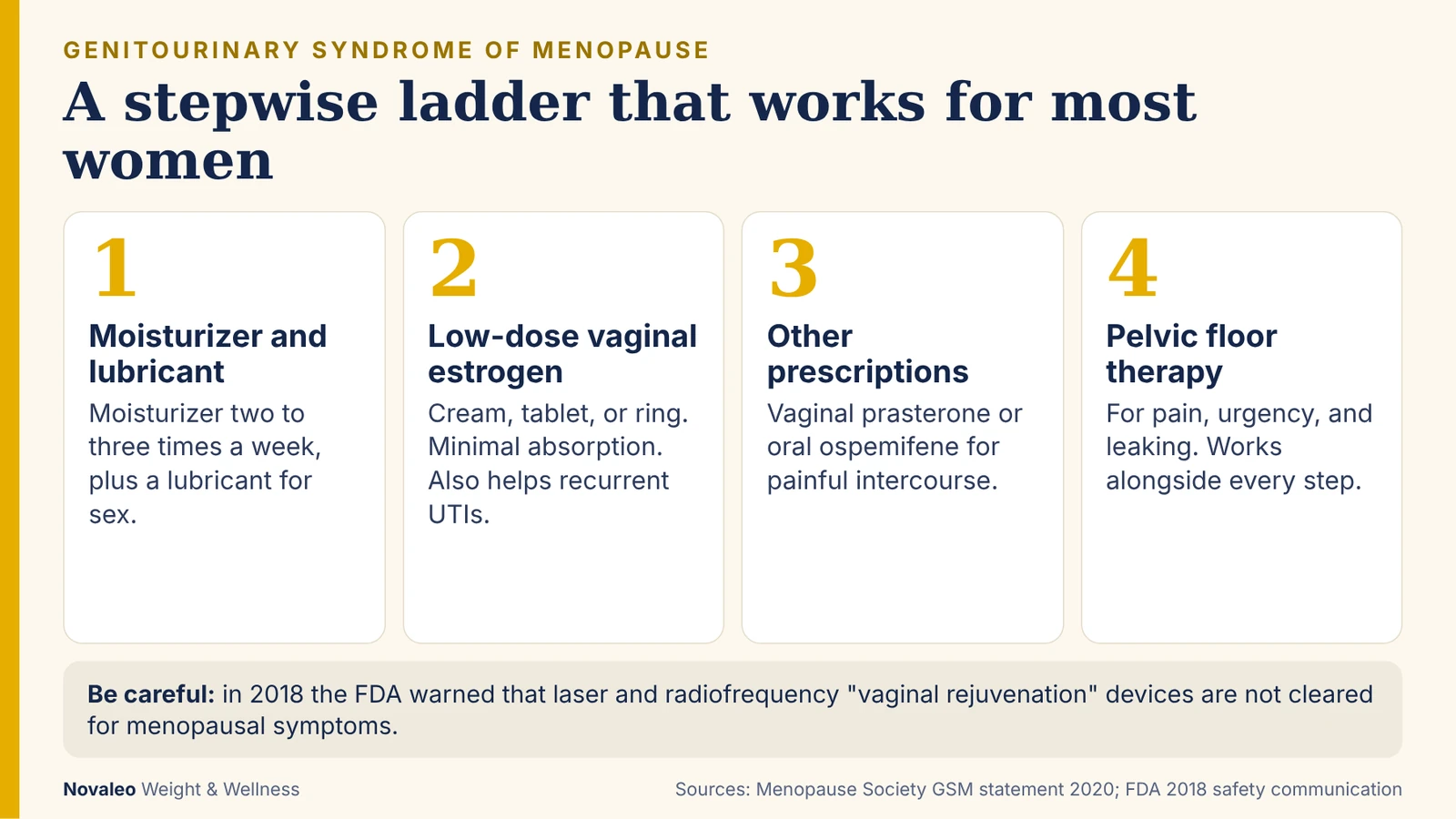
The Menopause Society's 2020 position statement on GSM lays out a stepwise approach (see the 2020 genitourinary syndrome of menopause position statement). In plain language, it looks like this.
- Start with non-hormonal basics. A vaginal moisturizer used regularly, two to three times a week and not only at the time of sex, helps restore comfort. A good lubricant at the time of sex reduces friction. Water-based and silicone-based lubricants are both reasonable choices, and silicone-based ones tend to last longer. Avoid scented products, douches, and harsh soaps.
- Add low-dose vaginal estrogen when basics are not enough. Vaginal estrogen comes as a cream, a small tablet or insert, or a ring. It is applied locally at a very low dose, with minimal absorption into the bloodstream, and it is the most effective treatment for GSM. It also reduces recurrent urinary tract infections in postmenopausal women. For many women, it can be used for years, and it is considered appropriate for most women regardless of age or how long ago they went through menopause, which makes it a different conversation from systemic hormone therapy.
- Consider other prescription options. Vaginal prasterone (a DHEA insert) and oral ospemifene are FDA-approved for painful intercourse due to menopause. They are worth discussing when vaginal estrogen is not suitable or not preferred.
- Pelvic floor physical therapy. A therapist trained in pelvic health can help with pain, muscle tension, urinary urgency, and incontinence. Many women never hear that this exists. It can make a profound difference, and it combines well with the other measures.
A word of caution about laser and radiofrequency treatments marketed for "vaginal rejuvenation." In 2018 the FDA issued a safety communication warning that these energy-based devices have not been cleared or approved for treating menopausal symptoms, and that it had received reports of burns, scarring, pain with intercourse, and recurring or chronic pain (see the 2019 commentary in Menopause summarizing the FDA warning). Studies have not shown that they work better than far less expensive standard treatments. If an advertisement promises a quick fix, ask your clinician first.
For women with a history of breast cancer or other hormone-sensitive conditions, the decision about vaginal estrogen is a joint one with the oncology team, and non-hormonal options come first. Do not assume you have no options, but do involve the people who know your cancer history.
Urinary Symptoms
Urgency, frequency, nighttime urination, leaking with coughing or exercise, and recurrent infections become more common after menopause. Some of this is GSM. Some is pelvic floor weakness after childbirth and years of strain. Some is related to sleep apnea, medications, caffeine, and diabetes. If you have recurrent urinary infections, blood in the urine, or pain that does not resolve, those should be evaluated rather than treated by guesswork. The pelvic floor and local estrogen strategies above are the most commonly overlooked treatments.
Desire, Arousal, and the Honest Testosterone Conversation
Sexual desire after menopause is shaped by far more than hormones. Relationship quality, stress, sleep, pain, body image, mood, and medications such as antidepressants all matter, and so does whether sex is physically comfortable. I always start by treating pain and dryness, which can quietly erode desire, and by looking at mood, sleep, thyroid function, and medications. Counseling or sex therapy, individually or with a partner, helps many women and is not a last resort.
Testosterone attracts a lot of attention, much of it overblown. In the United States there is no FDA-approved testosterone product for women. The 2019 Global Consensus Position Statement on testosterone therapy for women concluded that the best evidence supports a trial of testosterone in postmenopausal women with hypoactive sexual desire disorder, meaning a distressing loss of sexual desire, and that the evidence does not support its use for other reasons such as improving mood, energy, cognition, bone density, or muscle (see Davis and colleagues, Journal of Clinical Endocrinology and Metabolism, 2019). The statement recommends keeping blood levels in the premenopausal physiologic range, notes that transdermal forms avoid the adverse lipid effects seen with oral forms, and acknowledges mild side effects such as acne and increased body hair. If a clinician offers you testosterone, ask what the goal is, which product and dose, how it will be monitored, and when you will stop if it is not working.
Joints, Skin, Hair, Mood, and Memory
This section covers a group of symptoms that women often do not connect to menopause, and that many clinicians do not either. They deserve attention because they affect daily life and because some of them have other treatable causes worth ruling out.
Aching Joints
Many women notice new stiffness and aching in the hands, knees, hips, and shoulders around the time of menopause. Estrogen has anti-inflammatory and tissue-supporting effects, and its decline seems to heighten pain and stiffness for some women. The morning stiffness that eases with movement is a common pattern. Do not assume all joint pain is "just menopause," though. Rheumatoid arthritis, thyroid disease, vitamin D deficiency, osteoarthritis, and polymyalgia rheumatica can all start in this decade. Swelling, warmth, stiffness lasting more than an hour in the morning, or symptoms that involve several joints symmetrically deserve a prompt evaluation. For ordinary menopausal aching, the most reliable remedies are the same ones that help everything else: regular movement, strength training to support the joints, weight reduction where relevant, adequate protein, and omega-3 fats from fish. Some women find hormone therapy eases joint symptoms, though the evidence is modest and it should not be started solely for that purpose.
Skin
Skin contains estrogen receptors and a good deal of collagen, and skin tends to become thinner, drier, and less elastic in the years after menopause. The basics matter more than any expensive product: a daily broad-spectrum sunscreen, a gentle moisturizer, protection from winter wind and dry indoor heat, adequate protein and hydration, and not smoking. Prescription retinoids have the best evidence among topical products for improving aging skin. Because skin cancer risk rises with age and sun exposure, an annual skin check is a sensible addition to your screening routine, and so is attention to any mole or spot that changes.
Hair
Scalp hair thinning, often at the part or crown, and increased facial hair are both common after menopause, as the balance between estrogen and androgens shifts. Before attributing hair loss to hormones, I check ferritin, a complete thyroid panel, vitamin D, and B12, because low iron stores and thyroid disease are among the most common treatable contributors. Our guide on thyroid dysfunction when the TSH is normal explains why a TSH alone can miss the picture. Topical minoxidil and, in some cases, other therapies are available through a dermatologist for pattern thinning.
Mood: Take It Seriously
The menopause transition is a window of higher vulnerability to depression. In SWAN, women who were in the menopausal transition were at higher risk of major depression than women who were premenopausal, even after accounting for other factors, and a prior history of depression raised the risk further (see Bromberger and colleagues, Psychological Medicine, 2011). For some women the mood changes ease once hormones stabilize after menopause. For others they persist or begin later, driven by sleep loss, pain, isolation, grief, or life transitions common in the fifties, including children leaving, parents declining or dying, retirement planning, and divorce.
If you are feeling persistently low, hopeless, irritable, or numb, or have lost interest in things you used to enjoy, please do not wait it out. Effective treatments include psychotherapy, antidepressant medication, treatment of sleep and pain, exercise, and, in some perimenopausal women, hormone therapy. If you ever have thoughts of harming yourself, call or text 988, the Suicide and Crisis Lifeline, any time (see 988lifeline.org). Our guide to hormonal sleep and anxiety emphasizes the same point: hormone evaluation is a complement to mental health care, never a replacement for it.

Connection is itself a treatment. A winter in the Upper Midwest can be isolating, particularly if you live alone, work remotely, or live far from family. Women who keep a standing walk, a book club, a craft group, a faith community, or a regular call with a friend through the dark months consistently tell me they sleep better and feel better. Put it on the calendar the way you would a medical appointment.
Memory and Thinking
Many women describe word-finding trouble, forgetfulness, and slowed thinking in the transition. For most women these changes are most noticeable during perimenopause and often improve after hormones stabilize, as explained in our guide to perimenopausal brain fog, which also lays out the features that call for a different kind of evaluation. After menopause, protect your thinking the way you protect your heart: treat blood pressure, check for sleep apnea, stay physically active, keep up social and intellectual engagement, and address hearing and vision. The Menopause Society does not recommend starting hormone therapy solely to prevent dementia or cognitive decline.
Digestion, Bloating, and Gut Health After Menopause
Digestive complaints rarely make it onto the list of things women associate with menopause, and yet I hear about them constantly: new bloating, constipation that was never a problem before, reflux at night, food sensitivities that seem to appear from nowhere, and a general feeling that the gut has become less forgiving. These symptoms are common in this decade of life, and while hormones may play a part, they are far from the whole story. The gut deserves a careful, honest look, partly because most digestive symptoms in your fifties have manageable explanations, and partly because a small number of them should never be written off as "just menopause."

Why the Gut May Change
Estrogen and progesterone both influence how quickly food moves through the digestive tract, and the intestinal lining and the bacteria that live in it respond to hormonal shifts. Progesterone tends to slow gut movement, and fluctuating hormones in the transition can shift symptoms from week to week. After menopause, other age-related changes add to the picture: less physical activity, less fiber, certain medications, a more sedentary winter, and changes in stomach acid. Some researchers study the "estrobolome," the collection of gut bacteria that help metabolize estrogens, and the idea is a fascinating one. At the moment, however, the research does not yet support specific, practical treatments based on it, and I would be wary of anyone selling a protocol on that basis. We touch on the gut's role in hormone and thyroid health in our hormones and weight resistance guide and our thyroid pillar, and the same cautious approach applies: take the biology seriously and the marketing skeptically.
The Everyday Problems and What Tends to Help
- Constipation. Build up fiber gradually toward at least 25 grams a day from vegetables, fruit, beans, lentils, oats, and chia or ground flaxseed, and drink enough water that your fiber can do its job. Regular movement helps, as does eating at consistent times. Magnesium citrate or a gentle osmotic laxative such as polyethylene glycol can be useful short-term, and I generally prefer those to daily stimulant laxatives. An underactive thyroid, calcium and iron supplements, and certain medications can all contribute, which is one more reason to check the underlying labs.
- Bloating. Bloating is among the most common and least specific symptoms. Causes include constipation, eating quickly, high-fermentable carbohydrates, carbonated drinks, alcohol, lactose intolerance, and, in some women, irritable bowel syndrome. A one- to two-week food and symptom diary often reveals a pattern. If bloating is persistent, progressive, or accompanied by pelvic pain, early fullness, or urinary urgency, it needs to be evaluated and not assumed to be dietary. I return to this in the red flags section.
- Reflux and heartburn. Weight around the midsection, late meals, alcohol, and certain foods can all worsen reflux. Finishing dinner earlier, raising the head of the bed, and reducing triggers help many women. If you take a proton pump inhibitor long term, discuss it with your prescriber, because prolonged use is associated with lower levels of vitamin B12 and magnesium and with a higher risk of fractures, and because stopping abruptly can cause rebound symptoms. The decision about whether you need it should be made deliberately, not by default.
- Gallbladder concerns. Gallstones are more common in women, and risk rises with rapid weight loss and with oral estrogen. This is one reason I often prefer transdermal estrogen when hormone therapy is appropriate, and it is why anyone losing weight quickly, including on a GLP-1 medication, should know the warning signs of gallbladder disease: severe pain in the upper right abdomen or between the shoulder blades, especially after fatty meals, with nausea or fever.
- Food reactions. New sensitivities to alcohol, caffeine, dairy, or high-histamine foods are common reports. An elimination approach guided by a clinician, with a clear plan to reintroduce foods, can be informative, but long lists of avoided foods are unnecessary, risky for bone and protein status, and often unhelpful.
When a Digestive Symptom Is Not Menopause
A new change in bowel habits after 50 should not be explained away as menopause or IBS without thought. Colorectal cancer screening begins at age 45 for average-risk adults, and anyone with blood in the stool, black stools, unexplained iron-deficiency anemia, unintentional weight loss, difficulty swallowing, persistent vomiting, severe or nighttime abdominal pain, a family history of colorectal cancer or celiac disease, or a persistent change in bowel habits should see a clinician promptly. Celiac disease, which can first appear in midlife, is a notable example. It can present as bloating, anemia, fatigue, or even low bone density, as in Renee's story above. It is worth considering in any woman with unexplained digestive symptoms and low bone density.
If you are working with Novaleo, your lab review will already include markers that bear on the gut, such as ferritin, B12, and inflammation, and we will discuss whether further testing or a referral to a gastroenterologist makes sense. I would rather send you to the right specialist than keep you in a long loop of elimination diets.
Stress, Caregiving, and Your Nervous System
One of the quiet truths of this decade is that many women reach menopause at the exact moment their lives are most demanding. They are managing careers at their peak, caring for aging parents, supporting adult children, and sometimes raising grandchildren, often while grieving a loss or navigating a divorce or a retirement plan. Stress does not cause menopause, and it does not explain every symptom, but it shapes how you experience nearly all of them. It affects sleep, appetite, blood pressure, blood sugar, pain, and mood, and it makes hot flashes feel worse. I would be doing you a disservice if I wrote a guide to life after menopause and left it out.

What the Evidence Supports
The language around "nervous system regulation" has become popular and often vague, so let me be specific about what has real evidence behind it for stress, mood, and sleep in midlife women.
- Cognitive behavioral therapy. One of the best-studied approaches for anxiety, depression, insomnia, and even the distress of hot flashes. A skilled therapist, or a well-designed program, teaches skills you keep using.
- Mindfulness-based stress reduction. Structured eight-week programs have reasonable evidence for reducing stress and improving mood and sleep quality, though effects vary, and it is a skill that requires practice rather than a quick fix.
- Regular exercise, especially strength training and walking. Among the most reliable stress buffers we have, and also good for sleep, mood, bone, and heart.
- Sleep itself. Chronic sleep loss raises stress reactivity. Treating insomnia and sleep apnea is often the most effective stress intervention a woman can make.
- Time in daylight and nature. Spending time outdoors in daylight is associated with better mood and sleep, and it costs nothing.
- Connection. Social isolation is a genuine health risk. Regular contact with people who make you feel at ease is protective, as the friends in the autumn photograph above would likely tell you.
- Boundaries and help. Practical relief matters as much as technique. Asking a sibling to take a shift with a parent, hiring help with winter snow removal, or saying no to a committee are health interventions.
A caution about breathing exercises: the Menopause Society's review did not find that paced breathing reduces hot flashes, so I do not promote it as a hot flash treatment. Slow breathing can still be a perfectly good tool for settling your body in a stressful moment, and it costs nothing, so use it for that.
A Five-Minute Daily Reset
For women who tell me they have no time, I suggest a small, specific daily ritual, because small and specific beats ambitious and abandoned. Choose one anchor point in your day, such as after your morning coffee, and spend five minutes on whichever of these you need most: a brisk walk around the block, three rounds of slow breathing with a longer exhale than inhale, a short stretch for the neck, shoulders, and hips, a brief note in a journal listing one thing that went well, or a message to a friend. The point is not perfection. It is teaching your body that there is a part of the day that belongs to you.
The Caregiver's Dilemma in the Midwest
In Michigan and Wisconsin, many women are caring for parents who still live in the family home, sometimes a long drive away, and the winter makes that care more difficult. Visits become logistics, and your own care gets pushed to the bottom of the list. If this is you, I would ask you to treat your own screening and sleep as part of your caregiving, not a competitor to it. You cannot sustain care for others when your own bone density, blood pressure, and sleep are neglected. Ask about local respite services through your county's aging office, share responsibilities with family where you can, and use telehealth for your own care so that your health appointments do not become another trip.
If your stress has crossed into exhaustion, hopelessness, or panic, please talk to a clinician or a therapist. And if you are ever in crisis, call or text 988. Asking for help with stress is not weakness. It is how women keep going.
Hormone Therapy After 50: Where the Evidence Stands in 2026
No topic in women's health has been more distorted by headlines than menopausal hormone therapy. For two decades, women were told that it caused cancer and heart disease, then that it was a miracle, then that it was dangerous again. In late 2025 and early 2026 the story shifted once more when the FDA moved to change the labels. If you are confused, that is understandable. This section tries to lay out, as calmly as I can, where the evidence stands in 2026 and how a careful woman and her clinician might think about it. For a deeper dive into delivery methods, dosing, the Women's Health Initiative, and compounded products, see our full guide to bioidentical hormone therapy. Here I focus on what is new and on how the decision fits into life after 50.
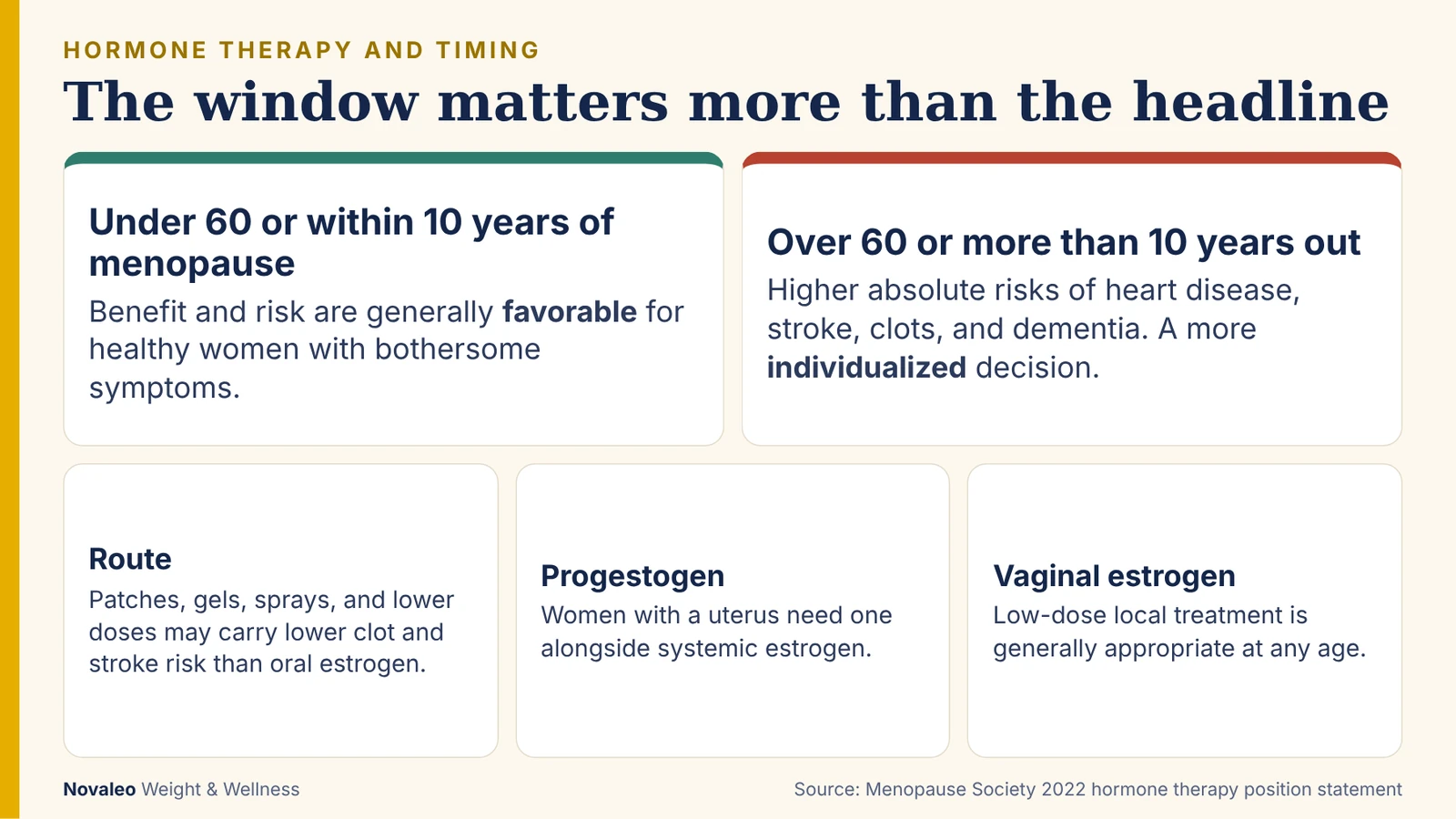
The Short Version of a Long History
In 2002, the Women's Health Initiative reported early findings from a large randomized trial of oral conjugated equine estrogens plus a synthetic progestin, and the result, an increase in breast cancer, heart disease, stroke, and blood clots, produced a wave of fear and a collapse in prescribing. What took years to come into focus is that the average woman in that trial was in her early sixties and, on average, roughly a decade or more past menopause, that the product studied was one specific oral combination, and that the absolute risks were small for any individual woman. Later analyses and trials, including the ELITE trial mentioned earlier, supported what is called the timing hypothesis: that the balance of risks and benefits depends heavily on when hormone therapy is started, with a more favorable profile for women who begin close to menopause.
What the Menopause Society Says
The Menopause Society's 2022 position statement remains the most authoritative summary of the evidence for clinicians in the United States (see the 2022 hormone therapy position statement). Its key points are these.
- Hormone therapy is the most effective treatment for hot flashes and night sweats and for the genitourinary syndrome of menopause, and it prevents bone loss and fracture.
- The risks and benefits depend on the specific product, dose, duration, route, timing of initiation, and whether a progestogen is used. There is no single answer for all women.
- For women who are under 60 or within 10 years of menopause onset, the benefit-risk balance is generally favorable for most healthy women with bothersome symptoms.
- For women who start more than 10 years after menopause or after age 60, the balance is less favorable because of higher absolute risks of heart disease, stroke, blood clots, and dementia.
- Transdermal estrogen, meaning patches, gels, and sprays, and lower doses may be associated with a lower risk of blood clots and stroke than standard-dose oral estrogen.
- Longer use should be tied to a documented reason, such as persistent symptoms, with shared decision-making and periodic reassessment rather than an automatic stopping date.
What the FDA Changed, and What It Did Not
On November 10, 2025, the FDA and the Department of Health and Human Services announced that the agency would begin removing the boxed warning from menopausal hormone therapy products. On February 12, 2026, the FDA announced that it had approved labeling changes for a first group of six products, including Prometrium, Divigel, Cenestin, Enjuvia, Estring, and Bijuva, removing language on cardiovascular disease, breast cancer, and probable dementia from the boxed warning. The warning about endometrial cancer was retained for systemic estrogen-alone products, because that risk can be mitigated by adding a progestogen in women who have a uterus. Twenty-nine manufacturers submitted proposed changes and more updates were expected (see the FDA announcement and the JAMA viewpoint, "Updated Labeling for Menopausal Hormone Therapy").
How should you interpret this? Reasonable clinicians interpret it in three ways at once. First, it is a long-overdue correction of a warning that, for women starting therapy in early menopause, overstated the risk. Leaders in menopause medicine, including Dr. JoAnn Manson, welcomed the change while emphasizing that individualized discussion of risks and benefits is still essential, and that different hormone therapies carry different risks. Second, some physicians have raised questions about the speed and process of the change. Third, and most important for you, a label is not a prescription. Whether a particular hormone therapy is right for you depends on your age, your time since menopause, your personal and family history, your symptoms, and your preferences. The label change does not make hormone therapy risk-free, and combined estrogen-progestogen therapy still carries a small, real increase in breast cancer risk with longer use that every woman should weigh.
Who Tends to Benefit Most
- Women with bothersome hot flashes or night sweats who are under 60 or within ten years of their final period
- Women with genitourinary symptoms, for whom low-dose vaginal estrogen is often enough and is a lower-risk option
- Women who reach menopause before age 45, who generally benefit from hormone therapy until the average age of natural menopause unless there is a reason not to, because the long-term protection of bone and cardiovascular health is greater
- Women at elevated risk of osteoporosis who also have menopausal symptoms and for whom other bone treatments are unsuitable
Who Should Be Cautious or Avoid It
Hormone therapy is generally not recommended for women with a history of breast cancer or other estrogen-dependent cancers, undiagnosed vaginal bleeding, active liver disease, a history of blood clots or stroke, or established coronary heart disease, though some situations call for specialist input rather than an automatic no. A strong family history of breast cancer, migraine with aura, high blood pressure, high triglycerides, smoking, and obesity change the calculation and often favor a transdermal route and a closer conversation. If you take hormone therapy, a current mammogram and a blood pressure and lipid check belong in the plan.
Routes, Progesterone, and Product Choices
Estrogen comes as pills, patches, gels, sprays, vaginal products, and rings. Oral estrogen passes through the liver first, where it increases clotting factors and triglycerides. Transdermal estrogen bypasses that effect, which is why it is often favored for women with higher cardiovascular or clotting risk, and it is a very reasonable first choice for most women. Women who still have a uterus need a progestogen alongside systemic estrogen to protect the uterine lining. Options include micronized progesterone, which is identical to your body's own progesterone and which some women find helps sleep when taken at bedtime, synthetic progestins, a levonorgestrel intrauterine device, and combination products. Women without a uterus generally take estrogen alone.
This is where the word "bioidentical" gets complicated. The term describes a molecule that is chemically identical to a human hormone, such as estradiol or progesterone, and there are FDA-approved bioidentical products with standardized dosing and safety review. There are also custom-compounded products, including creams, troches, and pellets, which are made to order and do not undergo the same FDA review. Our BHRT guide explains the differences among delivery methods in detail. My own approach is to prefer well-studied, FDA-approved products when they meet the need, to be honest about what compounded products can and cannot offer, and to monitor, regardless of the product.
Starting Later, Staying On, and Stopping
If you are more than ten years past menopause or over 60, systemic hormone therapy is a more individualized decision, usually with a lower starting dose, a transdermal route, and closer monitoring. Low-dose vaginal estrogen for genitourinary symptoms is a different matter and is generally considered appropriate at any age. There is no automatic age at which hormone therapy must stop. The Menopause Society recommends periodic reassessment of whether the benefits continue to outweigh the risks for you. Some women taper after a few years and find their hot flashes have faded. Others reasonably stay on a low dose for longer because their symptoms return when they stop.
Five Questions to Ask Before You Decide
- How long ago was my last period, and how old am I? Does that put me inside or outside the window where the balance is most favorable?
- What are my specific risks, given my personal and family history of breast cancer, clots, stroke, heart disease, and migraine?
- Which route, dose, and product would you suggest, and why that one rather than another?
- How will we know if it is working, how often will we check in, and what would make us stop or change course?
- If I decide not to use hormones, what are the best alternatives for my symptoms, and what will we do about my bones and heart?
At Novaleo, hormone therapy consultation is part of a broader comprehensive evaluation rather than a stand-alone prescription. That means a review of your symptoms, a full set of labs, a conversation about your risks and preferences, and a plan that also addresses sleep, strength, nutrition, bone, and cardiovascular health. For some women the best plan includes hormone therapy. For others it includes one of the non-hormonal options or lifestyle measures alone. I would rather help you make a well-informed choice than steer you to either answer.
Testing: What Actually Helps After Menopause
One of the most common mistakes I see is a woman who has spent hundreds of dollars on a battery of hormone tests that did not change a single decision. The other common mistake is the opposite: a woman who has been told "your labs are normal" after a basic panel that never looked at the things that matter after menopause. Good testing sits between those two. It asks specific questions, uses the right test for each one, and leads to an action.
You Usually Do Not Need Hormone Tests to Diagnose Menopause
For a woman in her late forties or fifties with typical symptoms and twelve months without a period, menopause is a clinical diagnosis. Estradiol and FSH fluctuate considerably, especially in the transition, and a single value does not add much. Hormone testing is most useful in specific circumstances: when menopause may be occurring before age 45, when periods have stopped for another reason such as a hysterectomy, an IUD, or a medication, when symptoms do not fit the picture and another endocrine problem is suspected, and when a clinician is evaluating androgens before considering testosterone. I also use hormone panels, including a dried urine hormone and metabolite test, in selected cases when the clinical picture is complicated. I do not use them to decide whether a woman "has enough estrogen" in the abstract. Salivary hormone testing in particular has not been shown to be a reliable guide to dosing, and I do not rely on it.
The Labs That Move the Needle
Think of these as a post-menopause baseline: the tests that reveal the risks discussed in this article and that can be acted on.
| Test | What it tells you | Why it matters after menopause |
|---|---|---|
| Complete thyroid panel (TSH, free T4, free T3, TPO antibodies) | How your thyroid is functioning and whether autoimmunity is present | Thyroid disease is common in this age group, mimics menopause, raises LDL cholesterol, and affects weight, mood, hair, and sleep. |
| Hemoglobin A1c, fasting glucose, and fasting insulin | How well you handle blood sugar, and whether insulin resistance is developing | Insulin rises years before glucose does. This is the earliest warning of metabolic drift and belly fat accumulation. |
| Lipid panel with apoB, and Lp(a) once | The number of cholesterol-carrying particles, and your inherited risk marker | LDL and apoB rise around the final period. Lp(a) should be measured at least once in adulthood under the 2026 guideline. |
| Comprehensive metabolic panel and liver tests including GGT | Kidney and liver function, calcium, and electrolytes | Fatty liver becomes more common. Calcium and kidney function matter for bone and for safe supplementation. |
| 25-hydroxyvitamin D | Your vitamin D status | Strongly affected by Midwestern winters. Relevant to bone, muscle, and mood. |
| Ferritin and complete blood count | Iron stores and anemia | Low ferritin contributes to fatigue, hair thinning, restless legs, and poor sleep. High ferritin has its own meaning. |
| Vitamin B12 and other nutrients | Whether common deficiencies are present | Acid-reducing medications, metformin, and plant-based diets can lower B12 and cause fatigue and brain fog. |
| hs-CRP and, when useful, homocysteine | Markers of low-grade inflammation and cardiovascular risk | Context for heart and metabolic risk, interpreted alongside the rest of the picture. |
Some tests are valuable when your history points to them: parathyroid hormone and celiac antibodies when bone density is lower than expected, a morning cortisol when symptoms suggest an adrenal problem, a sex hormone panel with SHBG and testosterone before and during testosterone therapy, and, in selected cases, additional cardiovascular testing. Beyond blood tests, the most important "tests" after menopause are not labs at all: a DXA scan, a mammogram, a blood pressure log, and sometimes a sleep study or a coronary calcium score. I list those in the screening checklist that follows.
What Our Root Cause Lab Panel Covers
At Novaleo, the Root Cause Lab Panel, priced at $454 on our services page, covers the core of what I described above: nutrients (vitamin D, B12, ferritin, zinc, and red blood cell magnesium), a full thyroid panel (TSH, free T3, free T4, and TPO antibodies), a lipid panel with lipoprotein(a), blood sugar markers (fasting glucose, HbA1c, and fasting insulin), liver function with GGT, and inflammation markers (hs-CRP and homocysteine). The panel is ordered through our lab partner, you fast overnight and have your blood drawn at a local site, results are typically ready in about two weeks, and we review them together by video with written insights. If a test that matters for you is not on the panel, such as apoB, a bone density scan, or a mammogram, we discuss how to obtain it through your primary care clinician or another facility, and we review the results with you as part of your plan.
Understanding "Normal" Versus "Optimal"
Reference ranges are statistical. They describe where most people in a lab's sample fall, which is not the same as the range where you feel and function best or where your long-term risk is lowest. A TSH of 3.8 may be inside a range and still deserve a closer look if you have symptoms and positive thyroid antibodies, as we discuss in our thyroid guide. A fasting glucose of 96 can sit alongside a fasting insulin that tells a very different story. I use "optimal" ranges cautiously and always in context, because chasing numbers without symptoms or risk is a recipe for anxiety and unnecessary intervention. Good functional medicine and good conventional medicine agree on more than either side admits: test with a reason, treat what you find, and recheck.
What Testing Cannot Do
A lab value cannot tell you whether to take hormone therapy. It cannot predict with certainty who will have a fracture or a heart attack. And it cannot substitute for a conversation about what matters to you. The point of testing is to turn vague worry into specific, measurable targets, and to catch the silent changes before they become events.
Your After-50 Screening Checklist
The table below summarizes the screenings I most often review with women in their fifties and sixties. It reflects current national guidance for women at average risk, and it is a starting point rather than a substitute for your clinician's judgment about your personal history. The U.S. Preventive Services Task Force posts its full list of recommendations on its recommendation topics page, and your age, family history, and risk factors may change what applies.
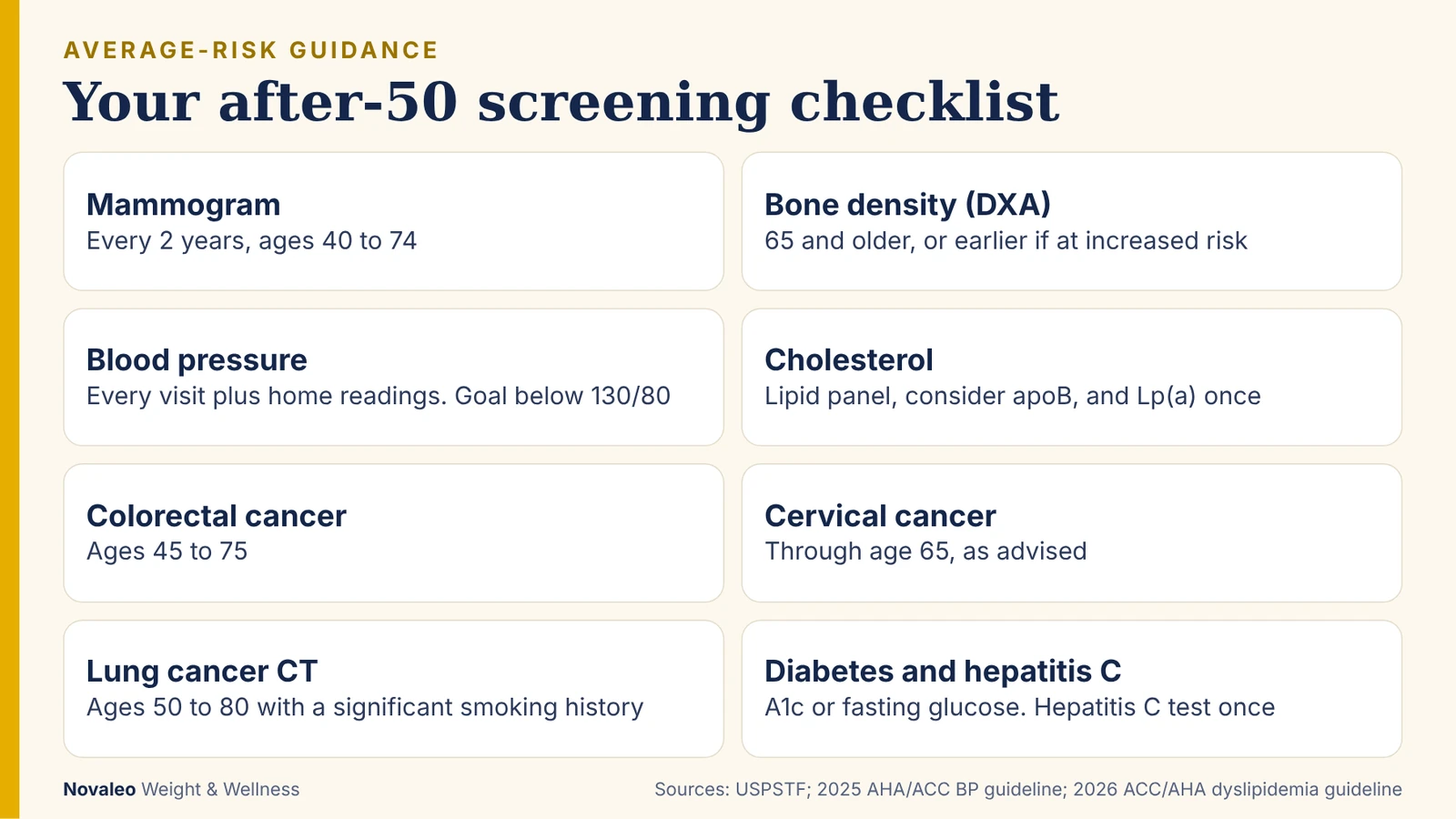
| Screening | General guidance for average-risk women | Notes |
|---|---|---|
| Mammogram | Every two years from age 40 to 74 (USPSTF, 2024) | Higher-risk women, including those with a strong family history or dense breasts, may need a different plan. Ask your clinician. |
| Bone density (DXA) | Women 65 and older, and postmenopausal women younger than 65 at increased risk (USPSTF, 2025) | Ask earlier if you have risk factors listed in the bone section. |
| Blood pressure | At every visit, plus home readings | Goal below 130 over 80 under the 2025 AHA and ACC guideline. |
| Cholesterol, with Lp(a) once | Lipid panel regularly; Lp(a) at least once in adulthood (2026 ACC and AHA guideline) | Consider apoB. Repeat lipids after menopause even if previous results were normal. |
| Diabetes screening | Hemoglobin A1c or fasting glucose, particularly with excess weight or risk factors | Fasting insulin can add early information. |
| Colorectal cancer | Ages 45 to 75, by stool-based test, colonoscopy, or other approved method | Earlier or more frequent with family history or symptoms. |
| Cervical cancer | Through age 65, using cytology, HPV testing, or both, as advised for your age | Ask whether you can stop after 65, based on prior results. |
| Lung cancer | Annual low-dose CT for ages 50 to 80 with a significant smoking history who currently smoke or quit within 15 years | Not for women without that history. |
| Hepatitis C | Once in adulthood | Often overlooked. |
| Skin check | Annual or as advised, with prompt evaluation of changing moles | More important with a history of sunburns or tanning. |
| Eye, hearing, and dental exams | Regular routine care | Hearing and vision both affect fall risk and cognition. |
| Sleep apnea screening | When symptoms or risk factors are present | See the sleep section. |
Bring this list to your next primary care visit and ask which items are current and which are due. If you are in Michigan or Wisconsin and face a long drive to imaging, ask whether mammography and DXA can be scheduled on the same day, which many health systems can do, and ask about mobile mammography units in rural areas. Combining appointments is one of the easiest ways to make screening happen.
Red Flags: Symptoms That Are Never Just Menopause
Throughout this guide I have encouraged you to take your symptoms seriously and to stop accepting "it is just aging" as an answer. The flip side of that message is important and deserves its own section. Some symptoms are a reason to be evaluated promptly, whatever your age and whatever your menopausal status, and being clear about them is part of safe care. The table below is not exhaustive and is not a diagnostic tool. It is a list of the signals I would never want a woman to wait on.
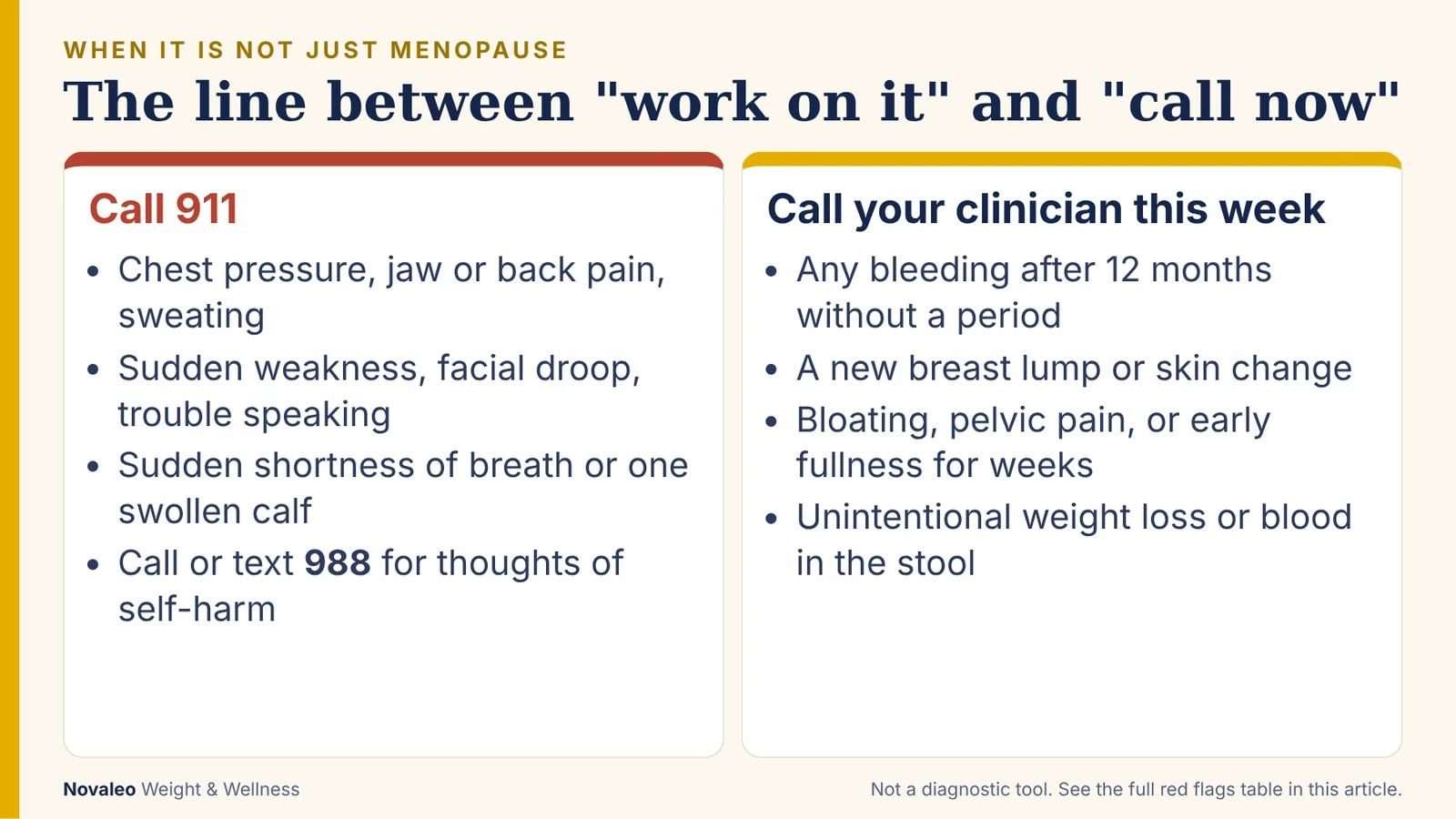
| Symptom | Why it matters | What to do |
|---|---|---|
| Any vaginal bleeding or spotting after twelve months without a period | Most causes are benign, such as thinning tissue or a polyp, but postmenopausal bleeding can be the first sign of endometrial cancer, which is very treatable when found early. | Call your clinician promptly. Expect an exam and usually an ultrasound, and sometimes a biopsy. Do not wait to see if it recurs. If you are on hormone therapy, unexpected bleeding after the first months also needs evaluation. |
| A new breast lump, skin dimpling, nipple discharge, or a persistent localized change | These are not screened by waiting for your next mammogram. | See your clinician within days to weeks, regardless of when your last mammogram was. |
| Persistent bloating, pelvic or abdominal pain, feeling full quickly, or new urinary urgency lasting more than a few weeks | This cluster can be an early sign of ovarian cancer, which is often mistaken for digestive or menopausal symptoms. | Make an appointment. Ask directly whether pelvic imaging and a pelvic exam are needed. |
| Unintentional weight loss, drenching night sweats with fever, or swollen lymph nodes | These can signal infection, thyroid disease, or cancer, and they are not typical of menopause. | Seek medical evaluation within days. |
| Blood in the stool, black stools, difficulty swallowing, or a persistent change in bowel habits | Possible gastrointestinal bleeding or cancer. Colorectal screening starts at 45 for average-risk adults. | Call your clinician promptly. Do not assume it is hemorrhoids or IBS. |
| Chest pain or pressure, shortness of breath, pain in the jaw, back, or arm, sudden unusual fatigue, or nausea with sweating | Possible heart attack. Women's symptoms can be less typical than men's, and women delay care more often. | Call 911. Do not drive yourself. |
| Sudden weakness or numbness on one side, facial droop, trouble speaking, vision loss, or the worst headache of your life | Possible stroke or brain bleed. | Call 911 immediately. |
| Calf swelling, pain, and warmth in one leg, or sudden shortness of breath | Possible blood clot, which can travel to the lungs. | Seek emergency care. |
| Sudden severe back pain after minor strain, or noticeable height loss | Possible vertebral compression fracture from osteoporosis. | See your clinician soon and ask for a DXA and vertebral assessment. |
| Blood in the urine, or recurrent urinary infections that do not clear | Could reflect a stone, an infection that is not resolving, or a bladder problem. | See your clinician to evaluate, not just treat again. |
| A mole that changes in size, color, or shape, or a sore that does not heal | Possible skin cancer. | See a dermatologist. |
| Persistent hopelessness, loss of interest, or thoughts of harming yourself | Depression and suicidal thoughts are treatable and are not weaknesses. | Call or text 988 any time, or tell your clinician today. |
Two of these deserve a few more words. Postmenopausal bleeding is the single most important one. After a full year without a period, you should not bleed, even lightly, even once. Many women assume it is a stray period or a side effect of dryness and wait. I would rather you call and be told it is nothing than wait and learn it was something. The second is the cluster of vague abdominal symptoms, bloating, pelvic discomfort, feeling full after a few bites, and urinary urgency, which are easy to blame on aging, diet, or menopause. When those symptoms are new, persistent, and frequent, they should be taken to a clinician and not managed with another supplement.
The purpose of a list like this is not to make you anxious about every twinge. Most symptoms are not dangerous. The purpose is to give you a clear line between "this is probably my body adjusting, and I can work on it" and "this needs a clinician now." Having that line in your head makes it easier to live with the first kind of symptom without fear.
Eating for Bones, Heart, and Metabolism in the Great Lakes States
There is no single "menopause diet," and anyone who sells you one is overselling. What the research supports is a small number of principles that serve your bones, heart, and metabolism at the same time, and they can be built from foods that are easy to buy in any Michigan or Wisconsin grocery store. This section translates the principles into food and into the culture you actually live in.

Six Principles That Hold Up
- Protein at every meal. Aim for roughly 25 to 35 grams at breakfast, lunch, and dinner, as described in the strength section. If you eat a typical toast-and-coffee breakfast, this single change often has the biggest effect on energy, cravings, and muscle.
- Fiber and plants. Beans, lentils, vegetables, berries, nuts, seeds, and whole grains support blood sugar, cholesterol, gut health, and fullness. A target of 25 grams of fiber a day or more is a practical goal for most women, built up gradually with plenty of water.
- Healthy fats. Olive oil, nuts, avocado, and fatty fish in place of heavy use of processed meat, butter-heavy sauces, and deep-fried foods.
- Calcium-rich foods daily. Yogurt, milk, cheese, kefir, canned fish with bones, fortified foods, tofu set with calcium, and leafy greens.
- Limit ultra-processed foods, added sugar, and sodium. They are linked with weight gain, blood sugar swings, and higher blood pressure.
- Be deliberate about alcohol. Alcohol disrupts sleep, can trigger hot flashes in some women, adds calories, and is associated with a higher risk of breast cancer. Current dietary guidance advises women who drink to limit intake, and for many women past menopause, less is better. If you drink, keep it earlier in the evening and take some alcohol-free days.
Great Lakes Fish: A Real Benefit With a Real Caveat
Fish is one of the best foods for the heart and for protein, and our region is lucky to have access to whitefish, lake trout, perch, walleye, and salmon, along with excellent canned and frozen fish in the grocery store. The caveat is that some fish from some waters contain contaminants such as PCBs, mercury, and PFAS, which is why both states publish consumption advisories. In Michigan, the Department of Health and Human Services publishes Eat Safe Fish guides, based on fish samples collected by the Department of Environment, Great Lakes, and Energy, and the 2026 edition covers hundreds of Michigan water bodies (see the Michigan Eat Safe Fish program). In Wisconsin, the Department of Natural Resources and the Department of Health Services publish consumption guidelines for waters across the state, including Lake Michigan (see the Wisconsin DNR fish consumption page).
Two practical points. These guides are advisories rather than laws, they vary by species, size, and location, and the most restrictive guidance is built to protect pregnant women and children, so ask how it applies to you. Still, take "do not eat" entries seriously, vary the fish you eat, and look up the guide for the specific lake or river where you or your family fish. For the store-bought side, wild-caught or farmed salmon, sardines, and canned light tuna in moderation are reliable choices, and canned salmon and sardines with bones add calcium.
Midwestern Favorites, Reworked Without Giving Them Up
| The tradition | A small shift that keeps the culture | Why it helps |
|---|---|---|
| Friday fish fry | Choose baked or pan-fried whitefish or perch, keep the slaw, and share the fries or swap in a baked potato | More protein and omega-3, less fried-food load and sodium |
| Supper club night | Enjoy the relish tray, choose a broiled fish or lean cut, and keep the old fashioned to one | Keeps the ritual, lowers saturated fat and alcohol |
| Cheese curds and a good aged cheese | Treat cheese as a protein and calcium source in a measured portion, and pair with fruit | Calcium and protein, with sodium kept in check |
| Brats and the cookout | Choose leaner sausages when you can, add kraut and a bean or slaw side, and go easy on the bun and beer | Lowers sodium and processed meat, adds fiber |
| Hotdish and casseroles | Use more vegetables and Greek yogurt in place of cream soups, and use whole-grain pasta or rice | More fiber and protein, less sodium and refined starch |
| Pasties and meat-and-potato meals | Add a salad or a side of vegetables, and keep the portion sensible | Balances the plate |
| Michigan cherries, blueberries, and apples | Buy frozen cherries and blueberries year-round for yogurt, oatmeal, and smoothies | Fiber and polyphenols, easy in winter |
| Kringle, bakery treats, and holiday baking | Enjoy a small slice with a protein-rich snack or after a meal, not on an empty stomach | Softens blood sugar spikes |
Winter Eating
From November to March, our appetite follows the darkness, and comfort food is part of getting through it. Rather than fight that, plan for it. Soups, stews, and slow-cooker meals built around beans, lentils, vegetables, and lean protein are warm, inexpensive, and good for you, and a batch on Sunday covers several weeknights. Frozen vegetables and fruit are nutritionally excellent and lower waste. Keep a protein-forward breakfast on autopilot, because the dark mornings are the ones most likely to be skipped, and keep a source of calcium and vitamin D in your day, which matters more when there is no sunlight to help you make your own.
Supplements: A Short, Honest List
Food first, supplements to fill specific gaps. For most women past menopause, the supplements worth considering are vitamin D (dosed to your blood level), calcium only to fill a dietary gap, protein powder for convenience, omega-3 if you do not eat fish, and, if you lift, creatine monohydrate. Magnesium can help some women with sleep, cramps, or constipation, and many diets fall short, but excess magnesium can cause loose stools and is a concern in kidney disease. Be wary of long lists of "menopause support" ingredients, proprietary blends, and megadoses. Look for products tested by an independent organization such as USP or NSF, and bring your supplements to your appointment, because some interact with medications, including thyroid medication, blood thinners, and antidepressants.
A note on fasting. Some women find a 12 to 14 hour overnight fast, finishing dinner early and delaying breakfast slightly, helps with appetite and sleep. Longer fasting windows, extreme restriction, and skipping protein can backfire at this stage, particularly if you are lifting, sleeping poorly, or already losing muscle. If you try any fasting pattern, treat it as an experiment, and stop it if your sleep, mood, or strength get worse.
A Supplement Scorecard
Women ask me about supplements more than almost any other topic, and the marketing is relentless, so a one-page scorecard can save a lot of money and confusion. This is my honest summary of where the evidence stands, not a recommendation for you personally, and it should be read alongside your labs and medications.
| Supplement | Best-supported use | Evidence snapshot | Practical note |
|---|---|---|---|
| Vitamin D | Correcting a low blood level, supporting bone and muscle | Strong for correcting deficiency. Large trials in people who were not deficient have generally not shown fracture benefit. | Dose to a blood level. Winter deficiency is common in Michigan and Wisconsin. |
| Calcium | Filling a dietary gap toward 1,200 mg a day | Food sources are preferred. Supplements can cause constipation and, in some people, kidney stones. | Keep total intake below 2,000 mg a day. Separate from thyroid medication by about four hours. |
| Protein powder | Reaching daily protein targets | Well supported as a convenient protein source when paired with resistance training. | Choose a product tested by a third party. Check with your kidney specialist if you have kidney disease. |
| Creatine monohydrate | Small gains in lean mass and strength with lifting | Supported by a 2026 meta-analysis in postmenopausal women. No effect on bone density. | About 5 grams daily, the dose used in the trials that showed benefit. Talk to your clinician if you have kidney disease. |
| Magnesium | Constipation, muscle cramps, possibly sleep | Limited evidence for sleep. Many diets are low in magnesium. | Citrate can loosen stools and glycinate is gentler. Use caution in kidney disease. |
| Omega-3 fish oil | Lowering very high triglycerides at prescription doses | Mixed results for general heart protection in healthy people. Eating fish has better support. | Eat fish two times a week within advisories. Ask before using high doses if you take blood thinners. |
| Melatonin | Short-term help with falling asleep, especially with a shifted schedule | Modest benefit, generally low risk. | Use a low dose, and choose a reputable brand because contents vary. |
| Black cohosh, red clover, soy isoflavones, and blended menopause formulas | Marketed for hot flashes | The Menopause Society's review did not find enough evidence to recommend most supplements and herbal products. Rare liver injury has been reported with black cohosh. | If you try one, set a fixed trial and a symptom log, and tell your clinician. |
| Ashwagandha and other adaptogens | Marketed for stress and sleep | Limited, short trials. Rare reports of liver injury. | Avoid with liver disease, and discuss it with your prescriber first. |
| Vitamin K2 | Marketed for bone and arteries | Trial evidence is mixed. It interacts with warfarin. | Do not start if you take warfarin without your prescriber's approval. |
| Collagen peptides | Marketed for skin, joints, and bone | Small trials with modest or inconsistent benefits. | Reasonable as a protein source, but not a proven bone or skin treatment. |
| Oral DHEA | Marketed for energy, libido, and aging | Not recommended for routine use. Vaginal prasterone is a prescription treatment for painful sex. | Hormone supplements should be monitored, not taken casually. |
| Iron | Treating iron deficiency | Helpful when levels are low, harmful when taken unnecessarily. | Check ferritin before and after. Separate from thyroid medication. |
If you take a handful of these already, I would not panic. Bring the bottles to your next visit and we can sort which ones earn their place. The goal is a short list, chosen for you, that you can afford and stick with.
Moving Through a Midwest Winter
The hardest part of any exercise plan in Michigan and Wisconsin is not knowing what to do. It is doing it in January. Women who succeed over years are not more motivated than the rest of us. They make winter easier on themselves with a few structural choices.
Make a Winter Menu, Not a Winter Wish
- Pick your indoor strength plan in October. A pair of adjustable dumbbells, a set of resistance bands, and a sturdy chair or bench will cover everything in the strength section. Put the sessions on the calendar. Two thirty-minute sessions a week matter more than an ambitious plan you abandon by December.
- Know your indoor walking options. A treadmill at home, a walking track at a local YMCA or recreation center, a community center pool, a mall that opens early, or a school hallway program give you a place to walk when the sidewalks are glazed.
- Dress for the outdoors you do like. A good insulated jacket, wool socks, traction cleats, and a headlamp or reflective gear change winter from something to endure into something to enjoy. Many women discover they love a crisp walk after a fresh snowfall.
- Use daylight on purpose. A ten- to twenty-minute walk outdoors in the morning light serves your body clock and your mood, and it adds steps toward your daily total.
- Shovel with care. Snow shoveling is heavy, sudden exertion in the cold, and it is a recognized trigger for cardiac events in people who are unfit or have heart risk. Push snow rather than lifting it, use a shovel with an ergonomic handle, take breaks, and consider hiring help or using a snow blower if you have heart disease, high blood pressure that is poorly controlled, or you are not conditioned. Warm up first, and stop at the first hint of chest pressure.
- Find a partner. A standing walk with a neighbor, a class, or a group chat makes it harder to skip and easier to feel the benefit.
Use the Warm Months to Build, and the Cold Months to Maintain
Spring through fall is the time to add volume: longer walks, trail time, cycling, swimming in the lake, paddling, and outdoor strength sessions. Winter is the time to protect what you built, with two strength sessions a week, daily walking, and mobility. A woman who thinks of winter as "maintenance season" rather than "falling behind" tends to stay on track. Treat the first warm weekend of spring as a celebration, not a restart.
How Much Is Enough?
Public health guidelines suggest adults get at least 150 minutes of moderate aerobic activity a week, plus muscle-strengthening activity on two or more days. That is a useful frame, but I prefer a simpler standard for the women I work with: move your body every day, lift twice a week, and stay a little out of breath on at least a couple of occasions. If you are new to exercise, have heart disease, diabetes, severe osteoporosis, or any significant health condition, talk to your clinician before starting a vigorous program, and begin with what feels doable. A ten-minute walk after dinner is a real start.
Special Situations: Early Menopause, Cancer History, GLP-1s, and More
Most of this guide assumes a woman who went through natural menopause in her late forties or early fifties and is otherwise reasonably healthy. Many women do not fit that description, and for some of you the advice changes in important ways. Here are the situations I see most often.
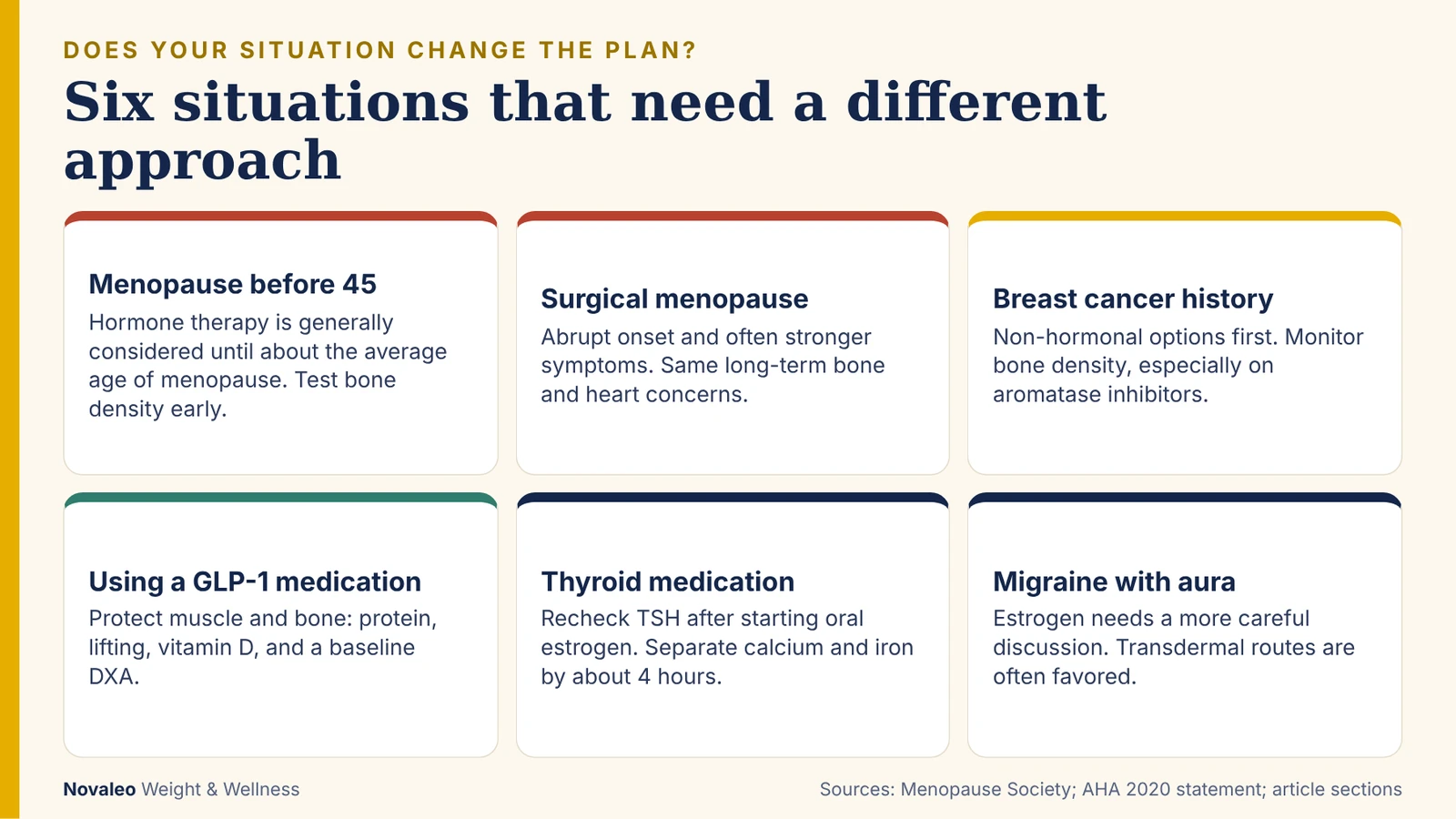
Menopause Before 45, Including Premature Ovarian Insufficiency
Menopause before 45 is considered early, and loss of ovarian function before 40 is called premature ovarian insufficiency. Both carry higher long-term risks to bone, heart, and possibly brain health because the body spends more years without estrogen. The American Heart Association's 2020 statement notes that earlier age at natural menopause tends to be a marker of higher cardiovascular risk. For most women in this situation, hormone therapy is generally recommended until around the average age of natural menopause unless there is a specific reason not to, and bone density testing should happen early. Early menopause also deserves a work-up for causes, such as autoimmune disease, genetic conditions, and prior treatments, and a conversation with a gynecologist or endocrinologist. If this is your situation, you are not "just early." You need a plan that starts now.
Surgical Menopause
Removing both ovaries brings on menopause abruptly, often with more intense symptoms because there is no gradual transition. If this happened before the average age of menopause, the same long-term concerns as early menopause apply, and hormone therapy is often considered when there are no contraindications. Women who had a hysterectomy but kept their ovaries may still reach menopause somewhat earlier than average, so do not assume that your ovaries "turned off" on the day of surgery or that they will last forever. If you had your uterus removed, you generally take estrogen without a progestogen if you choose hormone therapy.
History of Breast Cancer, or at High Risk
Women with a history of breast cancer face a particular set of challenges. Aromatase inhibitors, often used after hormone-receptor-positive breast cancer, cause dramatic estrogen suppression and can accelerate bone loss, so bone density monitoring is essential. Hot flashes and genitourinary symptoms can be severe. Hormone therapy is generally avoided, and the non-hormonal options come first: cognitive behavioral therapy, clinical hypnosis, gabapentin, oxybutynin, venlafaxine and similar medications, and the newer neurokinin antagonists where appropriate. One important drug interaction is that paroxetine and fluoxetine can reduce the effectiveness of tamoxifen, so women on tamoxifen should avoid them. Treat vaginal symptoms with non-hormonal moisturizers and lubricants first, and make any decision about low-dose vaginal estrogen with your oncology team. If you have a strong family history or a known BRCA or other high-risk gene variant, genetic counseling and a personalized plan are worth the time.
If You Are Using, or Considering, a GLP-1 Medication
Medications such as semaglutide and tirzepatide have changed weight treatment, and many postmenopausal women are using them, whether prescribed by a primary care provider, an obesity medicine clinic, or an online service. These drugs reduce appetite effectively, but weight lost on them can include lean mass and bone density along with fat, and the postmenopausal woman has less margin for either. If you use one, protein intake, resistance training, vitamin D and calcium adequacy, and a baseline bone density test become more important, not less. Women often notice appetite suppression pushes protein intake very low, which compounds the problem. Go slowly where possible, track strength and waist rather than only weight, and ask what the plan is for the day you stop or reduce the dose, since regain after stopping is common. Our guide to why the Ozempic plateau happens goes into the muscle loss and rebound questions in depth, and the city-by-city guide explains how to judge the quality of a telehealth weight program wherever you live.
If You Take Thyroid Medication
Two practical points. Oral estrogen increases the protein that binds thyroid hormone in the blood, which can raise the dose of levothyroxine a woman needs, so anyone starting oral estrogen should have her TSH rechecked after a couple of months. Transdermal estrogen has much less of this effect. And calcium and iron supplements can block levothyroxine absorption, so separate them from your thyroid pill by about four hours. If you are not sure whether your thyroid is optimally treated, our thyroid guide explains why a complete panel, not just a TSH, matters.
Diabetes, Prediabetes, or a History of PCOS
Women with diabetes or prediabetes face higher cardiovascular risk and benefit even more from strength training, protein distribution, and blood pressure and lipid control. Women with a history of polycystic ovary syndrome carry a higher lifetime risk of type 2 diabetes and cardiovascular disease that does not vanish at menopause. Even if PCOS symptoms quiet down after your cycles stop, the metabolic tendency remains. Our PCOS guide explains the insulin mechanism, and the testing and lifestyle priorities in this article apply with extra force to you.
Migraine
Migraine with aura raises stroke risk, and that matters when discussing estrogen. Many women with migraine without aura can use transdermal estrogen safely, while those with migraine with aura need a more careful discussion. Some women find migraines improve after menopause and others find them worse because of hot flashes and poor sleep, so tracking is helpful.
Plant-Based Eating
A vegetarian or vegan diet can be very healthy, and it requires a plan for protein, calcium, vitamin D, B12, iron, zinc, and omega-3 fats after menopause. Calcium-set tofu, fortified plant milks, beans, lentils, and soy protein are all useful, and a B12 supplement is essential for vegans. Check your B12, ferritin, and vitamin D levels regularly.
Five Women, Five Different Postmenopausal Pictures
The five scenarios below are composites. They are drawn from patterns common in clinical practice, not from any one patient, and the names are invented. I include them because seeing how the same life stage plays out differently often helps women recognize their own situation faster than a list of symptoms can.
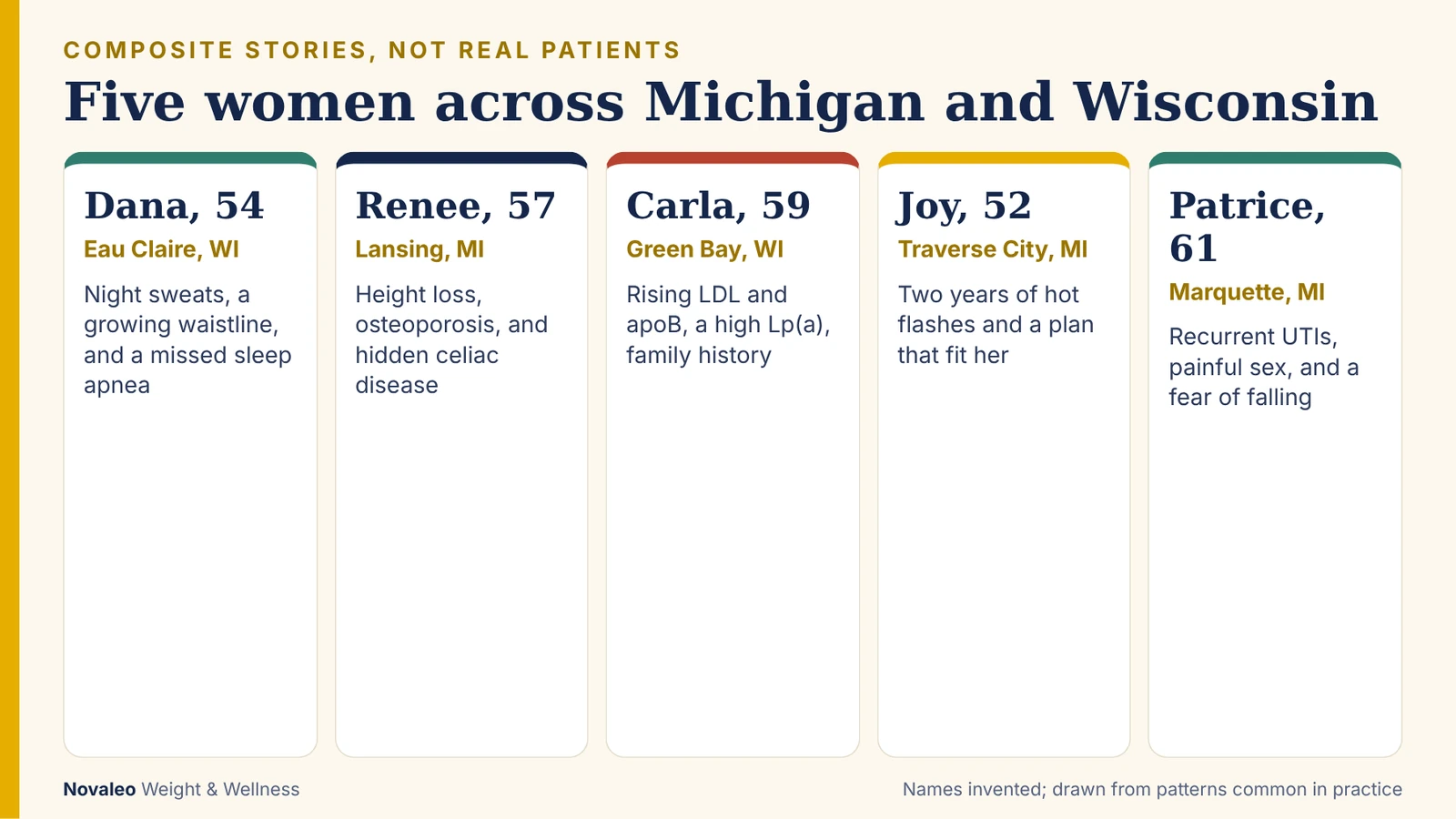
Dana, 54, Eau Claire: The Waistline, the 3 AM Wake-Ups, and a Surprise
Dana is the woman from the beginning of this article. She had gained inches around her middle despite no change in how she ate, and she was waking drenched at 3 AM. We ran a comprehensive panel. Her fasting insulin was elevated even though her fasting glucose was in range, her ferritin was low, and her vitamin D was low after a long Wisconsin winter. Her home blood pressure readings ran higher than her office numbers. Because she snored and woke unrefreshed, I asked about a sleep study, and it showed moderate sleep apnea that nobody had considered. Treating the apnea changed her sleep more than anything else we did. Over several months, with a protein-forward breakfast, two strength sessions a week, iron and vitamin D repletion, and attention to evening alcohol, her night sweats eased, her waist shrank, and her blood pressure improved. She chose not to start hormone therapy and revisited the question at her six-month review.
Renee, 57, Lansing: The Mother Who Broke a Hip
Renee came in because she was tired and had lost about an inch and a half of height. Her mother had broken a hip at 71, and Renee had never had a bone density test. A DXA showed osteoporosis at the spine and low bone mass at the hip. A secondary-cause work-up found a low vitamin D level and positive celiac antibodies, which had been quietly limiting calcium absorption for years. She was referred to an endocrinologist for treatment of osteoporosis, began a gluten-free diet under guidance, corrected her vitamin D, and started supervised resistance training with a physical therapist who understood bone. Her story is a reminder that "menopausal bone loss" sometimes has another contributor hiding beneath it.
Carla, 59, Green Bay: The Number Nobody Had Checked
Carla felt well. Her father had a heart attack at 56, but her cholesterol had been "fine" at every checkup for years, so she assumed she was low risk. Her recent panel, drawn six years after her final period, showed LDL cholesterol and apoB well above where they had been at 48, a blood pressure trending to the borderline range on her home log, and a lipoprotein(a) that was markedly elevated, a result that explained her family history and that she had never been tested for. After a conversation about her risk, she chose to start a statin and tighten her blood pressure with sodium reduction and walking. Her sister and two adult children were advised to be tested for Lp(a) as well. Carla's case illustrates why "my cholesterol was normal" at 48 does not protect you at 59.
Joy, 52, Traverse City: Two Years of Flashes and Nobody Offering a Plan
Joy's hot flashes began in perimenopause and had not stopped, and she was waking four or five times a night. She had no history of breast cancer, blood clots, or stroke, her blood pressure was normal, and her mammogram was current. She was within about two years of her final period. After a careful conversation, she chose a transdermal estradiol patch with oral micronized progesterone at bedtime, started at a low dose and adjusted over several months. Her flashes and sleep improved noticeably. She also started strength training and had a baseline DXA. Her friend Marcy, 56, had breast cancer treated five years earlier, so hormone therapy was not an option. Marcy worked with her oncology team on a plan of cognitive behavioral therapy, a low-dose antidepressant that did not interfere with her tamoxifen, and later one of the newer neurokinin antagonists with liver monitoring. Same symptom, different plans, and both women were well served because the plan fit the person.
Patrice, 61, Marquette: The Recurrent Infections and the Fear of Falling
Patrice was eleven years past menopause when she told me, a little embarrassed, that she had had four urinary infections in a year and that sex had become painful enough that she avoided it. She was also afraid of falling on the ice that blankets Marquette for months. She had never been offered vaginal estrogen. We started a low-dose vaginal estrogen, added a vaginal moisturizer, and referred her to pelvic floor physical therapy. Her infections stopped, and intimacy became comfortable again. She decided against systemic hormone therapy given her age and years since menopause. She began a basic strength and balance routine at the local rec center, bought ice traction cleats, and had her DXA and vitamin D checked. For Patrice, the most valuable thing was that nobody told her this was just getting older.
What do these women have in common? Each had something that a short visit and a basic lab panel would not have found. Each had a plan built for her specific situation, not a template. And each walked away understanding the "why," which is what makes a plan stick.
Common Myths About Menopause After 50
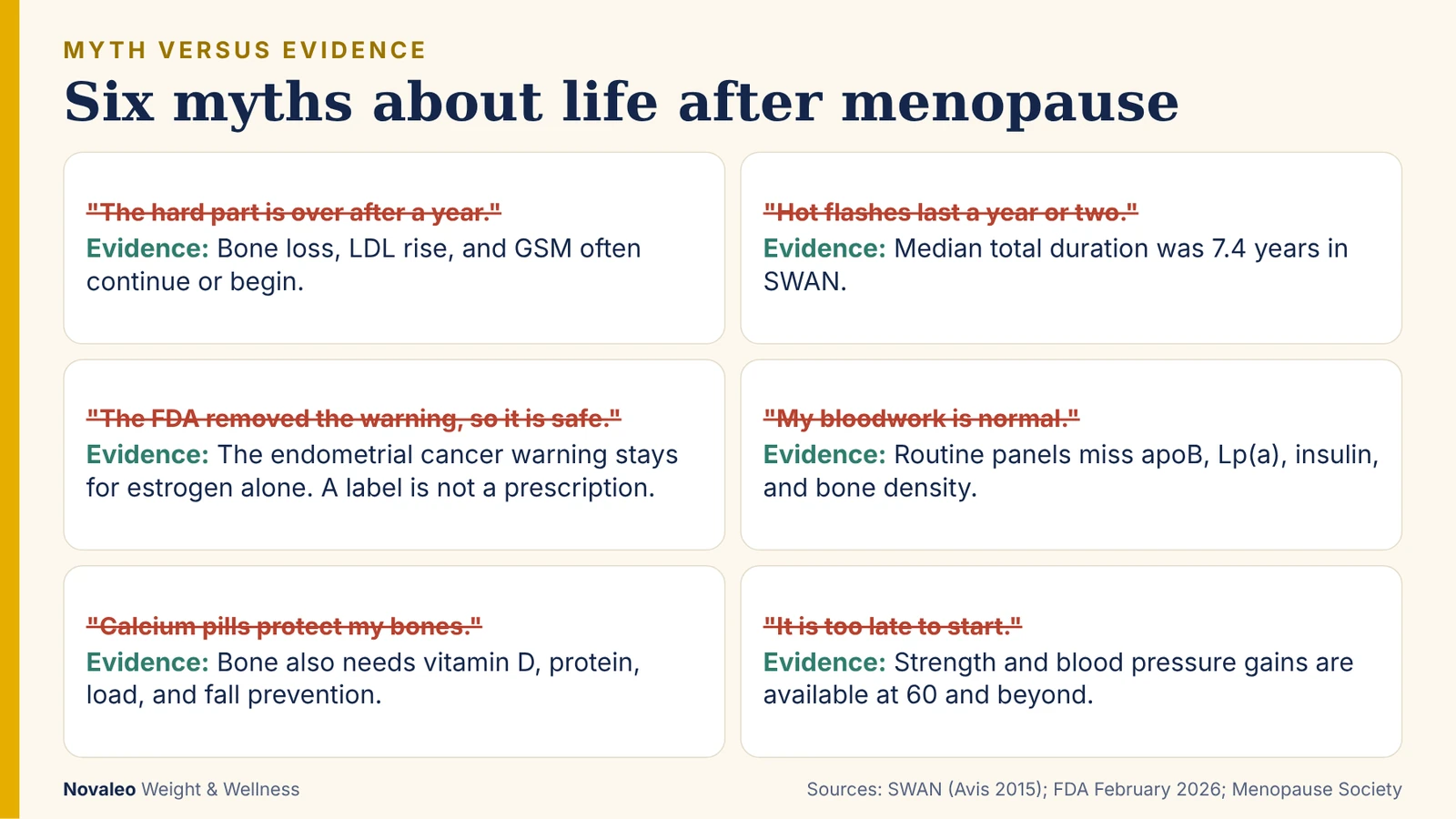
Myth: "Once you have gone a year without a period, the hard part is over."
For some women the worst symptoms ease. For many, hot flashes last years more, and bone loss, cholesterol changes, and genitourinary symptoms arrive or progress after the final period. The first years are a window for prevention, not a finish line.
Myth: "Weight gain after menopause is inevitable, and nothing works."
The body composition shift is real and measurable, but it is not a sentence. Strength training, adequate protein, better sleep, treating thyroid and metabolic contributors, and moderating alcohol all change the trajectory. The SWAN data show that the accelerated phase eventually slows, which means the work you do is on a more stable foundation than it was in the transition.
Myth: "Hormone therapy causes cancer and heart attacks, so I should never consider it."
The risk depends on the product, dose, route, timing, and your history. For healthy women under 60 or within ten years of menopause, the Menopause Society finds the balance generally favorable for bothersome symptoms. Combined therapy carries a small increase in breast cancer risk with longer use that deserves an honest discussion, and it is not appropriate for everyone. Neither blanket fear nor blanket enthusiasm serves you.
Myth: "The FDA removed the warnings, so hormone therapy is now totally safe."
The label change corrected an outdated boxed warning for the first group of products, and it kept the endometrial cancer warning for estrogen alone. It did not make hormone therapy risk-free or right for every woman. It is a reason to reopen the conversation, not to skip it.
Myth: "Hot flashes last a year or two."
In SWAN the median total duration was 7.4 years, and more than 11 years for women whose symptoms started early. You are not failing if yours lasts longer, and there are effective treatments.
Myth: "If my bloodwork is normal, nothing is wrong."
A routine panel does not measure bone density, apoB, Lp(a), fasting insulin, a complete thyroid panel, ferritin, or vitamin D. Many of the most important changes after menopause are invisible on a basic panel.
Myth: "Calcium pills will protect my bones."
Calcium is one piece. Bone also needs vitamin D, protein, mechanical load, adequate hormones or treatment where indicated, and fall prevention. Calcium alone, particularly from supplements, is not a bone plan.
Myth: "Heart disease is a man's problem, and my cholesterol was fine at 45."
Heart disease is the leading cause of death in women. LDL and apoB rise around the final period, so earlier numbers do not predict later ones, and blood pressure and Lp(a) matter too.
Myth: "Lifting weights will make me bulky or hurt my joints."
Women do not become bulky from the kind of resistance training described here. Done progressively with good technique, strength training tends to reduce joint pain and fall risk, not increase them.
Myth: "Natural supplements are safer than medication and work just as well."
Natural does not mean harmless or effective. Most supplements marketed for hot flashes lack good evidence, and some carry risks. A medication with known benefits and monitored side effects can be safer than an unregulated product of unknown composition.
Myth: "It is too late for me to start."
It is not. Strength gains, blood pressure improvement, better sleep, and better bone loading are available at 60, 70, and beyond. Some options, such as systemic hormone therapy, have a more favorable window earlier, but nearly every other step in this guide is worth taking at any age.
What a Comprehensive Evaluation Looks Like at Novaleo
Everything in this article can be explored on your own, and I hope it helps you ask better questions. If you would like a clinician to help you put it together for your specific situation, here is how working with Novaleo is structured, and what it costs, so there are no surprises. Everything happens by secure video, and I am licensed to practice in both Michigan and Wisconsin.

Step One: The Free Root Cause Assessment Call
A no-cost Google Meet conversation with me where you can tell me what is happening, ask questions, and decide what the best next step is. It is not a sales call and there is no pressure. It exists because many women are not sure whether what they are experiencing deserves a full evaluation, and a short conversation is a low-stakes way to find out. You can book it from our assessment call page.
Step Two: The Root Cause Intake, a 60-Minute Clarity Session ($97)
A comprehensive clinical assessment in which we go deep: your full health history, symptoms, lifestyle, nutrition, stress, sleep patterns, and any prior labs. For the postmenopausal woman, that includes your reproductive history, family history of bone and heart disease, screening status, medications, and goals. You leave with clarity about what may be driving your symptoms and a personalized starting plan. You can learn more on the Clarity Session page.
Step Three: The Root Cause Lab Panel ($454)
The panel I described in the testing section, with written insights on your results. It requires overnight fasting, results are typically ready in about two weeks, and the cost can be credited toward the Root Cause Restoration Program if you enroll within 30 days. I will tell you plainly which tests I think you still need beyond this panel, such as a DXA scan, a mammogram, apoB, or a sleep study, and I will help you coordinate those with your primary care provider.
Step Four: Your Plan, and Follow-Up
A plan that fits your results and your life: nutrition and protein targets, a realistic strength and movement plan, sleep strategy, supplement guidance where indicated, and a discussion of hormone therapy and non-hormonal medication where they fit, with referrals when you need a specialist. Follow-up visits for program clients run 30 to 60 minutes depending on whether we are reviewing progress, complex labs, or a comprehensive reassessment.
The Root Cause Restoration Program, and Who It Fits
The Root Cause Restoration Program is a six-month program, priced at $3,995, built around four non-negotiables: nutrition and blood sugar stability, sleep and circadian rhythm, stress and nervous system regulation, and movement and metabolic strength. It includes bi-monthly consultations with a healthcare provider, a 48-hour response time for inquiries, comprehensive biomarker analysis and metabolic tracking, monthly data reviews, and supplement and nutrition guidance. It is intentionally limited to four clients at a time. I want to be direct about fit. The program is designed primarily for women between 35 and 55 who feel their bodies have changed, and many of the women reading this article are at or just past the upper end of that range. If you are older, or if you would rather start smaller, the Clarity Session and lab panel are an excellent way to begin, and we can talk on the assessment call about what makes sense for you.
Cost, Insurance, and What We Do Not Do
Novaleo does not accept insurance. We accept FSA and HSA payments as well as credit and debit cards. A mammogram and a DXA scan ordered by your primary care provider are typically handled through your insurance as screening, subject to your plan. I want to be honest about limits too. Telehealth cannot perform a DXA scan, a mammogram, or a physical exam, it cannot treat an emergency, and it does not replace your primary care provider, your gynecologist, or a specialist such as an endocrinologist or oncologist when you need one. Good care coordinates with them, and I will share findings with your care team with your permission. You can read more about how we work on our approach page, and about our focus conditions on the what we treat page.
Not sure where to start? Start with a conversation.
A free assessment call is a low-pressure way to talk through your symptoms, ask any question from this article, and decide whether a comprehensive evaluation makes sense for you.
Book Free Assessment CallMichigan and Wisconsin Considerations
Menopause is biology, but living with it is local. Here is what I think about when I help women in the Great Lakes states, and what I hope you will keep in mind.
Telehealth Across Two States
Novaleo serves women in both Michigan and Wisconsin by video. Telehealth practice across state lines depends on licensure in the state where the patient is located, and licensing standards are maintained by the Michigan Department of Licensing and Regulatory Affairs and by the Wisconsin Department of Safety and Professional Services. If you travel or live part of the year elsewhere, tell us, because where you are during the visit matters. Also remember that Wisconsin is on Central time and most of Michigan is on Eastern time, with four Upper Peninsula counties, Gogebic, Iron, Dickinson, and Menominee, on Central. When you book, confirm the time zone, especially if you are near the border.
Labs, DXA, and Mammograms Close to Home
Blood draws are done at a local lab site, and there are many across both states. Bone density scans and mammograms are services you will usually arrange through your primary care clinician or a local imaging center. Large health systems, including Corewell Health, Henry Ford Health, and University of Michigan Health in Michigan, and Froedtert and UW Health in Wisconsin, as well as many regional hospitals, offer both services. Availability and wait times vary, so ask your primary care provider to place the order, and ask whether your DXA and mammogram can be done on the same day to save a trip. In rural areas, including the Upper Peninsula, the Northwoods, and the Driftless region of southwestern Wisconsin, call ahead, ask about mobile mammography, and plan around winter weather. Telehealth can handle the follow-up so you do not have to drive for every result.
The Winter Effects Stack Up
The long Great Lakes winter touches nearly everything in this guide. Low sunlight means vitamin D deficiency is common, which affects bone, muscle, and mood. Ice means a higher risk of the falls that turn low bone density into fractures. Short days affect sleep and mood. Indoor heating makes bedrooms too warm for women with night sweats. And long stretches indoors reduce activity. My practical advice is to plan for winter in the fall: check your vitamin D in autumn, set up your indoor strength routine, buy traction cleats, schedule your DXA and mammogram before the worst of the weather, and decide who your walking partner will be.
The Research Roots Are Local, Too
As noted earlier, Michigan was one of the sites of the national SWAN study, and the University of Wisconsin's Wisconsin Sleep Cohort produced some of the best data on menopause and sleep-disordered breathing. When I tell a woman in Kalamazoo or La Crosse that these findings came in part from women like her, it tends to land. You are not an abstraction in a textbook. Women in your region helped create the evidence.
Food, Culture, and Cost
Our food traditions are a strength when we use them thoughtfully, as the nutrition section describes, and Great Lakes fish are a genuine asset when you check the advisories. On cost, be realistic about what is covered. Insurance often covers screening mammograms and bone density tests when ordered by your clinician under defined criteria, and Medicare covers bone mass measurement for eligible beneficiaries, so check with your plan. Novaleo's services are self-pay with FSA and HSA accepted, which means you can plan the spending deliberately. If you have already done recent testing elsewhere, bring it, because it can reduce duplication.
If you are reading this from a smaller town and wondering whether this kind of attention is realistic where you live, it is. The whole point of telehealth is that your zip code should not determine whether someone has time to look at your whole picture. Our city-by-city guide walks through how this works in Grand Rapids, Metro Detroit, Ann Arbor, Lansing, Kalamazoo, Milwaukee, Madison, Green Bay, and the smaller and rural communities in between.
A 90-Day Plan You Can Start This Week
Long guides can leave you with a pile of good intentions and no starting point. So here is a practical, phased plan that turns the first three months into something you can actually do. You do not need to do everything. Pick the actions that fit your life and your risks, and use the plan as a menu.
| When | Focus | What to do |
|---|---|---|
| Days 1 to 7 | Get your baseline | Measure your waist at the navel. Take home blood pressure readings morning and evening for seven days. Start a simple symptom log for hot flashes, sleep, mood, and energy. Write down your medications and supplements. Write down what you know about your family's bone fractures, heart disease, cancers, and the age your mother went through menopause. Add a protein-forward breakfast and a ten-minute daily walk. |
| Weeks 2 to 4 | Build the foundations | Start strength training twice a week using the four-week starter plan. Aim for protein at each meal. Cool the bedroom and set a caffeine cutoff. Step outside in morning light. Review your alcohol habits honestly. Check whether you are due for a mammogram, bone density test, and blood pressure and cholesterol review, and schedule them. Complete a screening questionnaire for sleep apnea if you snore or wake unrefreshed. |
| Weeks 5 to 8 | Get the data and decide | Complete your labs, including thyroid, A1c and fasting insulin, lipids with apoB, Lp(a), vitamin D, ferritin, and B12. Review the results with a clinician. Decide, together, about hormone therapy or a non-hormonal option if hot flashes or other symptoms are bothersome. Start a vaginal moisturizer, and ask about vaginal estrogen if you have dryness or recurrent infections. Begin CBT-I or a sleep study if sleep remains poor. Progress your strength training by adding load or sets. |
| Weeks 9 to 12 | Adjust and lock in | Recheck your waist, your strength benchmarks such as ten sit-to-stands without hands, your home blood pressure, and your sleep log. Adjust doses and plans with your clinician. Set up your next screenings. Write down the three habits that stuck and make them non-negotiable. Plan your winter or summer routine, depending on the season you are in, so you do not start from scratch. |
If your 90 days include a diagnosis, such as osteoporosis, hypertension, high Lp(a), sleep apnea, or thyroid disease, it does not mean you failed. It means the plan worked as intended, because it found something that can now be treated before it becomes an event.
How to Prepare for Your Visit and Questions to Ask
A little preparation can make a ten-minute appointment far more productive, and it makes it harder for your concerns to be brushed aside. Whether you see me, your primary care provider, a gynecologist, or an endocrinologist, bring the following.

- A one-page timeline: the date of your last period, when symptoms began, and what has changed in the past year
- Your symptom log or a short list of your top three concerns in priority order
- Your home blood pressure log
- A list of every medication, supplement, and over-the-counter product, with doses
- Your family history of osteoporosis, fractures, heart disease, stroke, blood clots, and cancers, including your mother's age at menopause
- Copies of recent labs, DXA, mammogram, and imaging reports, or the name of the facility where they were done
- Your questions, written down, because they are easy to forget in the moment
Questions Worth Asking Any Clinician
- Based on my age, history, and symptoms, what are my biggest risks over the next ten years: bones, heart, metabolic, or something else?
- Is it time for a baseline bone density test, and if not, why not?
- Can we check my cholesterol with apoB and a one-time Lp(a), and my thyroid with a full panel?
- Do my symptoms suggest sleep apnea, and should I have a sleep study?
- What are my options for hot flashes, both with and without hormones, and which do you recommend for me?
- What are my personal risks and benefits if I consider hormone therapy, and how would we monitor it?
- Which supplements, if any, do you recommend for me, and at what doses?
- How much protein should I be eating, and what kind of strength training is safe for my bones and joints?
- Which screenings am I due for, and who orders them?
- What should I do if my symptoms get worse, and when should I call or seek urgent care?
If You Feel Dismissed
It is reasonable to say, "I understand this may be a normal part of aging, but it is affecting my sleep and quality of life, and I would like to know what my options are." It is reasonable to ask what evidence supports a recommendation, and to ask what the alternatives are. And it is reasonable to seek another opinion. A clinician who listens, explains the reasoning, and welcomes your questions is worth finding, wherever that clinician practices.
For Partners and Family
If someone you love shared this with you, thank you for reading. It is easy to feel unsure how to help when a person you love is waking soaked, aching, and frustrated by a body she no longer recognizes. A few things make a real difference.
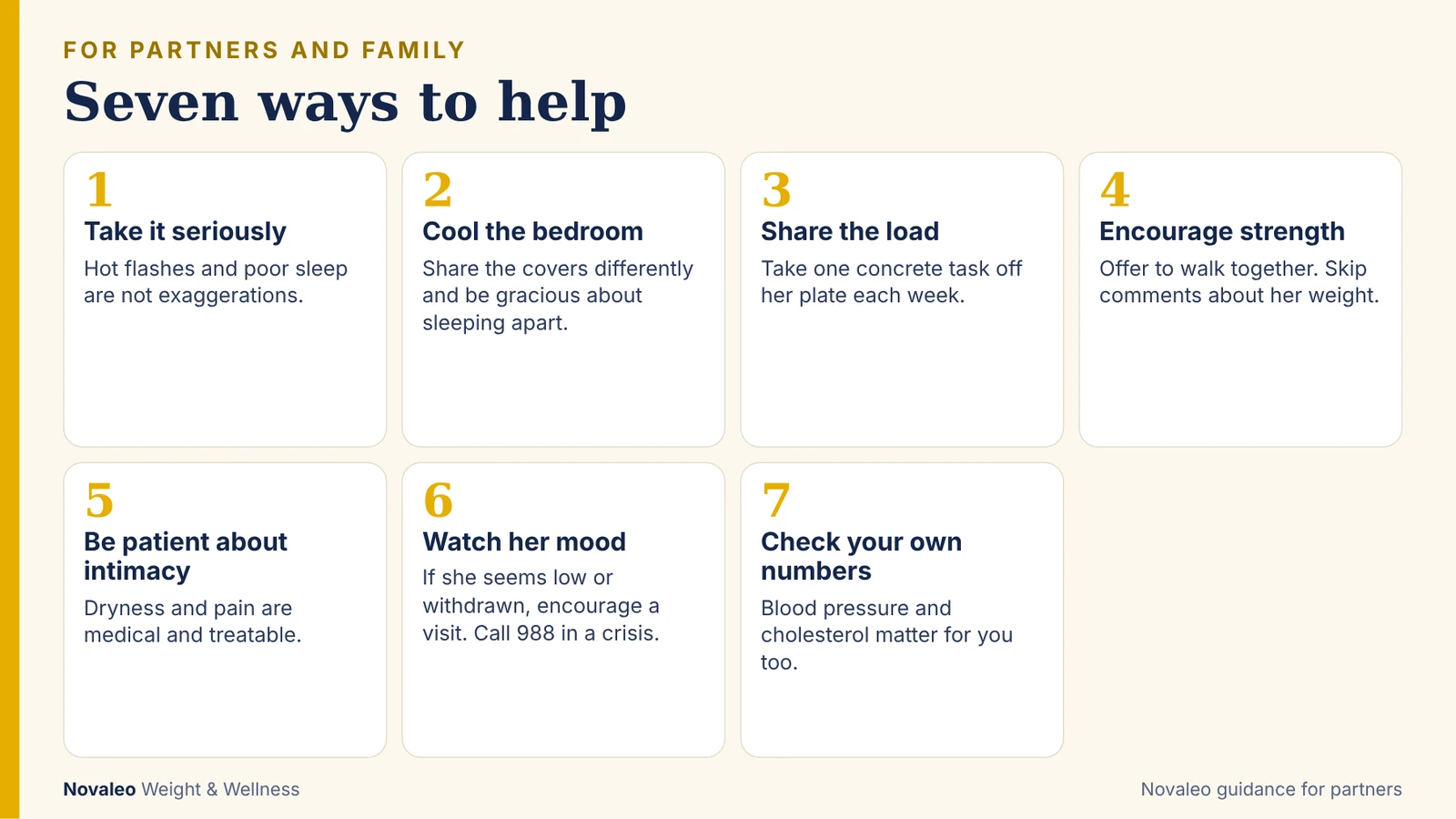
- Take it seriously. Hot flashes, poor sleep, and joint aches are not exaggerations. Dismissing them as "just age" tends to isolate her.
- Help the sleep environment. Cool the bedroom, share the covers differently, and be understanding if she sleeps apart for a while.
- Share the load. Many women in this decade are caregivers for parents and children at once. Taking something concrete off her plate helps her sleep and recover.
- Encourage strength, not weight loss. Commenting on her weight is rarely helpful. Offering to walk with her, or to take over a chore so she can get to a strength session, is.
- Be patient about intimacy. Dryness and pain are medical, treatable, and not a reflection of attraction. A calm conversation and a willingness to attend a visit together can open options.
- Watch for mood changes. If she seems persistently low or withdrawn, gently encourage her to talk with a clinician, and call 988 if she is ever in crisis.
- Learn your own risks. Menopause is also a good time for partners to check their own blood pressure, cholesterol, and screenings. Many couples find they can do this together.
What the Research Still Cannot Tell Us
An article that only reassures or only warns is not trustworthy. Here is where the evidence is incomplete, so that you can hold my recommendations with the right level of confidence.
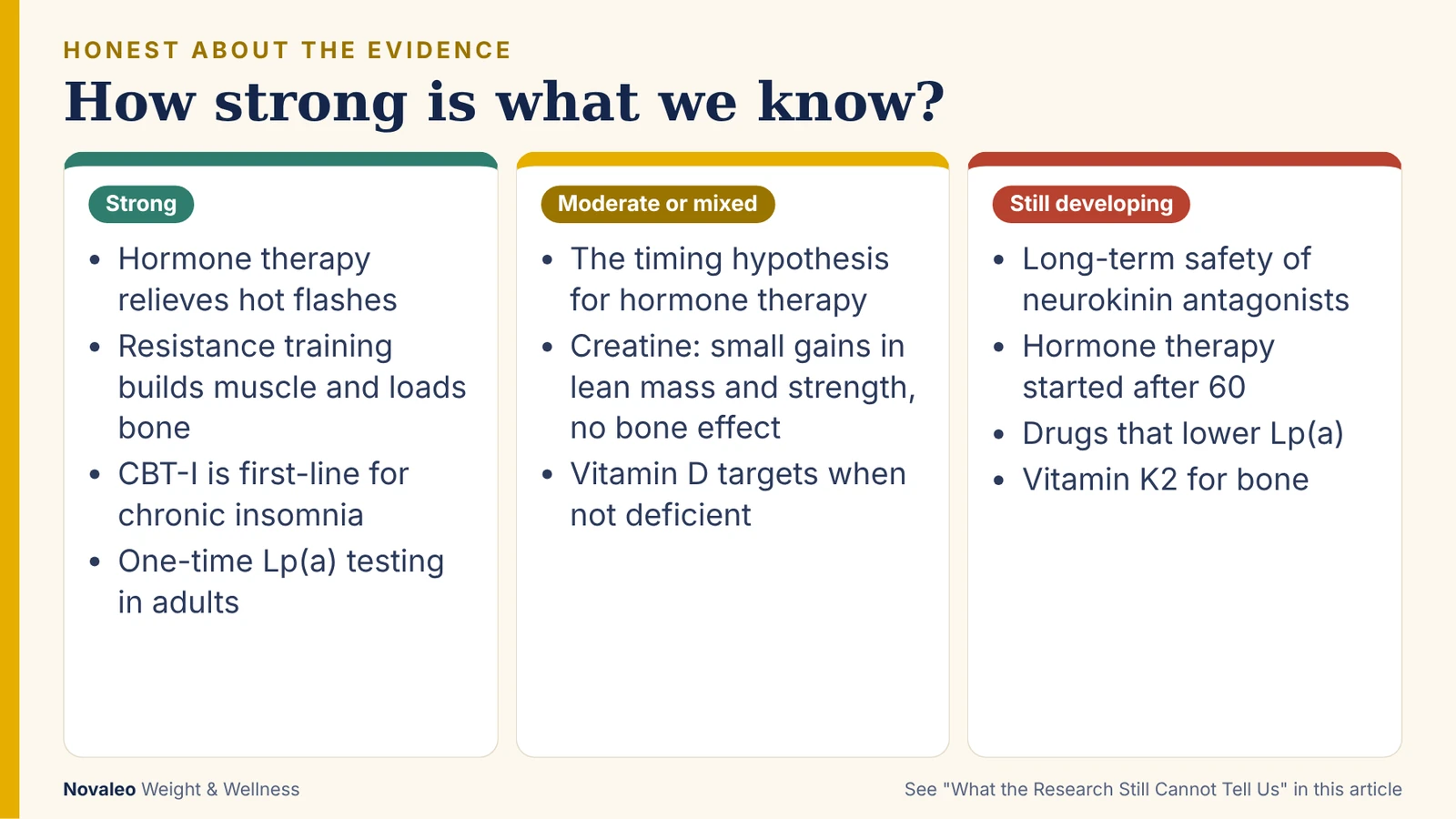
- Long-term outcomes of hormone therapy started after 60. The timing hypothesis is supported by several lines of evidence, but large randomized trials in women starting early and following them for decades do not exist. The data we use are a blend of trials, observational studies, and biological reasoning.
- The real-world effect of the FDA label change. The first products were updated in early 2026, more were pending, and it will take time to see how prescribing, patient understanding, and outcomes change.
- Long-term safety of the neurokinin antagonists. Fezolinetant and elinzanetant are new, and trial durations are limited. The liver warning on fezolinetant was added only after the drug reached the market, a reminder that rare effects emerge with wider use.
- What lowers Lp(a). Lifestyle has little effect, and specific Lp(a)-lowering drugs are still being studied in outcome trials. Today the practical response to a high Lp(a) is to treat the other risk factors more aggressively.
- Creatine and bone. The early positive signal was not confirmed in a larger two-year trial, and the effect on bone remains unclear.
- Vitamin D targets and vitamin K2. Experts disagree on the optimal vitamin D level, and the trial evidence for K2 and other bone supplements is mixed.
- How well the large studies generalize. SWAN included women from several ethnic groups and several regions, which is a strength, but it is a specific cohort that began in the 1990s. Women in Michigan and Wisconsin today have different histories, diets, and medication patterns, and individual variation is large.
- Many functional medicine tools. Detailed hormone metabolite panels and some of the more specialized tests have limited outcome evidence. I use them selectively and explain what they can and cannot tell us.
A Closer Look at the Research Behind This Article
A few studies carry much of the weight in this guide. Here is what each one is, what it can tell us, and what it cannot.
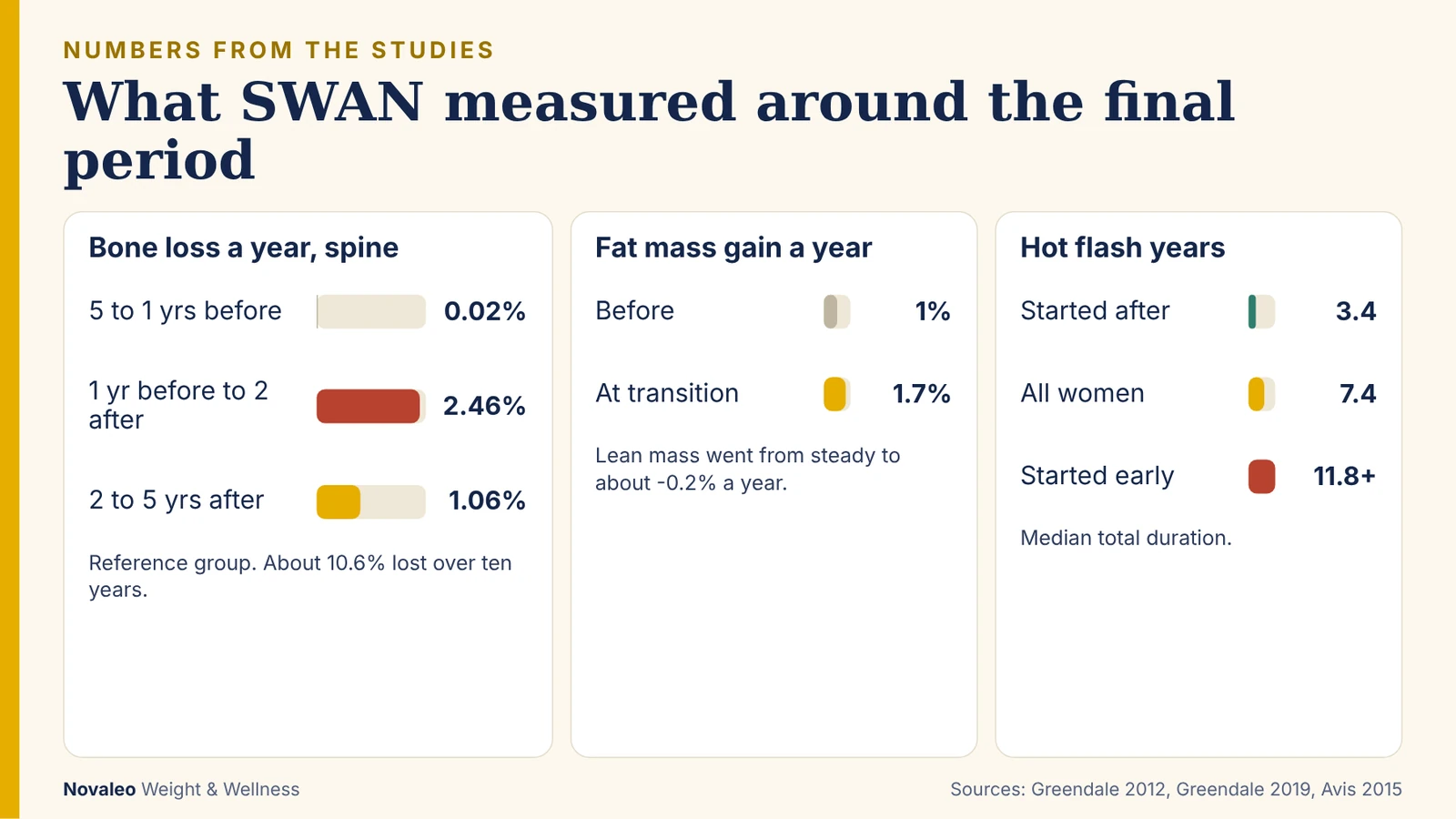
SWAN: Body Composition (Greendale and Colleagues, 2019)
This analysis followed 1,246 women with repeated DXA scans for about eighteen years and aligned the measurements to each woman's final menstrual period. Its strength is that it measured fat and lean mass directly and anchored the timing to ovarian aging rather than chronological age, which is what lets us see an acceleration at the transition. Its limits are that it is observational, it describes average trends, and individual women vary around them. It cannot prove that hormones alone cause the changes. (Read the study.)
SWAN: Bone (Greendale and Colleagues, 2012)
This study of 862 women with natural final menstrual periods showed the rhythm of bone loss around the final period: onset about a year before, the fastest rate until about two years after, then a slower continuing decline. Its strength is the precise timing. Its limits are that the reported rates are for the reference group and differed in other ethnic groups, and bone density is a surrogate for fracture. (Read the study.)
SWAN: Cholesterol and Other Risk Factors (Matthews and Colleagues, 2009)
By testing whether risk factors fit chronological aging or a menopause-anchored model, this study of 1,054 women showed that total cholesterol, LDL, and apoB made a distinct jump around the final period, while blood pressure, glucose, insulin, and inflammatory markers followed age. Its limits are that it measured risk markers, not heart attacks, and it was done in an earlier generation of women. (Read the study.)
SWAN: Hot Flashes (Avis and Colleagues, 2015)
This analysis of 1,449 women is the source of the 7.4-year median duration and of the striking variation by timing of onset and ethnicity. Its limits are that symptoms were self-reported, medians hide a wide range, and the analysis cannot tell you what will happen to any one woman. (Read the study.)
The Wisconsin Sleep Cohort (Young and Colleagues, 2003)
This population-based study of 589 women measured sleep-disordered breathing with overnight testing and compared menopausal groups. Its strength is that the breathing measurements were objective. Its limits are that it is cross-sectional for this question, so it shows an association rather than proof that menopause causes the change, though the authors adjusted for known confounders. (Read the study.)
The ELITE Trial (Hodis and Colleagues, 2016)
A randomized trial of 643 women comparing oral estradiol with placebo in women near menopause and in women well past it. It is among the few randomized tests of the timing hypothesis for blood vessel disease. Its limits are that its main outcome was a measure of artery thickness, not heart attacks, and the follow-up was about five years. (Read the study.)
How to Read Risk Numbers
Whenever you see a result expressed as a relative increase, ask for the absolute numbers. A "20 percent higher risk" of something that happens to 5 in 1,000 women is a very different message from a "20 percent higher risk" of something that happens to 200 in 1,000. This is one of the most useful skills you can develop for any discussion of hormone therapy, medication, or screening, and a good clinician will give you both.
Glossary of Terms Used in This Article
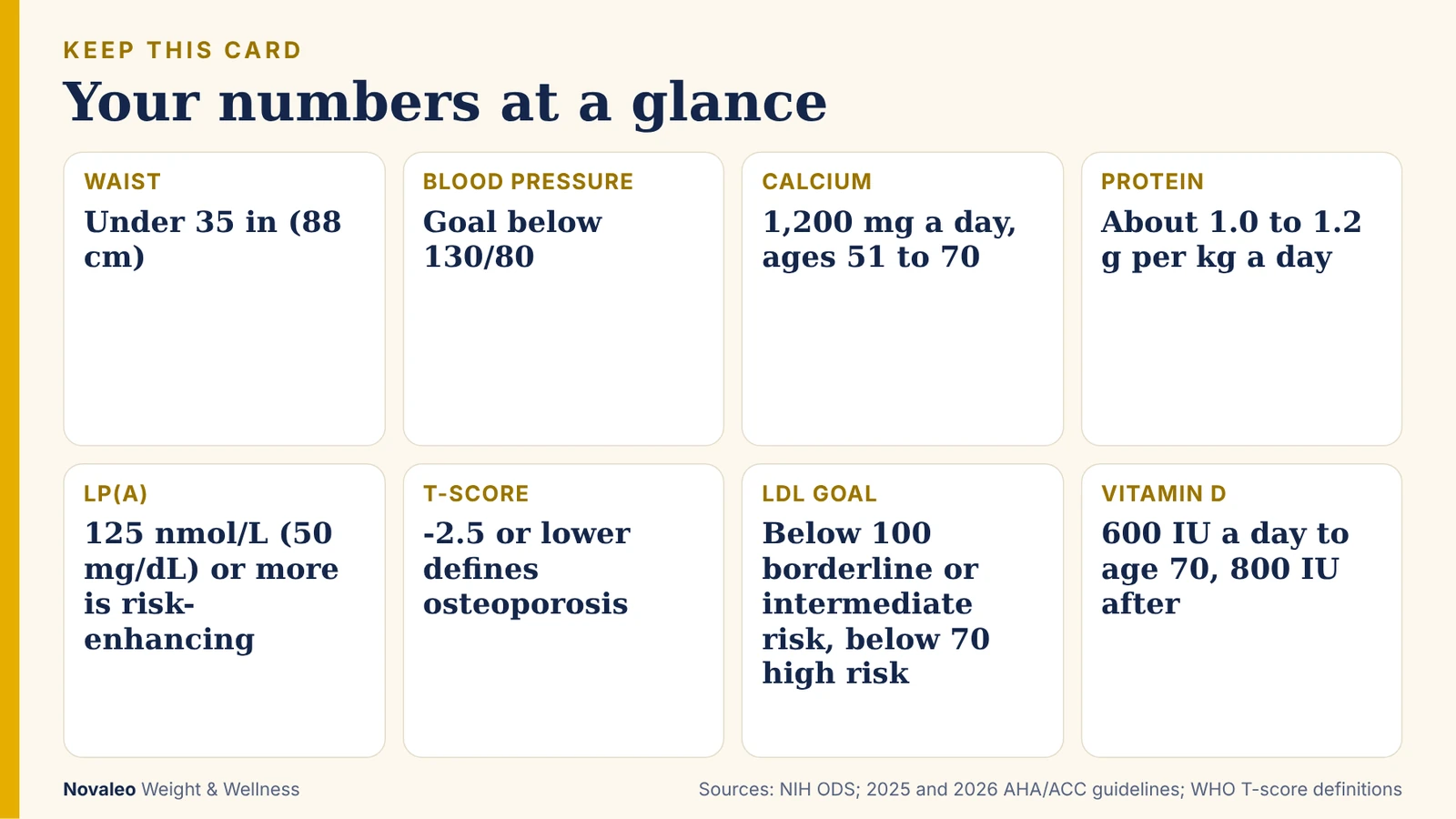
Menopause: The point in time that marks twelve consecutive months without a menstrual period. After it, a woman is postmenopausal for the rest of her life.
Perimenopause: The multi-year transition leading up to menopause, marked by fluctuating hormones and changing cycles.
Estradiol: The most potent form of estrogen, produced mainly by the ovaries before menopause.
FSH (follicle-stimulating hormone): A pituitary hormone that rises when the ovaries produce less estradiol.
Progestogen: A general term for progesterone and progesterone-like drugs called progestins. Women with a uterus who take systemic estrogen need one to protect the uterine lining.
Vasomotor symptoms: Hot flashes and night sweats, caused by a narrowing of the brain's temperature comfort range.
Neurokinin antagonist: A newer class of non-hormonal drugs for hot flashes that blocks neurokinin receptors in the brain's temperature center. Fezolinetant and elinzanetant are examples.
GSM (genitourinary syndrome of menopause): Vaginal, vulvar, and urinary symptoms caused by low estrogen, including dryness, painful sex, urgency, and recurrent infections.
DXA (dual-energy X-ray absorptiometry): The standard test for measuring bone mineral density.
T-score: A comparison of your bone density with that of a healthy young adult. A score of minus 2.5 or lower defines osteoporosis.
Osteopenia: Low bone mass, with a T-score between minus 1.0 and minus 2.5. It is not a disease but is a risk marker.
FRAX: A calculator that estimates a person's ten-year probability of a major osteoporotic fracture and a hip fracture.
Sarcopenia: Age-related loss of muscle mass and strength.
Visceral fat: Fat stored deep in the abdomen around the organs, more metabolically harmful than fat under the skin.
Insulin resistance: A state in which cells respond less well to insulin, pushing the body to make more of it. Often visible in a fasting insulin level before glucose rises.
LDL cholesterol: The cholesterol carried in low-density lipoprotein particles, a major contributor to plaque in the arteries.
ApoB (apolipoprotein B): A protein found on each plaque-forming cholesterol particle, so it reflects the number of those particles in the blood.
Lp(a) (lipoprotein(a)): An inherited cholesterol-carrying particle that raises the risk of heart attack and stroke. It is largely unaffected by lifestyle and needs to be measured only once.
PREVENT equations: The risk calculators now recommended by American cardiology guidelines for estimating ten- and thirty-year cardiovascular risk in adults aged 30 to 79.
Coronary artery calcium (CAC) score: A CT scan that measures calcium in the heart's arteries to refine risk in selected people.
CBT-I: Cognitive behavioral therapy for insomnia, the first-line treatment for chronic insomnia.
Transdermal: Absorbed through the skin, as with a patch, gel, or spray.
Timing hypothesis: The idea that the balance of benefit and risk from hormone therapy depends on when it is started relative to menopause.
Comprehensive FAQ
These are the questions I am asked most often by women in Michigan and Wisconsin who are past menopause. Each answer is short on purpose. The relevant section above has the evidence and the nuance.
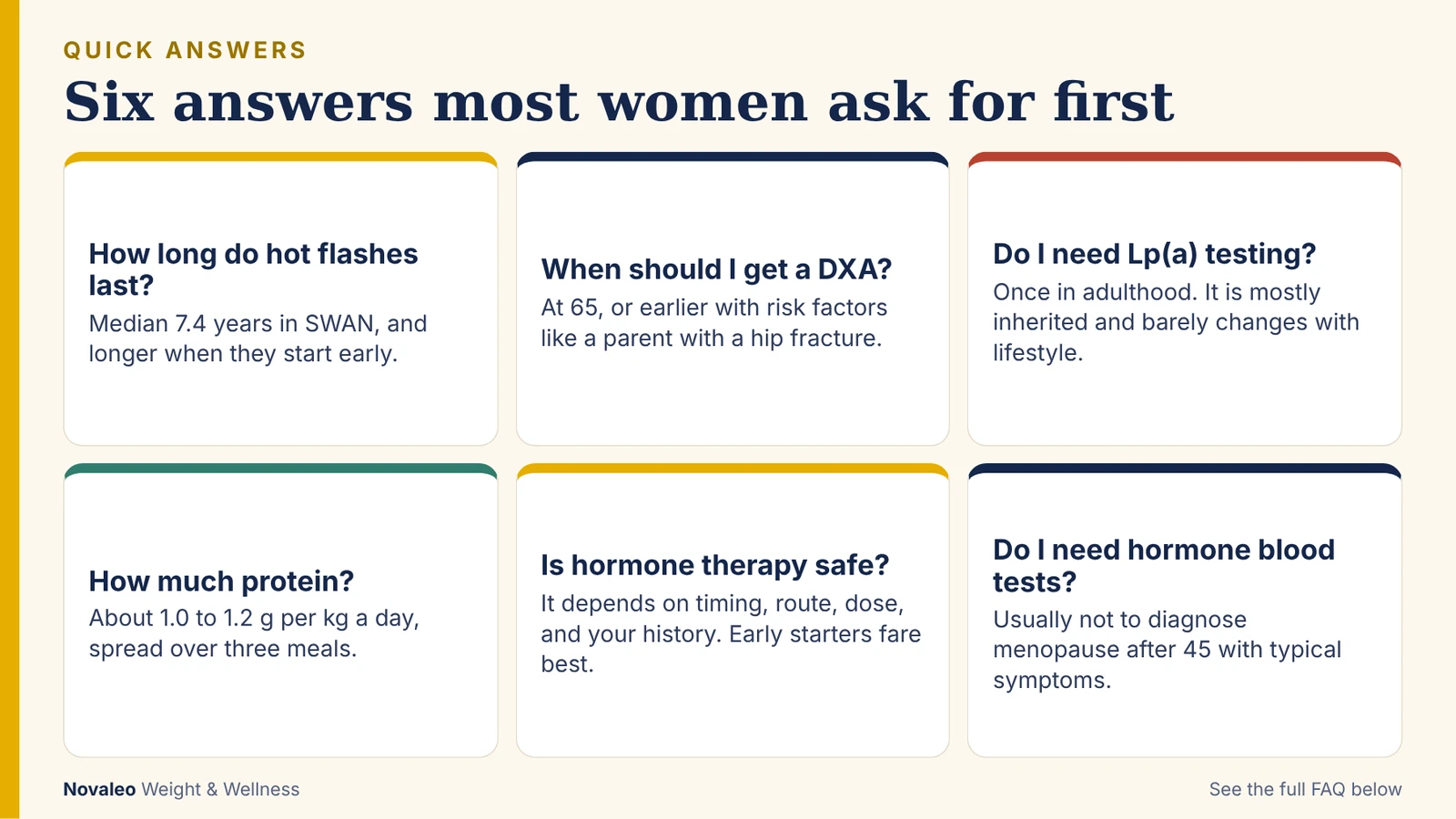
How long do hot flashes last after menopause?
In the SWAN study of 1,449 women, the median total duration of frequent hot flashes and night sweats was 7.4 years, with a median of 4.5 years continuing after the final period. Women whose symptoms began early in the transition had the longest course, more than 11 years, and women who started after menopause had the shortest, about 3.4 years. If your symptoms are still bothersome years later, effective treatments exist.
Why am I gaining belly fat after menopause even though I eat the same?
SWAN found that at the menopause transition the rate of fat gain accelerates and lean mass begins to fall, while total body weight does not change much. Fat also shifts toward the abdomen. Thyroid changes, insulin resistance, poor sleep, stress, and some medications can add to it. Strength training, enough protein, better sleep, and treating underlying drivers are the most effective responses.
How much bone do women lose after menopause?
In the SWAN bone study, bone loss began about a year before the final period, ran fastest until about two years after, and then slowed but continued. Cumulative loss across the ten years surrounding the final period was roughly 9 to 11 percent in the reference group. Rates differ between women, so a baseline DXA scan is the best way to know where you stand.
When should I get a bone density test?
The U.S. Preventive Services Task Force recommends screening for all women 65 and older and for postmenopausal women younger than 65 who are at increased risk. The Bone Health and Osteoporosis Foundation advises routine DXA for postmenopausal women. If you have risk factors such as a parent with a hip fracture, early menopause, a prior fracture, steroid use, or height loss, ask for a baseline scan earlier.
Does menopause raise my risk of heart disease?
The American Heart Association's 2020 scientific statement concluded that cardiovascular risk accelerates during the menopause transition. LDL cholesterol and apoB rise around the final period, body composition shifts, and blood pressure tends to climb with age. Heart disease is the leading cause of death in women, so repeat cholesterol and blood pressure checks after menopause even if past results were normal.
What cholesterol tests should I ask for after menopause?
Ask for a lipid panel, and ask about apoB, which counts the number of plaque-forming particles. Ask for lipoprotein(a) once, since the 2026 ACC and AHA guideline recommends measuring it at least once in every adult. Also check blood pressure, A1c, and a complete thyroid panel, because an underactive thyroid can raise LDL.
What is Lp(a) and should I be tested?
Lipoprotein(a) is an inherited cholesterol-carrying particle that raises the lifetime risk of heart attack and stroke. A level of about 125 nanomoles per liter (50 milligrams per deciliter) or higher is considered risk-enhancing. Lifestyle changes have little effect on it, so it generally needs to be measured only once. A high result is also useful for blood relatives.
Is hormone therapy safe after 50?
It depends on the product, dose, route, timing, and your history. The Menopause Society finds that for healthy women under 60 or within 10 years of menopause with bothersome symptoms, the balance of benefit and risk is generally favorable. Risks are higher when therapy is started later, and combined therapy carries a small increase in breast cancer risk with longer use. It is a decision to make with a clinician who knows your history.
Did the FDA remove the hormone therapy warning, and what does it mean for me?
In February 2026 the FDA approved labeling changes for a first group of six menopausal hormone therapy products, removing boxed warning language about cardiovascular disease, breast cancer, and probable dementia, and keeping the endometrial cancer warning for estrogen alone. More updates were expected. It does not make hormone therapy risk-free or right for every woman, but it is a reasonable reason to revisit the conversation.
What are the non-hormonal options for hot flashes?
The Menopause Society's 2023 review supports cognitive behavioral therapy, clinical hypnosis, SSRIs and SNRIs, gabapentin, oxybutynin, and fezolinetant. The FDA also approved elinzanetant in October 2025. Fezolinetant carries a boxed warning for rare liver injury and requires liver testing. Most over-the-counter supplements lack enough evidence to recommend.
Why am I waking at 3 AM after menopause?
Common causes include night sweats, loss of progesterone's calming effect, an altered cortisol rhythm, sleep apnea, needing to urinate, restless legs, pain, anxiety, and alcohol or caffeine. A thorough look at several of these usually works better than sleep hygiene alone. Cognitive behavioral therapy for insomnia is the first-line treatment for chronic insomnia.
Could I have sleep apnea?
Possibly. The Wisconsin Sleep Cohort found that postmenopausal women had about 2.6 times the odds of sleep-disordered breathing compared with premenopausal women after adjustment. Women often present with insomnia, morning headaches, fatigue, and mood changes rather than loud snoring. Ask your clinician about a home sleep test if several of the warning signs apply to you.
How much protein do I need after menopause?
The standard recommended allowance is 0.8 grams per kilogram per day, but an international expert group recommends at least 1.0 to 1.2 grams per kilogram for older adults, and many clinicians use that range for active postmenopausal women. For a 150-pound woman, that is roughly 68 to 82 grams a day, spread over three meals. People with significant kidney disease should ask their kidney specialist first.
Is creatine safe, and does it help?
A 2026 meta-analysis of seven randomized trials in 608 postmenopausal women found small gains in lean mass and leg strength, mainly when creatine at about 5 grams a day or more was combined with resistance training, with mild side effects similar to placebo. It did not change bone density. Talk to your clinician first if you have kidney disease.
Do I need calcium and vitamin D supplements?
Aim to get 1,200 milligrams of calcium a day if you are 51 to 70, ideally from food, and use a supplement only to fill the gap. Vitamin D needs vary, and in Michigan and Wisconsin sunlight does not make vitamin D in your skin for roughly four months or more of the year, so a blood level is the best guide to dosing.
Is vaginal estrogen safe?
Low-dose vaginal estrogen is a local treatment with minimal absorption into the bloodstream, and the Menopause Society's 2020 statement supports it as an effective treatment for genitourinary symptoms. It can also reduce recurrent urinary infections. It is generally considered appropriate regardless of age. Women with a history of breast cancer should decide with their oncology team.
Can testosterone help my libido?
The 2019 Global Consensus Position Statement supports a trial of testosterone for postmenopausal women with hypoactive sexual desire disorder, with blood levels kept in the premenopausal range, and it found no good evidence for other uses such as mood, energy, or bone. No testosterone product is FDA approved for women in the United States, so ask about the product, dose, and monitoring.
Do I need hormone blood tests to know I am in menopause?
Usually not. For a woman in her late forties or fifties with typical symptoms and twelve months without a period, menopause is diagnosed clinically. Estradiol and FSH fluctuate and add little. Hormone testing is more useful before age 45, after a hysterectomy, with an IUD, or when something else is suspected.
Can I still start hormone therapy more than 10 years after menopause?
It is possible but more individualized. The Menopause Society notes that starting after age 60 or more than 10 years after menopause carries higher absolute risks of heart disease, stroke, blood clots, and dementia, so clinicians often use lower doses, transdermal routes, and closer monitoring, or choose other treatments. Low-dose vaginal estrogen is a separate, lower-risk option.
What is the best exercise for bones after menopause?
Progressive resistance training, with or without impact, is the most effective exercise for bone. In the LIFTMOR trial, supervised high-intensity resistance and impact training improved spine bone density by about 3 percent in postmenopausal women with low bone mass, while the control group lost bone. Women with osteoporosis should get guidance from a trained professional before heavy training.
Is it normal to feel anxious or depressed after menopause?
It is common. SWAN found a higher risk of major depression during and after the menopausal transition, especially in women with a prior history. Persistent low mood, hopelessness, or loss of interest deserves treatment, which may include therapy, medication, sleep and pain management, exercise, and sometimes hormone therapy. If you ever have thoughts of harming yourself, call or text 988.
What screenings should I have after 50?
For women at average risk, national guidance includes mammography every two years from age 40 to 74, bone density testing based on age and risk, blood pressure and cholesterol checks with Lp(a) once, diabetes screening, colorectal cancer screening from 45 to 75, cervical cancer screening through 65, and a hepatitis C test once. Your personal history may change this list.
Can Michigan and Wisconsin women get this kind of evaluation by telehealth?
Yes. Novaleo provides telehealth care across Michigan and Wisconsin, with labs drawn at a local site and results reviewed by video. A bone density scan and mammogram are arranged locally through your primary care provider or an imaging center, and we coordinate findings with your care team with your permission.
How much does a comprehensive evaluation cost at Novaleo?
The Root Cause Assessment Call is free, the 60-minute Root Cause Intake (Clarity Session) is $97, and the Root Cause Lab Panel is $454. The six-month Root Cause Restoration Program is $3,995 and is designed primarily for women ages 35 to 55. Novaleo does not accept insurance, but FSA and HSA payments are accepted.
A Personal Note from Katie
If you made it this far, thank you. I know it was a lot, and I hope it did what I intended, which was to hand you the explanation that so many women are not given.

Here is what I most want you to take from it. You are not imagining the changes in your body after menopause, and you are not failing because they are happening. These changes are real, measurable, and in many cases manageable. The most important parts, your bones, your heart, your muscle, and your sleep, respond to attention, and you are in a better position to act now than you will ever be later. You do not need to fix everything at once. Pick one thing from this guide, the baseline numbers, a strength session, a conversation with your clinician about a DXA scan, and start there.
You do not have to figure out menopause alone.
Book your free assessment call. No pressure, no assumptions, just a real conversation about what you have been experiencing and what a thoughtful evaluation could look like for you.
Book Free Assessment CallI have spent two decades listening to women describe symptoms that other people waved away. The pattern is always the same: they knew something was different, and they were right. Whether the answer turns out to be hormonal, metabolic, a sleep problem, a thyroid issue, or something that needs a specialist, the first step is always to take your experience seriously and look.
If you live in Michigan or Wisconsin and you have been told that you are "through it" and everything is fine, but your body says otherwise, I would be honored to look with you. If you read this for someone you love, please send it to her. The silence around life after menopause has been too long and too costly.
Katie Long, NP-C
Founder, Novaleo Weight and Wellness
Kathryn Long, NP-C
Board-Certified Nurse Practitioner
Katie is the founder of Novaleo Weight and Wellness, a telehealth functional medicine practice licensed in both Michigan and Wisconsin. With over 20 years of healthcare experience, she specializes in helping women identify and address the root causes of fatigue, weight resistance, and hormone-related changes in midlife. Learn more on the about page.
Ready for Answers That Fit Your Life After 50?
Start with a free conversation. Whatever you have been quietly wondering about your weight, bones, heart, or sleep, your free assessment call is the first step.
Book Free Assessment CallReferences
- The 2022 hormone therapy position statement of The North American Menopause Society. Menopause. 2022;29(7):767-794. View statement
- The 2023 nonhormone therapy position statement of The North American Menopause Society. Menopause. 2023;30(6):573-590. View statement
- The 2020 genitourinary syndrome of menopause position statement of The North American Menopause Society. Menopause. 2020;27(9):976-992. View statement
- U.S. Food and Drug Administration. "FDA approves labeling changes to menopausal hormone therapy products." News release, February 12, 2026. View announcement
- "Updated Labeling for Menopausal Hormone Therapy." JAMA. 2026 (Viewpoint). View article
- U.S. Food and Drug Administration. "FDA adds warning about rare occurrence of serious liver injury with use of Veozah (fezolinetant) for hot flashes due to menopause." Drug Safety Communication. View communication
- U.S. Food and Drug Administration. Lynkuet (elinzanetant) prescribing information. NDA 219469. View label
- Greendale GA, Sternfeld B, Huang M, et al. "Changes in body composition and weight during the menopause transition." JCI Insight. 2019;4(5):e124865. View study
- Greendale GA, Sowers M, Han W, et al. "Bone mineral density loss in relation to the final menstrual period in a multiethnic cohort: results from the Study of Women's Health Across the Nation (SWAN)." Journal of Bone and Mineral Research. 2012;27(1):111-118. View study
- Matthews KA, Crawford SL, Chae CU, et al. "Are changes in cardiovascular disease risk factors in midlife women due to chronological aging or to the menopausal transition?" Journal of the American College of Cardiology. 2009;54(25):2366-2373. View study
- El Khoudary SR, Aggarwal B, Beckie TM, et al. "Menopause Transition and Cardiovascular Disease Risk: Implications for Timing of Early Prevention: A Scientific Statement From the American Heart Association." Circulation. 2020;142(25):e506-e532. View statement
- Avis NE, Crawford SL, Greendale G, et al. "Duration of menopausal vasomotor symptoms over the menopause transition." JAMA Internal Medicine. 2015;175(4):531-539. View study
- Young T, Finn L, Austin D, Peterson A. "Menopausal status and sleep-disordered breathing in the Wisconsin Sleep Cohort Study." American Journal of Respiratory and Critical Care Medicine. 2003;167(9):1181-1185. View study
- Hodis HN, Mack WJ, Henderson VW, et al. "Vascular Effects of Early versus Late Postmenopausal Treatment with Estradiol." New England Journal of Medicine. 2016;374(13):1221-1231. View study
- 2026 ACC/AHA multisociety guideline on the management of dyslipidemia. Journal of the American College of Cardiology. 2026. Summary: American College of Cardiology, March 13, 2026. View summary
- 2025 AHA/ACC guideline for the prevention, detection, evaluation, and management of high blood pressure in adults. Summary: American College of Cardiology, August 2025. View summary
- US Preventive Services Task Force. "Screening for Osteoporosis to Prevent Fractures: Recommendation Statement." JAMA. 2025. View statement
- US Preventive Services Task Force. "Screening for Breast Cancer: Recommendation Statement." JAMA. 2024. View statement
- Bone Health and Osteoporosis Foundation. "What Women Need to Know." View resource
- Watson SL, Weeks BK, Weis LJ, et al. "High-Intensity Resistance and Impact Training Improves Bone Mineral Density and Physical Function in Postmenopausal Women With Osteopenia and Osteoporosis: The LIFTMOR Randomized Controlled Trial." Journal of Bone and Mineral Research. 2018;33(2):211-220. View study
- Naddafha S, Antonio J, Kreider RB, Stout JR. "Creatine monohydrate for lean mass, strength, and bone density in postmenopausal women: a systematic review and meta-analysis." Journal of the International Society of Sports Nutrition. 2026. View study
- "A 2-yr Randomized Controlled Trial on Creatine Supplementation during Exercise for Postmenopausal Bone Health." Medicine and Science in Sports and Exercise. 2023. View study
- Bauer J, Biolo G, Cederholm T, et al. "Evidence-based recommendations for optimal dietary protein intake in older people: a position paper from the PROT-AGE Study Group." Journal of the American Medical Directors Association. 2013;14(8):542-559. View position paper
- Webb AR, Kline L, Holick MF. "Influence of season and latitude on the cutaneous synthesis of vitamin D3: exposure to winter sunlight in Boston and Edmonton will not promote vitamin D3 synthesis in human skin." Journal of Clinical Endocrinology and Metabolism. 1988;67(2):373-378. View study
- National Institutes of Health Office of Dietary Supplements. "Calcium: Fact Sheet for Health Professionals." View fact sheet
- Qaseem A, Kansagara D, Forciea MA, et al. "Management of Chronic Insomnia Disorder in Adults: A Clinical Practice Guideline From the American College of Physicians." Annals of Internal Medicine. 2016;165(2):125-133. View guideline
- Davis SR, Baber R, Panay N, et al. "Global Consensus Position Statement on the Use of Testosterone Therapy for Women." Journal of Clinical Endocrinology and Metabolism. 2019;104(10):4660-4666. View statement
- Bromberger JT, Kravitz HM, Chang YF, et al. "Major depression during and after the menopausal transition: Study of Women's Health Across the Nation (SWAN)." Psychological Medicine. 2011;41(9):1879-1888. View study
- Kaunitz AM, Pinkerton JV, Manson JE. "Women harmed by vaginal laser for treatment of GSM, the latest casualties of fear and confusion surrounding hormone therapy." Menopause. 2019;26(4):338-340. Summarizes the U.S. Food and Drug Administration safety communication of July 30, 2018 on energy-based devices for vaginal "rejuvenation." View commentary
- Centers for Disease Control and Prevention. "Women and Heart Disease." View resource
- American Heart Association. "Life's Essential 8." View resource
- National Institute on Aging. "SWAN: Study of Women's Health Across the Nation." Aging Research Biobank. View overview
- Michigan Department of Health and Human Services. "Eat Safe Fish Program." View program
- Wisconsin Department of Natural Resources. "Fish consumption advisories." View guidance
- U.S. Preventive Services Task Force. "Recommendation topics." View recommendations
- 988 Suicide and Crisis Lifeline. Visit 988lifeline.org